
Pruning
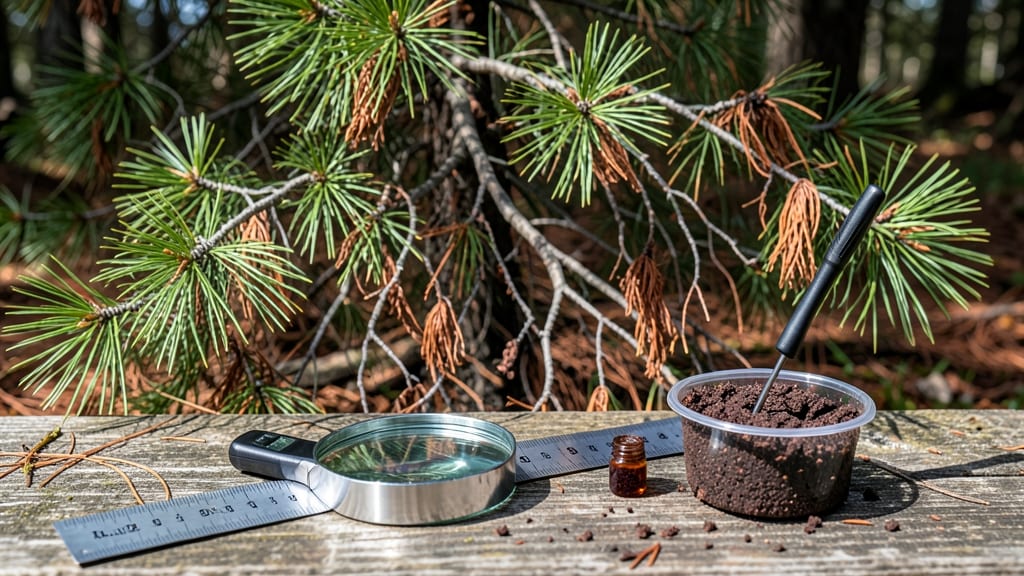
Your pine tree’s dying branches turning brown isn’t a death sentence—it’s a call for action. 🌲 Root rot and fungal infections like needle blight often sneak in when soil stays too wet, and by the time you notice the damage, it’s already spread.
The good news? Pruning the right branches now can stop the rot from taking over your entire tree.
First, check the soil—if it smells sour or feels soggy, that’s your first clue. Healthy pine roots need air and drainage; compacted or waterlogged soil strangles them.
I’ve saved multiple pines by simply improving drainage (gravel, sand, or raised beds work) and cutting back the worst-affected branches with clean, sharp pruners. Just avoid pruning in wet weather—fresh cuts are an open invitation to fungi.
What you’ll end up with is a tree that stops losing branches and starts recovering its natural shape. New growth will be bright green and firm, not brittle or yellowing. The key is acting fast—once more than 30% of the tree’s canopy is dead, recovery gets a lot harder.
With the right cuts and soil care, you can nurse your pine back to health in just a few seasons.
This works for all pine varieties—from dwarf pines to towering loblollies—whether your tree is in the ground or a container. The sooner you prune and adjust care, the better its chances. Let’s get those branches back to life before winter sets in.
Root Causes Behind Dying Pine Branches
Pine trees are resilient, but when their branches start wilting, browning, or falling off, it’s often a sign of deeper stress. Understanding the why behind dying pine branches is the first step to saving your tree.
Below, we break down the most common culprits—backed by science—and explain how they damage your pine’s health.
Pine trees thrive in specific climates, and when conditions stray too far from their comfort zone, branches suffer. Here’s how:
- Drought & Water Deficiency Pines rely on deep root systems to access water, but prolonged drought forces them to shut down non-essential branches first.
Symptoms include needle browning (from the tips inward) and brittle, snapping twigs. - Why it happens: Xylem vessels (water conductors) collapse under extreme dehydration, blocking nutrient flow.
Evergreens like pines can’t shed needles like deciduous trees, so they prioritize survival by sacrificing branches. - Actionable fix: Deep watering (6–12 inches down) every 10–14 days during dry spells. Use drip irrigation or soaker hoses to mimic natural rainfall.
- Frost & Cold Damage Sudden freezes or late-season cold snaps can kill new growth. Pines are somewhat cold-hardy, but rapid temperature drops (below 20°F) damage cells, turning needles black and causing branch dieback. - Why it happens: Ice crystals form in plant tissues, rupturing cell walls.
Evergreens are especially vulnerable because they retain water year-round. - Actionable fix: Apply anti-desiccant sprays (like Wilt-Pruf) in late fall to create a protective barrier. Mulch the root zone with 3–4 inches of organic mulch (pine straw or wood chips) to insulate roots.
- Heat & Sun Scorch Intense afternoon sun (especially after winter) can burn needles, leading to branch death. Young pines or those recovering from stress are most at risk. - Why it happens: High temperatures cause transpiration stress, where water loss exceeds uptake.
Needles dry out, turn yellow/brown, and die back to the branch collar. - Actionable fix: Provide afternoon shade (use shade cloth or plant nearby deciduous trees). Water deeply in the early morning to reduce evaporation.
Pine trees are a buffet for pests and pathogens, and once they breach the tree’s defenses, branches decline rapidly.
- Bark Beetles & Wood Borers These insects tunnel under the bark, disrupting the phloem (nutrient transport layer) and xylem (water transport). Infested branches often have sawdust-like frass at the base and wilt suddenly. - Why it happens: Beetles introduce fungi (like Ophiostoma) that clog vascular tissues.
Healthy pines can fight off attacks, but drought-stressed trees become easy targets. - Actionable fix: - Remove and burn or chip heavily infested branches (do not compost). - Use pesticide baits (like Permethrin-based sprays) in early summer when beetles are active. - Attract beetle predators (woodpeckers, parasitic wasps) by planting native shrubs nearby.
- Fungal Infections (e.g., Fusarium, Armillaria) Root and butt rot fungi thrive in compacted, waterlogged soil and spread upward, girdling branches.
Symptoms include mushrooms at the base, conk growth, and branches dying in patches. - Why it happens: Fungi block nutrient flow by destroying mycorrhizal relationships (root-fungus partnerships) and cambium layers (growth tissue). - Actionable fix: - Improve drainage with sand or gravel amendments (avoid clay-heavy soil). - Apply copper fungicide (like Chlorothalonil) to the base in early spring. - Prune infected branches 6+ inches below the rot (sterilize tools with 70% isopropyl alcohol between cuts).
- Spider Mites & Needle Cast Fungi Tiny spider mites skeletonize needles, while fungi like Lophodermium cause brown banding on needles, leading to branch decline.
- Why it happens: Both thrive in hot, dry conditions and weaken the tree’s photosynthetic capacity.
- Actionable fix:
- Blast off mites with a strong hose spray (disrupts their silk webs).
- Apply neem oil or horticultural oil (follow label rates) to smother mites and fungi.
Pines are acid-loving (pH 4.5–6.0) and need specific nutrients to stay healthy. When soil conditions are off, branches suffer.
- Compacted or Alkaline Soil Heavy foot traffic, construction, or limestone-rich soil raises pH, locking out iron, manganese, and phosphorus—critical for needle health.
- Why it happens: High pH reduces micronutrient availability, causing chlorosis (yellowing between veins) and stunted growth.
- Actionable fix:
- Test soil pH (aim for 5.0–6.0).
- Amend with elemental sulfur (for alkaline soil) or peat moss (for compacted soil).
- Apply chelated iron (like Ironite) if chlorosis appears.
- Nitrogen Deficiency Yellowing needles (starting at branch tips) signal low nitrogen, a key building block for chlorophyll.
- Why it happens: Nitrogen leaches quickly in sandy soils or is tied up by excessive organic matter decomposition.
- Actionable fix:
- Use slow-release nitrogen (like sulfur-coated urea) in early spring.
- Top-dress with pine-specific fertilizer (e.g., 10-10-10 or 12-4-8).
- Over-Fertilization & Salt Burn Too much fertilizer (especially synthetic salts) burns roots, causing osmotic stress and branch dieback.
- Why it happens: Excess salts draw water out of root cells, leading to dehydration at the cellular level.
- Actionable fix:
- Flush soil with water after fertilizing.
- Switch to organic fertilizers (like fish emulsion or composted pine bark).
Sometimes, the problem isn’t natural—it’s us. Improper pruning, construction, or even well-meaning (but harmful) practices can kill branches.
- Improper Pruning Cuts Cutting too close to the branch collar (the swollen area where the branch meets the trunk) or leaving stubs invites disease and decay.
- Why it happens: Poor cuts expose live cambium tissue, leading to cankers (sunken, dead areas) that spread upward.
- Actionable fix:
- Prune at the branch collar using clean, sharp tools.
- Make 3-cut pruning to avoid tearing bark (🔪 Step 1: Undercut 6–12" from the trunk; Step 2: Top cut 1–2" outside the branch collar; Step 3: Remove the stub).
- Mechanical Injury (Lawnmowers, String Trimmers) Scrapes on the trunk or roots sever vascular tissues, causing girdling and branch death above the wound.
- Why it happens: Even small wounds create entry points for pathogens and disrupt sugar transport from leaves to roots.
- Actionable fix:
- Apply wound dressing (like Tanglefoot Tree Wound Pruning Seal) to fresh cuts.
- Create a mulch barrier (2–3" of wood chips) around the trunk to protect from equipment.
- Overwatering & Root Suffocation Waterlogged soil starves roots of oxygen, leading to anaerobic conditions where beneficial microbes die and harmful ones (like Phytophthora) thrive.
- Why it happens: Compacted or clay-heavy soil traps water, causing root rot that spreads upward.
- Actionable fix:
- Test drainage by digging a 12" hole—if water pools after 6 hours, amend soil with perlite or coarse sand.
- Avoid overhead watering; use d
Reviving Your Pine’s Health Step-by-Step
When your pine tree’s branches start turning brown and brittle, it’s time to roll up your sleeves and take action. The good news? Most issues are fixable with the right care. Below, we’ll break down targeted solutions for each common cause—plus prevention tips to keep your pine thriving for years.
Think of this as your pine tree first-aid kit, tailored to the problem.
If your pine’s roots are waterlogged or infected, act fast to save the tree.
🌱 Step 1: Improve Soil Drainage Poor drainage is the #1 enemy of pine roots.
If your tree sits in soggy soil, fix it with these tweaks: - Raise the root zone: Amend heavy clay soil with 3–4 inches of coarse sand, perlite, or pine bark fines around the base (but avoid piling mulch directly against the trunk). - Install a French drain: For severe cases, bury a perforated pipe surrounded by gravel to redirect water away from the roots. - Check the grading: Ensure the ground slopes away from the tree (at least 6 inches over 3 feet).
Water should flow away, not pool.
🍄 Step 2: Treat Fungal Infections
Root rot often means fungus is feasting on your tree.
Combat it with: - Fungicide application: Use a copper-based fungicide (like Copper Sulfate) or a phosphite-based product (e.g., Phostrol) every 4–6 weeks during wet seasons. - Aerate compacted soil: Rent a manual aerator or hire a pro to poke holes in the soil around the root zone to improve airflow. - Remove infected mulch: If mulch is waterlogged, pull it back 6–12 inches from the trunk and replace with wood chips or gravel (which drains better).
💡 Pro Tip:
Test your soil’s moisture level before watering. Stick a screwdriver into the ground—if it goes in easily, the soil’s too wet. Wait until it’s dry 3–4 inches down before watering again.
If branches are bleached or crispy from too much sun, your pine needs shade relief.
🌿 Step 1: Provide Temporary Shade
- Use shade cloth: Drape 30–50% shade fabric over the tree for a few weeks to let it acclimate.
Secure it loosely so airflow isn’t blocked. - Prune aggressive neighbors: Trim back overhanging branches from nearby trees or structures that might be baking the pine. - Water deeply in the afternoon: Give the tree a slow soak (1–2 gallons per inch of trunk diameter) after 4 PM to reduce evaporation stress.
🔪 Step 2: Prune Damaged Branches
- Cut back scorched tips: Use clean, sharp pruners to trim dead or sunburned branches just above a healthy bud or lateral branch.
- Thin the canopy: Remove 10–20% of the thinnest, sun-exposed branches to improve airflow and reduce stress.
- Avoid heavy pruning: Never remove more than 25% of the canopy at once—this weakens the tree further.
🌡️ Pro Tip:
Pines in hot, dry climates (like the Southwest U.S.) often need extra winter watering to prevent spring sunburn. Water once a month in dormant seasons if rainfall is scarce.
If insects or disease are to blame, tackle them with precision.
🐛 Step 1: Identify the Culprit
Common pine pests include:
- Sawfly larvae (chew needles → brown frass)
- Aphids/spiders (sticky residue, webbing)
- Bark beetles (tiny holes, sawdust-like frass)
- Fungal needles (orange-brown needles that crumble)
🧴 Step 2: Apply Targeted Treatments
- For soft-bodied pests (aphids, spider mites): Spray with neem oil or insecticidal soap (reapply every 5–7 days).
- For sawflies/bark beetles: Use Bt (Bacillus thuringiensis) or a pyrethrin-based spray (follow label rates).
- For fungal issues: Apply a copper fungicide or baking soda spray (1 tbsp baking soda + 1 quart water + a drop of dish soap).
🎯 Pro Tip:
Encourage natural predators! Plant marigolds, yarrow, or dill near your pine to attract ladybugs and lacewings, which devour pests.
If yellowing needles or stunted growth are the issue, your pine might be hungry.
📊 Step 1: Test Your Soil
- Grab a DIY soil test kit (or send a sample to your local Cooperative Extension Service).
- Pines prefer acidic soil (pH 4.5–6.0). If yours is alkaline, amend with sulfur or peat moss.
💪 Step 2: Fertilize Smartly
- For general health: Use a slow-release, acidic fertilizer (like 10-10-10 or 16-4-8) in early spring.
- For micronutrients: Sprinkle iron chelate or magnesium sulfate (Epsom salt) around the root zone if needles are yellowing.
- Avoid over-fertilizing: Too much nitrogen causes soft, sappy growth that attracts pests.
🥗 Pro Tip:
Mulch correctly: Spread 2–4 inches of pine bark or wood chips in a 3-foot-wide ring around the tree (keep it 6 inches from the trunk). This retains moisture and slowly releases nutrients.
Once you’ve revived your tree, lock in its health with these habits: ✅ Water deeply but infrequently—pines hate wet feet but need 1–1.5 inches of water per week (more in extreme heat). ✅ Prune in late winter/early spring to remove deadwood before pests wake up. ✅ Inspect annually for early signs of stress (discolored needles, sawdust-like frass). ✅ Avoid compacting soil around the base—walk on paths, not the root zone. ✅ Plant pines in the right spot—most prefer full sun and well-draining soil (check your species’ needs!).
Final Thought: A dying pine doesn’t mean a dead pine—most issues are reversible with the right care. Start with the most likely cause, act quickly, and your tree will bounce back stronger than ever. 🌲✨
Frequently asked questions
Why do pine tree branches die from the tips inward?
This is often a sign of drought stress or transpiration issues. When pine trees don't get enough water, their xylem vessels (which transport water) collapse at the needle tips first. The tree sacrifices the outer branches to preserve core functions. Check soil moisture—if the top 6 inches are bone-dry, it's time to water deeply.
How can I tell if my pine tree has root rot vs. just drought?
Root rot causes mushrooms at the base, foul-smelling soil, and branches dying in patches, while drought affects the tree more uniformly. Dig near the roots—healthy roots should be brown and firm, while rotten ones are black/mushy. Also check for conks (shelf-like fungi) on the trunk.
Is it safe to prune dying branches now, or should I wait?
Prune dead or diseased branches immediately—they're just fuel for fungi and pests. Wait until dry weather (not rainy) to avoid spreading spores. Sterilize your tools with 70% isopropyl alcohol between cuts, and remove branches 6+ inches below visible damage.
Will my pine tree recover if half the branches are dead?
Yes, but recovery depends on the root system's health. If roots are intact, new growth will emerge from healthy buds. Focus on improving soil drainage, fertilizing with slow-release nitrogen, and protecting remaining branches from sun scorch. Monitor for 2–3 growing seasons for full recovery.
Can I save a pine tree with brown needles but no branch dieback yet?
Brown needles often signal nutrient deficiency or pest damage. Test your soil (pines prefer pH 4.5–6.0) and apply chelated iron if needles are yellow between veins. For pests, blast off mites with water or use neem oil. Most trees bounce back within 6–12 months with proper care.