
Trees
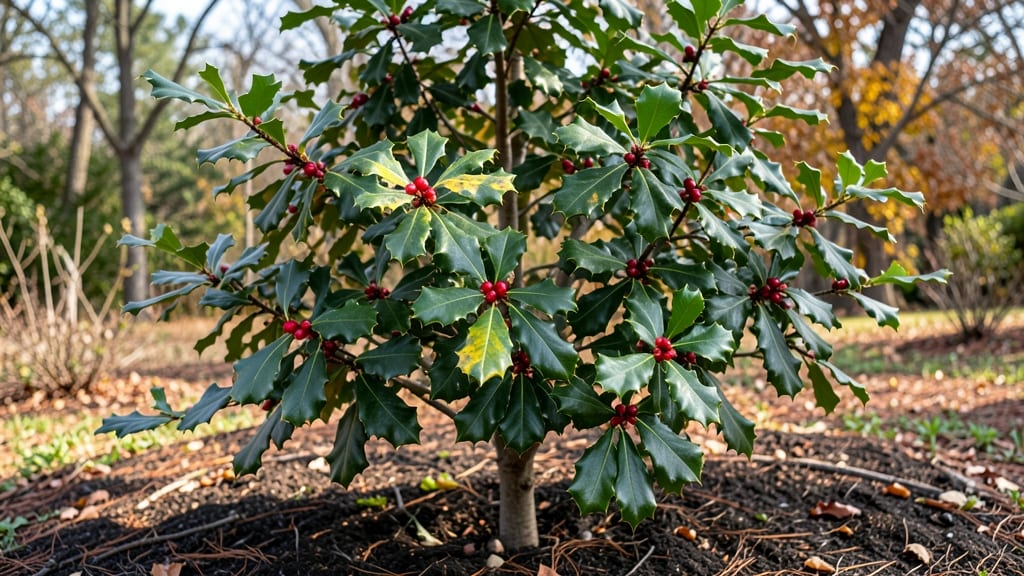
Your holly tree’s yellow leaves scream for help—not just cosmetic drama, but a sign the tree’s struggling to thrive. 🌿 I’ve nursed back more than a few hollys from this exact state, and the fix often boils down to three key adjustments most gardeners overlook.
The good news? You don’t need a degree in arboriculture to turn things around.
The culprit is usually one of four things: iron deficiency (common in alkaline soils), overwatering that drowns roots, spider mites hiding on the undersides of leaves, or sudden stress from heat or drought.
Each leaves its own clues—check for crispy edges (underwatering), webbing (pests), or patches of yellow between veins (nutrient issues).
Start with a soil test ($15 at garden centers) to rule out deficiencies, then adjust watering—holly roots hate soggy feet. Prune back any dead branches, and spray with neem oil if you spot pests.
Within 4-6 weeks, you’ll see fresh green growth pushing out, and those berries will make a comeback.
For stubborn cases, dig deeper: check drainage, mulch properly, and avoid compacting soil around the base. If yellowing spreads despite your efforts, it’s time to call an arborist—some diseases (like leaf spot) need professional treatment. But in my experience, 90% of holly yellowing is fixable with these basics.
Understanding Leaf Color Shifts
Holly trees are prized for their glossy, deep-green foliage—so when those leaves start turning yellow, it’s a clear signal something’s off. 🌿💛 But why does this happen? The answer often lies in a mix of environmental stress, nutrient imbalances, or even underlying health issues.
Let’s break down the most common culprits behind yellowing holly leaves, so you can identify the problem and take action.
Yellowing holly leaves can be a red flag that your tree isn’t getting the nutrients it needs to thrive. While holly trees are hardy, they’re not immune to soil-related issues. Here’s what to watch for:
💡 Iron Chlorosis: The Classic Yellowing Culprit - What’s happening? Iron chlorosis causes leaves to turn pale yellow between the veins while the veins stay green.
This is especially common in alkaline or calcareous soils (pH above 7.0), where iron becomes locked away and unavailable to the tree. - Why it matters: Holly trees need iron for chlorophyll production—without it, photosynthesis grinds to a halt. - Actionable fix: - Test your soil (pH kits are cheap and easy).
Aim for a slightly acidic range (5.5–6.5) for hollies. - Apply chelated iron (a soil amendment designed to release iron gradually). Follow label instructions for dosage. - Use compost or peat moss to lower soil pH naturally over time.
🌱 Nitrogen Shortage: The Slow Fade
- What’s happening? Yellowing starts on older leaves (a bottom-up pattern) and may include stunted growth or sparse foliage. This is classic nitrogen deficiency, the tree’s primary growth fuel.
- Why it matters: Nitrogen is essential for leaf development.
Without enough, the tree prioritizes survival over new growth, leading to weak, yellowing leaves. - Actionable fix: - Fertilize with a balanced, slow-release fertilizer (look for one with higher nitrogen (N) content, like 10-10-10 or 12-6-6). - Add organic matter like well-rotted manure or compost to boost soil fertility. - Avoid overwatering, which can leach nitrogen from the soil.
💀 Magnesium & Potassium Deficiencies: The Hidden Weaknesses
- Magnesium deficiency causes interveinal yellowing (similar to iron chlorosis but often with brown patches or dead spots).
- Fix: Apply Epsom salt (magnesium sulfate)—dissolve 1 tablespoon per gallon of water and spray on leaves or soil.
- Potassium deficiency leads to yellowing at leaf edges (a "scorched" look) and weak stems.
- Fix: Use a potassium-rich fertilizer (like wood ash or greensand) or a balanced fertilizer with higher potassium (K).
Holly trees hate "wet feet." Too much moisture—whether from overwatering, compacted soil, or poor drainage—can suffocate roots and trigger yellowing.
🚨 Root Rot & Oxygen Starvation
- What’s happening? Yellow leaves paired with mushy stems, wilting, or a foul smell at the base signal root rot, often caused by Fusarium or Phytophthora fungi thriving in soggy soil.
- Why it matters: Roots can’t absorb water or nutrients when they’re rotting, leading to leaf discoloration and tree decline.
- Actionable fix:
- Stop watering immediately and let the soil dry out.
- Improve drainage by amending soil with perlite, sand, or compost to create air pockets.
- Consider raised beds if your yard has heavy clay or poor drainage.
🌧️ Too Much Rain or Flooding
- What’s happening? Prolonged saturation (like after heavy storms) can leach nutrients and deprive roots of oxygen, causing yellowing and leaf drop.
- Actionable fix:
- Mulch around the base (2–3 inches of organic mulch) to regulate moisture.
- Install a French drain if water pools near the tree.
Holly trees are adaptable, but extreme conditions can push them over the edge.
🔥 Sun Scorch: When Leaves Fry - What’s happening? Yellow or brown patches on leaves exposed to direct sun, especially after winter or sudden heatwaves.
This is sun scorch, where leaves dry out faster than roots can supply water. - Why it matters: Holly leaves are thick and waxy but still vulnerable to rapid temperature shifts (e.g., cold nights + hot days). - Actionable fix: - Provide afternoon shade (use shade cloth or plant near other trees). - Water deeply during heatwaves (1–2 inches per week, at the soil level).
🌪️ Wind & Physical Damage
- What’s happening? Yellowing or torn leaves after strong winds, often with visible tears or bruising.
- Why it matters: Wind desiccates leaves and exposes them to pests or disease.
- Actionable fix:
- Prune to improve airflow and reduce wind exposure.
- Use windbreaks (like a fence or shrub barrier) if your holly is in a exposed area.
Sometimes, tiny troublemakers are to blame.
🐜 Spider Mites & Scale Insects: The Sap-Sucking Bandits
- What’s happening? Yellow stippling (tiny white/yellow dots) or sticky residue (honeydew) on leaves, often with webbing (mites) or brown bumps (scale).
- Why it matters: These pests suck sap, starving leaves of nutrients and causing yellowing or leaf drop.
- Actionable fix:
- Blast off pests with a strong spray of water (disrupts their life cycle).
- Use insecticidal soap or neem oil (follow label rates).
- Introduce predator insects like ladybugs if mites are present.
🍄 Fungal Infections: The Silent Spread
- What’s happening? Yellowing paired with black spots, powdery white growth, or leaf curling—signs of anthracnose, powdery mildew, or leaf spot fungi.
- Why it matters: Fungi thrive in humid, shady conditions and can spread rapidly, weakening the tree.
- Actionable fix:
- Remove infected leaves and destroy them (don’t compost).
- Apply fungicide (copper-based or sulfur-based) at the first sign of fungus.
- Improve air circulation by pruning dense branches.
Not all yellowing is a cause for alarm! Holly trees are evergreens, but they naturally shed older leaves (especially in late winter/early spring).
Look for: - Gradual yellowing on a few leaves at the bottom of the tree. - No other symptoms (no spots, wilting, or pests). - New growth appearing healthy.
Action: Simply rake up fallen leaves to keep the area tidy—no treatment needed!
Revive Your Holly Tree Fast
Yellow leaves on your holly tree can be frustrating, but the good news is most issues are fixable with the right care. Below, we’ve broken down practical solutions tailored to the most common causes—plus prevention tips to keep your tree lush and green.
Signs: Yellowing leaves, soggy soil, or leaves wilting despite wet conditions.
How to Fix It: 🔥 Step 1: Check the Soil – Dig 2–3 inches into the soil. If it’s damp or muddy, your holly is overwatered. Hollies prefer well-draining soil—if yours is heavy clay, amend it with compost or sand. 🍳 Step 2: Adjust Watering – Water deeply once a week (or when the top 1–2 inches of soil feel dry). Avoid shallow watering, which encourages root rot. 👨🍳 Step 3: Improve Drainage – If planted in a low spot, consider raising the soil level with a mound or installing a French drain. For container-grown hollies, ensure pots have drainage holes. 🥘 Step 4: Prune Affected Leaves – Snip off severely yellowed or mushy leaves to redirect energy to healthy growth.
Prevention Tip: 💡 Test your soil’s drainage before planting—hollies hate "wet feet." If unsure, opt for a slightly acidic, loamy mix (pH 4.5–6.0).
Signs: Crispy yellow edges, dry soil, or leaves curling upward.
How to Fix It: 🔥 Step 1: Water Deeply & Frequently – During hot spells, holly trees need more water. Soak the root zone 2–3 times per week until water runs out the drainage holes. 🍳 Step 2: Mulch Like a Pro – Apply 2–3 inches of mulch (wood chips or pine straw) around the base (but not touching the trunk). This locks in moisture and cools roots. 👨🍳 Step 3: Water in the Morning – Early watering reduces evaporation and gives roots time to absorb moisture before the heat peaks. 🥘 Step 4: Provide Shade (Temporarily) – If your holly is in a scorching spot, set up light shade cloth for a few weeks until it recovers.
Prevention Tip: 🌡️ Monitor soil moisture with your finger—if it’s bone-dry beyond 1 inch deep, it’s time to water.
Signs: Yellowing leaves with dark spots, mushy stems, or a foul smell at the base.
How to Fix It: 🔥 Step 1: Identify the Fungus – Root rot = soggy base; leaf spot = yellow/brown spots with black edges. If unsure, snap a photo and check with a local extension office. 🍳 Step 2: Trim the Damage – Use sterilized pruners to remove all yellowed, spotted, or dying leaves and branches. Dispose of them in the trash (not compost). 👨🍳 Step 3: Improve Airflow – Thin out dense branches to let sunlight and air circulate. Avoid overhead watering—use a soaker hose instead. 🥘 Step 4: Apply Fungicide – For leaf spot, spray with a copper-based fungicide (like copper sulfate) every 10–14 days for 3 weeks. For root rot, reduce watering immediately and consider fungicidal soil drenches. 🔪 Step 5: Repot or Replant (If Needed) – If root rot is severe, dig up the tree, trim affected roots, and repot in fresh, sterile soil with perlite for drainage.
Prevention Tip: ✨ Space plants properly (3–5 feet apart) and clean up fallen leaves to prevent fungal spores from lingering.
Signs: Pale yellow leaves (especially on new growth), slow growth, or weak stems.
How to Fix It: 🔥 Step 1: Test Your Soil – Grab a DIY soil test kit (or send a sample to your local extension service) to check for nitrogen, iron, or magnesium deficiencies. 🍳 Step 2: Fertilize Smartly –
- For nitrogen (yellow leaves with green veins): Use a balanced fertilizer (10-10-10) in early spring.
- For iron/chlorosis (bright yellow leaves): Apply chelated iron or Epsom salt (1 tbsp per gallon of water, sprayed on leaves).
- For magnesium (yellow patches between veins): Work gardening lime or Epsom salt into the soil.
👨🍳 Step 3: Feed in Stages – Hollies need two feedings per year: early spring (for new growth) and late summer (for winter prep).
Prevention Tip: 💪 Feed holly trees annually—they’re heavy feeders but sensitive to over-fertilizing. Always water before and after applying fertilizer.
Signs: Yellowing leaves with tiny holes, webs, or sticky residue (aphids, spider mites, or scale insects).
How to Fix It: 🔥 Step 1: Inspect Closely – Flip leaves over to spot pests. Common culprits:
- Spider mites = Tiny yellow dots, webbing.
- Aphids = Sticky honeydew, curled leaves.
- Scale insects = Bumpy brown/black spots on stems.
🍳 Step 2: Blast Them Off – Spray the tree with a strong stream of water to dislodge pests, then follow up with neem oil or insecticidal soap (repeat every 5–7 days). 👨🍳 Step 3: Introduce Beneficial Bugs – Ladybugs and lacewings love eating aphids. Buy them online or attract them with native plants. 🥘 Step 4: Prune & Dispose – Remove heavily infested branches and drop them in a sealed bag (not compost).
Prevention Tip: 🎯 Encourage biodiversity—birds, beetles, and predatory wasps keep pests in check. Avoid broad-spectrum pesticides that harm good bugs!
If your holly tree:
- Has large sections of dead wood (not just leaves).
- Shows signs of disease spreading rapidly (like canker or wilt).
- Is young or newly planted and struggling despite your efforts.
A certified arborist can diagnose issues like bacterial infections or soil-borne diseases that DIY fixes can’t handle.
Final Tip: 🌿 Observe your holly weekly—catching problems early (like yellowing leaves) means faster, easier fixes. With the right care, your holly will bounce back with vibrant green leaves in no time!
Frequently asked questions
Why do holly leaves turn yellow in patches rather than all at once?
Patchy yellowing usually signals localized stress. Check for fungal infections (like leaf spot) or pest infestations (such as spider mites) on those specific areas. It could also indicate nutrient deficiencies (like iron chlorosis) where certain branches aren't getting enough through the roots. Start by inspecting the undersides of affected leaves for webbing or tiny holes.
Is it safe to prune yellow leaves from my holly tree?
Yes, but only if the yellowing is confirmed dead (crispy, brown edges) or caused by disease/pests. Use sterilized pruners and remove entire branches if needed. Never prune during wet weather (spreads fungus). For healthy yellow leaves (like natural shedding), wait until spring when new growth appears.
How long does it take for holly trees to recover from yellow leaves?
With proper care, you'll see improvement in 4-6 weeks. Fastest recovery comes from fixing watering issues or pest control. Nutrient deficiencies (like iron) may take 2-3 months to fully correct, while fungal diseases could require ongoing treatment
Can I use household items to fix yellow holly leaves?
For nutrient deficiencies, mix 1 tablespoon Epsom salt in a gallon of water and spray on leaves (magnesium). For pests, try a soapy water spray (1 tsp mild dish soap per quart of water). Avoid vinegar or bleach—these can harm the tree. Always test solutions on a small branch first.
Will yellow holly leaves affect berry production next year?
Yes, if the tree is severely stressed. Healthy foliage is essential for berry formation, so address the issue now. A tree with 50%+ yellow leaves may produce fewer berries next season, but proper care can restore vigor. Focus on root health and nutrient balance to maximize recovery before flowering season.