
Pruning
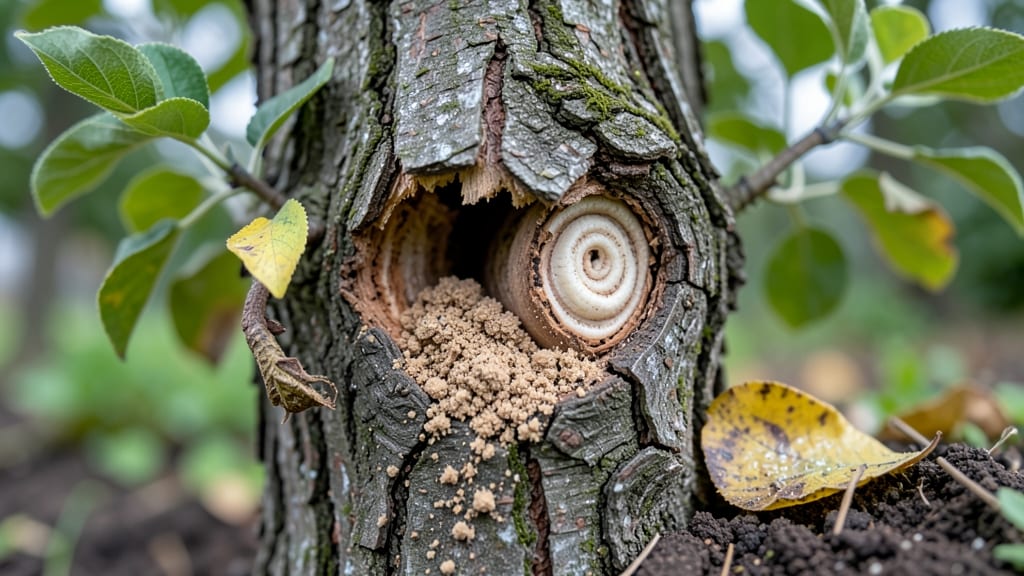
When your apple tree starts oozing sap and leaves wilt suddenly, 🌳 you're likely dealing with apple tree borer damage—one of the most destructive pests for fruit trees.
I've seen healthy trees turn into hollow shells in just a few seasons if the borers aren't caught early, and the frustration of losing a productive tree is real. The first sign is usually tiny holes in the bark or sawdust-like frass piled at the base of the tree.
These borers tunnel under the bark, cutting off nutrients and water flow. If you catch it early, you can still save your tree with targeted treatment—before the damage becomes irreversible. With the right approach, you'll restore your tree's health and prevent future infestations.
The key is acting fast—borers move quickly, and once they're established, they're nearly impossible to eradicate completely. Here's how to identify, treat, and protect your tree before it's too late.
Borers target stressed trees, so keeping your apple tree healthy is your first line of defense. Proper pruning to improve airflow, regular watering, and balanced fertilization make trees less appealing to borers. I've also found that beneficial insects like parasitic wasps can help control borer populations naturally.
Once you spot the signs, act immediately. Scrape out the larvae manually, apply organic treatments like neem oil or kaolin clay, or use targeted chemical controls for severe cases. The goal is to disrupt their lifecycle before they can cause permanent damage to your tree's structure.
Prevention is easier than treatment, so focus on maintaining tree health year-round. Regular inspections—especially after pruning—help catch borers before they establish. Healthy trees with strong bark are far less vulnerable, and a little vigilance can save your harvest for years to come.
Root Causes Of Apple Tree Borer Attacks
Apple tree borers—particularly the Saperda candida (apple tree borer) and Anobium species—don’t just strike randomly. Their destructive behavior stems from a mix of environmental, biological, and human-related factors. Understanding these triggers can help you prevent (or at least minimize) the damage before it spirals out of control.
Let’s break down the real reasons these pests target your trees.
Borers are opportunistic pests—they prefer trees already under stress. A healthy tree with strong bark and a robust immune system can fend off attacks, but once conditions weaken the tree, borers move in like vultures. Here’s what makes a tree vulnerable:
- Poor Nutrition: Trees lacking essential nutrients (especially nitrogen, potassium, and calcium) produce thinner bark and sap, making them easier targets. Think of it like this: A malnourished person gets sick faster—same goes for trees.
- Water Stress: Both drought and overwatering disrupt a tree’s ability to heal wounds. Borers detect stressed trees through volatile organic compounds (VOCs) released during stress, acting like a dinner bell.
- Physical Damage: Cracks, pruning wounds, or storm injuries expose inner wood, creating perfect entry points. Borers lay eggs in these gaps, and their larvae burrow in within days.
- Disease or Pest Pre-Attack: Trees already infested with aphids, spider mites, or fungal diseases (like apple scab) are far more likely to attract borers. Weakened defenses = open invitation.
💡 Pro Tip: Conduct a soil test and canopy assessment annually. Healthy trees with 1–2 inches of mulch and proper pruning (no jagged cuts!) resist borers naturally.
Borers are highly sensitive to temperature and humidity, and their life cycles sync with specific weather patterns. Here’s how climate plays a role:
| Season | Why Borers Strike | Peak Risk Period |
|---|---|---|
| Spring | Warmth (50–70°F) triggers adult borers to emerge from overwintering sites. They seek fresh bark to lay eggs. | April–June |
| Summer | Drought stress + high temps (80°F+) weaken trees, while larvae burrow deeper, causing irreversible damage. | July–August |
| Fall | Cool, damp conditions slow tree recovery but keep larvae active. Eggs laid in late summer hatch in spring. | September–October |
| Winter | Cold snaps kill some larvae, but insulated bark (e.g., thick mulch) protects them, ensuring survival. | December–February |
🌡️ Key Insight: Borers thrive in transitional seasons (spring/fall) when trees are recovering from winter dormancy or preparing for it. Mulch heavily in late summer to disrupt their life cycle.
Sometimes, we accidentally create the perfect borer paradise. Common gardening oversights include:
- Improper Pruning: Cutting too close to the trunk (within 1–2 inches) or leaving stubs creates wounds that borers exploit. Always prune in late winter (dormant season) to minimize risk.
- Over-Fertilizing Nitrogen: While nitrogen boosts leaf growth, it can delay bark hardening, making young trees more susceptible. Use a balanced fertilizer (10-10-10 or 12-12-12) instead.
- Ignoring Dead Wood: Snags or fallen branches left near healthy trees harbor borer larvae. Remove debris within 24 hours of falling.
- Planting Near Infested Trees: Borers can fly up to 1 mile in search of hosts. If a neighbor’s apple tree is infested, quarantine your orchard with reflective mulch or barrier sprays.
⚠️ Warning: Borers are not picky—they’ll attack peach, cherry, and plum trees too. If you’re in a mixed orchard, monitor all species.
By addressing these root causes—stress, climate, and human error—you can dramatically reduce borer damage. The next step? Learn how to treat active infestations before they kill your tree.
Stopping Apple Tree Borer Damage
Now that you’ve identified the signs of apple tree borer damage, it’s time to act. These pests can weaken or even kill your tree if left unchecked, but with the right approach, you can save your tree and restore its health.
Below are targeted solutions based on the most common causes of infestation, along with preventive measures to keep borers away for good.
---
Cause: Small, hidden borers go unnoticed until damage is severe. Fix: - Inspect your tree regularly (every 2–4 weeks during growing season) for sawdust-like frass, new holes, or oozing sap. - Prune any dead or dying branches—borers love weak wood. Use sterilized pruners (clean with rubbing alcohol) to avoid spreading disease. - Seal fresh wounds with pruning sealant to prevent borers from entering.
💡 Pro Tip: If you spot emerging adult moths (they look like small wasps), trap them with a pheromone trap to reduce mating and egg-laying.
---
Cause: Visible borer holes, sap oozing, or wilted foliage mean borers are active. Fix: #### Option 1: Systemic Insecticide (Best for Severe Cases) - Apply a borer-specific systemic insecticide (like Imidacloprid or Dinotefuran) directly to the soil around the tree’s drip line. - Follow label instructions—overwatering can dilute effectiveness. - Best time to treat: Early spring (before borers emerge) or late summer (when larvae are young).
#### Option 2: Drill-and-Inject Method (For Deep Infestations) 1. Drill small holes (¼ inch wide) into borer tunnels. 2. Inject insecticide gel (like Borer Killer Gel) into the holes. 3. Seal with toothpicks or wood plugs to keep pests out.
⚠️ Warning: Avoid neonicotinoids if bees are active—opt for pyrethrin-based sprays instead for surface treatments.
---
Cause: You prefer non-toxic or eco-friendly solutions. Fix: - Beneficial nematodes (Heterorhabditis bacteriophora)—water them into the soil to target borer larvae. - Parasitic wasps (like Spilochalcis beckeri)—introduce them naturally or purchase from garden centers. - Neem oil spray (mixed with water + a drop of dish soap) smothers eggs and young larvae—reapply every 7–10 days.
🌱 Bonus: Healthy trees resist borers better—fertilize with compost and water deeply but infrequently to strengthen wood.
---
Cause: Large borer galleries or extensive damage require aggressive treatment. Fix: 1. Cut out heavily infested branches (at least 6–12 inches below the damage). 2. Burn or dispose of infested wood (do not compost—borers can survive). 3. Scrape out tunnels in the trunk with a putty knife or chisel, then fill with insecticide gel. 4. Apply a fresh coat of pruning sealant to prevent reinfestation.
🔥 Pro Tip: If 50%+ of the trunk is damaged, consider replacing the tree—borers can spread to nearby trees.
---
Cause: You want to avoid future borer problems entirely. Fix: | Prevention Step | How to Do It | Best Time | |---------------------|------------------|---------------| | Tree Health Boost | Apply balanced fertilizer (10-10-10) in early spring. | March–April | | Mulch Properly | 3–4 inches of organic mulch (wood chips, straw) keep away from the trunk. | Year-round (renew annually) | | Pheromone Traps | Place moth traps in the orchard to monitor and reduce mating. | Install by May, remove by July | | Regular Pruning | Remove dead/dying branches and thin out dense growth for airflow. | Late winter or early spring | | Monitor for Stress | Drought or overwatering weakens trees—keep soil evenly moist. | Summer drought months |
🎯 Golden Rule: A healthy tree is a borer-resistant tree! Focus on soil health, proper pruning, and early pest scouting.
--- By combining immediate action (chemical or organic treatments) with long-term prevention, you can save your apple tree and keep borers at bay. Start today—your tree’s future depends on it! 🍏🌳
Frequently asked questions
How can I tell if my apple tree has borer damage vs. other pests?
Look for sawdust-like frass (borer poop) piled at the base of the trunk or oozing sap from small holes. Unlike aphids or mites, borers create clean, round exit holes (about 1/8-inch wide) and leave tunnels under the bark. Check for wilting branches or sudden leaf drop—these are classic signs of internal damage.
Can apple tree borers kill my tree if I don't treat them?
Yes, severe infestations can kill your tree in 1–3 years by cutting off water/nutrient flow. Borers weaken the tree's structure, making it susceptible to disease and storm damage. If you see 50%+ of the trunk damaged or large sections of bark peeling, the tree may already be beyond saving.
What's the best time of year to treat apple tree borers?
Apply treatments in early spring (before adults emerge) or late summer (when larvae are young). Avoid treating during active bloom (April–May) to protect pollinators. Systemic insecticides work best when soil is moist but not waterlogged.
Will pruning my apple tree attract more borers?
No—proper pruning reduces borer risk! Just follow these rules: Prune in late winter (dormant season), cut at a 45° angle (never leave stubs), and sterilize tools between cuts. The key is avoiding fresh wounds during peak borer season (spring/fall).
Can I use neem oil to treat apple tree borers?
Neem oil works best on eggs and young larvae but won't kill established borers. Mix 1 tablespoon neem oil + 1 teaspoon dish soap per gallon of water and spray every 7–10 days during growing season. For severe cases, combine with nematodes or parasitic wasps for better results.