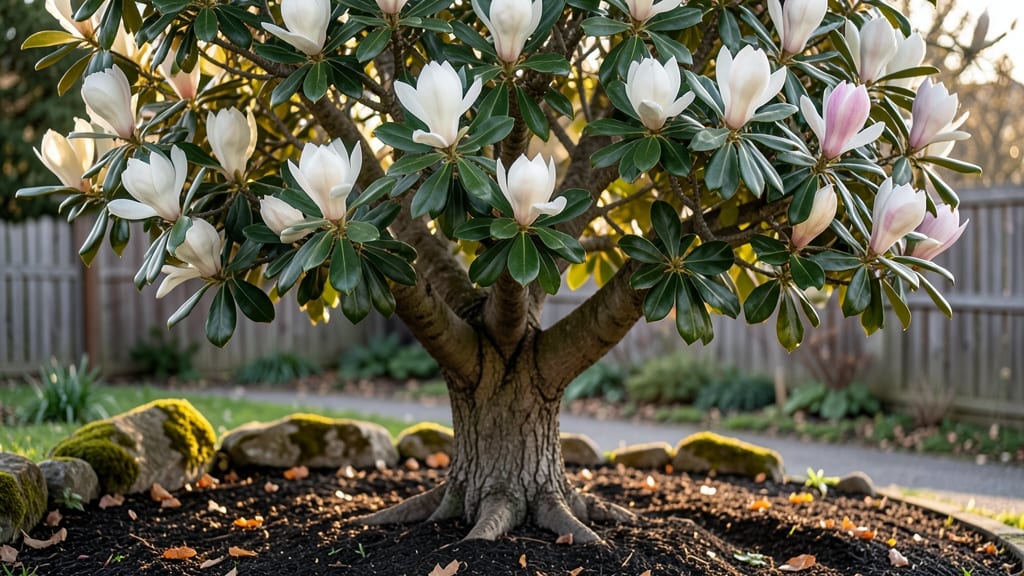
Understanding a magnolia tree’s height and width 🌸 is the first step to designing a landscape that thrives for decades—not just a few seasons.
Picture this: You’ve just planted a Southern Magnolia in your backyard, only to realize years later that its 80-foot branches are now brushing against your roof. Or worse, your tiny Star Magnolia is suddenly dwarfed by a neighbor’s towering specimen.
These mistakes happen when gardeners don’t account for how fast—or slow—magnolias grow, and whether they’ll stretch toward the sky or stay cozy in a corner.
From the dwarf varieties that top out at 10 feet to the giants that dwarf skyscrapers, each magnolia has its own growth story. Soil, sunlight, and even your local climate can push a tree to reach its potential—or hold it back.
The key? Knowing exactly what to expect before you dig that first hole.
In this guide, I’ll break down the height and width of the most popular magnolia varieties, share the critical spacing rules to avoid costly pruning (or worse), and show you how to pick the perfect tree for your space—whether you’ve got acres or just a small urban yard.
Magnolia Tree Height Range
10 ftto120 ft
0 ft
3 ft
6 ft
9 ft
12 ft
🌱
Very Very Tall Tree
Magnolia tree height and width by variety: growth charts for mature trees
Choosing the right magnolia variety means balancing your garden’s vision with the tree’s mature dimensions. Some varieties stretch toward the sky like skyscrapers, while others remain manageable for small yards.
For example, the Southern Magnolia can reach 80–100 feet tall, while the Little Gem® stays a modest 15–20 feet. Understanding these differences helps you avoid overcrowding, root competition, and future pruning headaches.
Proper spacing isn’t just about aesthetics—it’s about the tree’s health. A 20-foot canopy spread means planting at least 15 feet from structures to prevent root damage to sidewalks or foundations.
Below, I’ve compiled a variety-specific growth chart to guide your planting decisions, whether you’re designing a grand landscape or a cozy courtyard.
| Variety |
Mature Height (ft) |
Mature Width (ft) |
Growth Rate |
Spacing Needs |
| Southern Magnolia (Magnolia grandiflora) |
80–100 |
30–50 |
Slow |
60+ ft from structures |
| Saucer Magnolia (Magnolia × soulangeana) |
20–30 |
15–25 |
Moderate |
20–25 ft from structures |
| Star Magnolia (Magnolia stellata) |
15–25 |
15–20 |
Slow |
15–20 ft from structures |
| Little Gem® (Magnolia grandiflora) |
15–20 |
8–12 |
Moderate |
10–15 ft from structures |
| Yulan Magnolia (Magnolia denudata) |
20–30 |
15–20 |
Slow |
20–25 ft from structures |
| Jane (Magnolia virginiana) |
12–15 |
6–10 |
Moderate |
10–12 ft from structures |
| Black Tulip (Magnolia liliiflora) |
15–20 |
10–15 |
Slow |
15–20 ft from structures |
| Teddy Bear (Magnolia × loebneri) |
10–15 |
8–12 |
Slow |
10–12 ft from structures |
| Loebner Magnolia (Magnolia × loebneri) |
15–25 |
10–15 |
Moderate |
How to estimate Magnolia tree size before planting: key factors affecting growth
Estimating your magnolia tree height and width before planting is like reading a blueprint for your garden's future. The soil pH plays a starring role—most magnolias thrive in acidic soil (pH 5.0–6.5), while alkaline conditions stunt growth.
For example, a Southern Magnolia in ideal soil can reach 80 feet tall, but in alkaline soil, it may max out at 40 feet. Always test your soil before planting!
Next, consider sunlight exposure. Magnolias love morning sun and afternoon shade, especially in hot climates. A Star Magnolia in full sun might grow 20% wider than one in partial shade. If your yard gets intense afternoon sun, plan for 10–15 feet more spacing to prevent leaf scorch.
Your USDA hardiness zone also dictates growth potential. For instance, Magnolia grandiflora thrives in zones 6–10 but may grow 30% slower in zone 6 due to colder winters. Check your zone and adjust spacing accordingly—some varieties need extra winter protection in marginal zones.
🌱 Key Factors Affecting Magnolia Tree Size
- Soil pH: Acidic (5.0–6.5) = faster growth; alkaline = stunted
- Sunlight: Full sun = wider canopy; partial shade = tighter growth
- Climate Zone: Zones 7–10 = optimal growth; zones 6 or below = slower
- Pruning: Regular pruning = controlled size; no pruning = wild growth
Pro Tip: Dwarf varieties (e.g., Magnolia 'Black Tulip') stay under 8 feet—perfect for containers or urban gardens!
Don’t forget pruning habits. Left unchecked, even dwarf magnolias can outgrow their space. Prune in late winter or early spring to shape growth—this can reduce height by 20–30% over time.
For example, a Saucer Magnolia left unpruned might reach 25 feet tall, but with annual pruning, it stays around 15 feet.
For urban gardens or containers, opt for dwarf varieties like 'Little Gem' (15–20 ft tall) or 'Teddy Bear' (8–12 ft tall). These thrive in large pots (3+ feet deep) and need well-draining soil to prevent root rot.
Always account for root depth, which can extend 2–3x the trunk height!
Finally, adjust spacing based on your magnolia’s mature size. A Southern Magnolia needs 20+ feet from buildings, while a Star Magnolia can fit in 10–12 feet of space. Skimping on space leads to root competition and poor health—so measure twice, plant once!
★★★★★4.6(12 reviews)