
Container Gardens
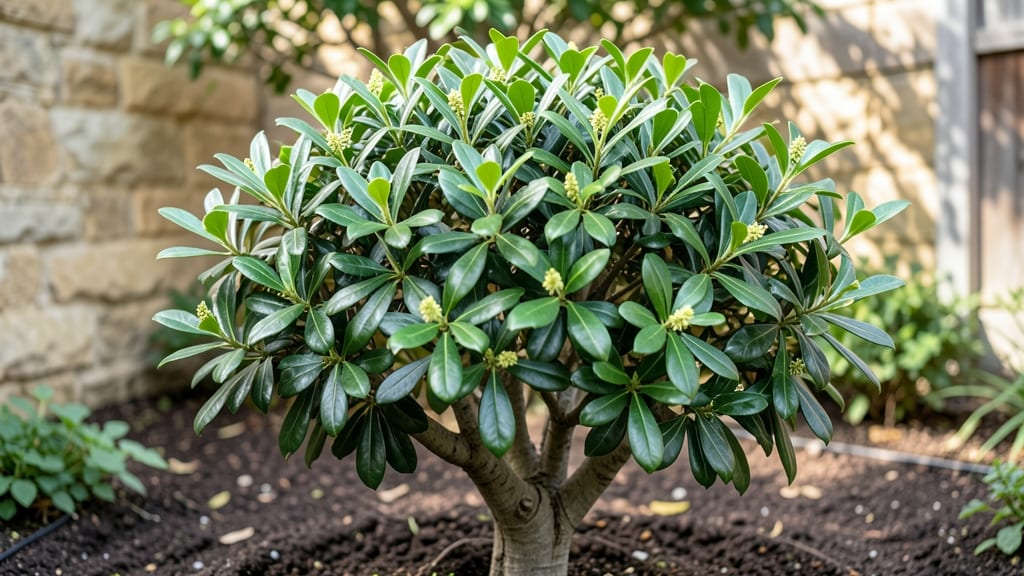
A bay leaf tree potted brings that fresh, earthy kitchen aroma straight to your patio. 🌿 I’ve grown mine for years, and the secret to keeping it thriving in containers is simple: well-draining soil, bright light, and consistent moisture without soggy roots.
The glossy, fragrant leaves aren’t just for cooking—they’re a stunning evergreen that turns heads in any sunny spot.
You’ll need a 10-15 gallon container with drainage holes, a mix of potting soil and perlite, and a spot that gets at least 6 hours of sunlight daily.
Water when the top inch of soil feels dry, and prune lightly after harvests to encourage bushier growth. The key? Don’t let it dry out completely—bay trees hate thirst.
By summer, your potted bay will be lush enough to snip leaves for soups and stews, with new growth popping up every few weeks. The fragrance alone makes it worth the effort, but the ornamental value?
Even better. Overwintering is easy—just move it indoors near a sunny window if temps drop below 20°F.
Common mistakes? Overwatering (root rot is real) and neglecting pruning (which leads to leggy growth). But once you get the rhythm, this perennial keeps giving—year after year—with minimal fuss. Ready to grow your own fragrant evergreen?
📚 In This Guide
- What you need
- Instructions
- Tips and common mistakes
- Wrapping up and next steps
What you need
- ● Potted bay leaf tree (Laurus nobilis) – Choose a healthy, 1-3 year old plant (dwarf varieties work best for containers).
- ● Container – A 5-gallon or larger pot (18"+ diameter) with drainage holes. Terracotta or ceramic pots help regulate moisture.
- ● Well-draining potting mix – A blend of 60% organic matter (peat moss or coconut coir), 20% perlite, and 20% coarse sand (or a pre-mixed cactus/succulent mix).
- ● Slow-release fertilizer – Granular 10-10-10 or 20-20-20 (follow package instructions for potted plants).
- ● Pruning shears – Sharp, clean shears for trimming (sterilize with rubbing alcohol between cuts).
- ○ Mulch (optional but recommended) – 3-4 inches of pine bark or shredded leaves to retain moisture and regulate temperature.
- ● Gloves – Heavy-duty gardening gloves to protect from sap and sharp edges.
- ● Watering can or hose with a gentle spray nozzle – Avoid over-saturating the soil.
- ● Trowel – For repotting or adjusting soil levels.
- ○ Support stake (optional) – A bamboo or metal stake if your bay tree grows tall in the pot.
- ○ Saucer or cache pot (optional) – To catch excess water and prevent mess.
Step-by-step guide to growing a fragrant bay leaf tree in containers
Here's how I transform a small bay leaf tree into a thriving, aromatic potted plant that keeps giving year after year.
🪴 Step 1: Select the Right Pot and Drainage
Bay leaf trees (Laurus nobilis) need room to grow, so choose a container at least 12 inches deep and wide for each plant. I prefer terracotta pots because they breathe and help prevent root rot, but any well-draining container works. Make sure it has multiple drainage holes—bay trees hate soggy roots, and excess moisture will kill them quickly.
If your pot lacks drainage, drill 3-4 holes in the bottom using a ½-inch drill bit. Line the bottom with ½-inch gravel or broken pottery shards to create a 1-inch deep drainage layer. This ensures water flows freely while keeping the root zone aerated. I always test drainage by filling the pot with water and watching it drain completely within 5-10 minutes—if it pools, the pot isn’t suitable.
🌱 Step 2: Prepare Well-Draining Soil and Plant
Bay trees thrive in sandy, well-draining soil that mimics their Mediterranean habitat. Mix 50% high-quality potting soil with 50% perlite or coarse sand to create a loose, airy blend. Avoid garden soil—it compacts and suffocates roots. For 4 plants, you’ll need about 4 gallons of this mix total.
Gently remove the bay tree from its nursery pot and loosen the roots if they’re tightly bound. Place the plant in its new container and backfill with your soil mix, pressing lightly around the edges to eliminate air pockets. The root ball should sit just below the soil line—never bury the trunk deeper than it was in the nursery pot. Water thoroughly until moisture runs out the drainage holes, then let it drain completely before placing in its final spot.
☀️ Step 3: Position for Full Sun and Consistent Care
Bay trees love bright, indirect light but can handle 4-6 hours of direct morning sun. A south- or west-facing window or patio is ideal, but avoid harsh afternoon sun, which can scorch delicate leaves. If growing indoors, supplement with a grow light positioned 12-18 inches above the plant for 12-14 hours daily—bay trees won’t tolerate dim conditions.
Water when the top 1-2 inches of soil feel dry to the touch. In summer, this might mean watering every 5-7 days, while winter care drops to every 10-14 days. I always check moisture by sticking my finger 1 inch deep—if it’s dry, it’s time to water. Overwatering is the #1 killer, so never let the pot sit in saucers of standing water. Instead, empty saucers after watering to prevent root rot.
✂️ Step 4: Prune and Fertilize for Healthy Growth
Prune in late winter or early spring before new growth begins. Use clean, sharp pruning shears to trim back ⅓ of the plant’s height to encourage bushier growth. Remove any dead, yellowed, or crossing branches—bay trees respond well to pruning and will fill in quickly. I also snip off any leggy growth to maintain a compact shape, which is especially important for potted plants.
Feed with a balanced, water-soluble fertilizer (like 10-10-10) once a month during spring and summer, following label instructions. In fall and winter, reduce feeding to every 6-8 weeks—bay trees go semi-dormant in cooler months and don’t need heavy feeding. Mulch the soil surface with ½-inch of pine bark or straw to retain moisture and regulate temperature, but keep it 2 inches away from the trunk to prevent rot.
🌿 Step 5: Overwinter and Encourage Year-Round Growth
Bay trees are evergreen but slow their growth in winter. Move pots indoors if temperatures drop below 25°F, but choose a spot with bright, cool light—avoid drafty areas or heating vents, which dry out the air. If keeping outdoors, protect from frost with burlap wraps or frost cloth, especially in USDA Zones 8 and below. I’ve seen bay trees survive winters in Zones 7-10 with proper protection, but they’re not frost-hardy.
Harvest leaves anytime by snipping small branches—younger leaves are more tender and flavorful. To encourage new growth, pinch back the tips of new shoots in early summer, which triggers bushier branching. With consistent care, your potted bay tree will reward you with fragrant leaves for years, perfect for cooking or garnishing dishes. Just remember: patience is key—bay trees grow slowly but live for decades with the right care.
Tips & tricks for thriving potted bay leaf trees
Here's how to avoid the most common pitfalls—and get the most aromatic results—from your container-grown bay leaf tree.
Container Selection: When choosing your 12-inch container, prioritize materials that wick away moisture. Glazed ceramic pots without drainage holes can trap water, while plastic containers may not provide enough airflow. I've found that terracotta pots with built-in saucers (that you empty after watering) offer the best balance—just make sure those 3-4 drainage holes are clear. Pro tip: If repurposing a decorative pot, nestle your terracotta pot inside it, creating a self-watering system while maintaining proper drainage.
Soil Mix Strategy: The 50-50 blend of potting soil and perlite/sand is non-negotiable for bay trees, but here's what I've learned about execution: Sift your perlite through a fine mesh screen to remove any dust particles that can clog the soil structure. For the 4-gallon mix needed for 4 plants, I recommend using a high-quality cactus/succulent mix as your base—it's already formulated for excellent drainage. When backfilling, press the soil mix gently around the root ball to eliminate air pockets, but don't compact it too firmly, which would restrict root growth.
Lighting Optimization: While bay trees tolerate 4-6 hours of morning sun, the 12-14 hours of grow light exposure indoors is where most people struggle. Position your grow light so it covers the entire plant canopy, not just the top. I've found that using two smaller grow lights on either side of the plant creates more even coverage than one large light. For maximum efficiency, place the lights on a timer set to 12 hours on/12 hours off, even if you're not home during daylight hours. This mimics natural daylight cycles and prevents leggy growth.
Winter Care Secret: When moving pots indoors below 25°F, transition them gradually over 7-10 days to prevent shock. Place your bay tree near an east-facing window first, then gradually move it to brighter light as it acclimates. I've successfully overwintered bay trees in sunrooms with supplemental grow lights, which provide the bright, cool light they need. Remember that even though bay trees are evergreen, they do slow their growth in winter—this is normal and doesn't indicate poor health.
Pro Tips for Bay Leaf Tree Potted
- Here's how to avoid the most common pitfalls—and get the most aromatic results—from your container-grown bay leaf tree.
- Container Selection: When choosing your 12-inch container, prioritize materials that wick away moisture. Glazed ceram...
- Soil Mix Strategy: The 50-50 blend of potting soil and perlite/sand is non-negotiable for bay trees, but here's what ...
Frequently asked questions
Got questions about growing a potted bay leaf tree?
You’re not alone! Here are answers to the most common queries to help you nurture your fragrant green companion with confidence.
How much sunlight does a potted bay leaf tree need?
A potted bay leaf tree thrives in full sun (6+ hours daily). If you notice yellowing leaves or slow growth, it may need more light. South- or west-facing spots are ideal. In low-light areas, supplement with a grow light to prevent leggy growth. Pro tip: Rotate the pot occasionally for even exposure!
How often should I water my bay leaf tree in a container?
Water when the top 1–2 inches of soil feel dry (usually every 1–2 weeks, depending on climate). Overwatering is the biggest risk—yellow leaves or mushy stems signal root rot. Ensure the pot has drainage holes, and avoid soggy soil. In summer, you may need to water more frequently. Test the soil: Stick your finger in—if it’s dry past your first knuckle, it’s time!
Can I grow a bay leaf tree indoors year-round?
Yes! Bay leaf trees adapt well to indoor containers if given bright light (near a sunny window or with grow lights). However, they’re not frost-hardy, so keep them above 20°F (-6°C). In winter, reduce watering slightly and watch for pests like spider mites, which love dry indoor air. A humidifier nearby can help!
What’s the best soil mix for a potted bay leaf tree?
Use a well-draining potting mix blended with perlite or sand (e.g., 60% potting soil + 30% perlite + 10% compost). Bay trees hate soggy roots, so avoid heavy garden soil. Repot every 2–3 years into a slightly larger container (1–2 inches wider) to prevent root binding. Upgrade tip: Add a handful of orchid bark for extra aeration!
Why are my bay leaves turning yellow or dropping?
Yellowing or dropping leaves usually mean overwatering, underwatering, or pests. Check the soil moisture first—if it’s dry, water deeply; if it’s soggy, let it dry out. Inspect leaves for aphids, scale, or spider mites (common in potted plants). Treat with neem oil or insecticidal soap if needed. Preventative care: Wipe leaves with a damp cloth weekly to deter pests!
How tall does a potted bay leaf tree get?
In containers, bay leaf trees stay compact (3–8 feet tall), depending on pruning. Regular trimming (especially in spring) encourages bushier growth. If you want a smaller shrub, prune back by ⅓ each year. For a tree-like shape, prune selectively to shape the canopy. Fun fact: Older trees can live for decades in pots!
Wrapping up and next steps
Growing a bay leaf tree in a potted container is a rewarding way to bring fragrant, culinary magic into your sunlit space! 🌿 With the right soil, sunlight, and care, you’ll enjoy lush foliage and aromatic leaves for years—whether you’re cooking, crafting, or simply admiring its beauty.
Start small, stay consistent with watering, and watch your little tree thrive.
Ready to turn your container gardening dreams into reality? Pick your pot, gather your supplies, and plant your bay leaf tree today! Your kitchen—and your garden—will thank you. 🌱✨