
Pruning
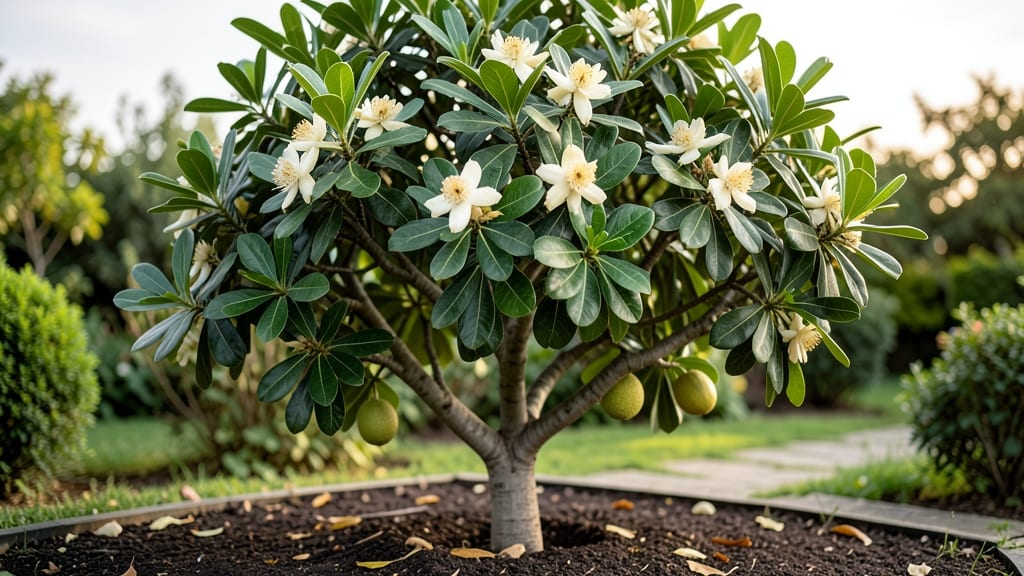
A sugar apple tree size can swing wildly from 15 to 30 feet at maturity, depending on the variety and growing conditions 🍈 — but that doesn’t mean you’re stuck with a jungle in your backyard.
Picture this: You’ve just planted your first sugar apple tree, dreaming of sweet, creamy fruit, only to realize it’s about to outgrow your patio in three years. That’s why knowing the exact size range—and how to control it—isn’t just helpful, it’s essential.
In tropical and subtropical climates like USDA Zones 10-12, these trees thrive with the right spacing and care, but without planning, even a small yard can end up crowded.
Some varieties stay compact, while others shoot up like a skyscraper—so choosing the right one for your space is the first step to success.
Below, I’ll break down the heights by variety, spacing rules for different settings, and how to prune or train your tree to fit your garden—whether you’re growing it in a container, a small yard, or a full orchard.

Sugar apple tree mature heights by popular varieties (with growth rates)
Choosing the right sugar apple tree variety depends on your space and climate. Some varieties stay compact while others grow into towering tropical giants. Understanding their mature heights and growth rates helps you plan for years of fragrant fruit production. Let's explore the most popular varieties and their space requirements.
Sugar apple trees (Annona squamosa) typically thrive in USDA zones 10-12, but some varieties adapt better to subtropical conditions. Their growth speed varies—some reach half their mature height in just 2-3 years, while others take 5+ years.
Always check your local frost-free period before planting, as even subtropical varieties need protection from unexpected cold snaps.
🌱
| Variety | Mature Height | Spread (Width) | Growth Rate | Climate Adaptation | Best For | |||||||||||||||||
|---|---|---|---|---|---|---|---|---|---|---|---|---|---|---|---|---|---|---|---|---|---|---|
| Sweet Gem | 12-15 ft | 10-12 ft | Moderate (3-5 ft/year) | Tropical/Subtropical | Small yards, containers | |||||||||||||||||
| Golden Gem | 15-18 ft | 12-15 ft | Fast (4-6 ft/year) | Tropical | Orchards, large gardens | |||||||||||||||||
| Red Gem | 18-22 ft | 15-18 ft | Moderate (3-4 ft/year) | Subtropical | Backyards, urban gardens | |||||||||||||||||
| Purple Heart | 20-25 ft | 18-22 ft | Slow (2-3 ft/year) | Tropical | Large estates, orchards | |||||||||||||||||
| Green Gem | 8-10 ft | 8-10 ft | Slow (1-2 ft/year) | Subtropical | Patios, balconies | |||||||||||||||||
| Sunrise | 22-28 ft | 20-25 ft | Fast (5-7 ft/year) | Tropical | Commercial farms | |||||||||||||||||
| Dwarf Sugar Apple | 6-8 ft | 6-8 ft | <
| Planting Type | Spacing Needs | Root System Depth | Notes |
|---|---|---|---|
| In-Ground (Standard) | 15-20 ft apart | 3-5 ft deep | Ideal for orchards; allows airflow and sunlight |
| Container (Large Pot) | Minimum 5 ft diameter pot | 2-3 ft deep | Requires drainage holes; limit to 3-4 years |
| Orchard Setup | 20-25 ft apart in rows | 4-6 ft deep | Maximizes yield; use windbreaks if exposed |
| Small Yards | 10-12 ft apart | 2-3 ft deep | Prune aggressively; expect reduced fruit |
If you're planting multiple sugar apple trees in an orchard, arrange them in rows with 20-25 feet between trees and 25-30 feet between rows. This spacing accounts for wind resistance and makes harvesting easier.
In coastal or windy areas, consider planting windbreaks like bamboo or palm trees to protect young trees from storm damage, as their shallow but wide root systems can be vulnerable.
For container growing, sugar apple trees are rarely recommended due to their size, but if you're using a large pot (5+ feet in diameter), ensure it has drainage holes and well-draining soil.
Even in containers, these trees will need regular pruning to control their height, as roots can quickly outgrow small spaces. Never plant more than one tree per container, as root competition will stunt growth.
Another critical factor is soil type and drainage. Sugar apple trees hate soggy roots, so spacing also affects how water and nutrients distribute. In clay-heavy soils, increase spacing to 20-25 feet to prevent waterlogging.
Amend the soil with compost or sand to improve drainage if needed. Always plant in well-draining, slightly acidic soil (pH 5.5-6.5) to support healthy root development.
Finally, consider neighboring plants when spacing. Sugar apple trees have aggressive roots that can compete with nearby vegetation. Avoid planting them close to shallow-rooted plants like herbs or vegetables, as they’ll struggle to access water and nutrients.
Instead, pair them with deep-rooted companions like citrus trees or palms, which won’t compete for space.
With the right spacing, your sugar apple tree will reward you with abundant fruit and minimal stress. Whether you're growing one tree in your backyard or an orchard, follow these guidelines to ensure your tropical beauty thrives for decades. 🌿🍈