
Pruning
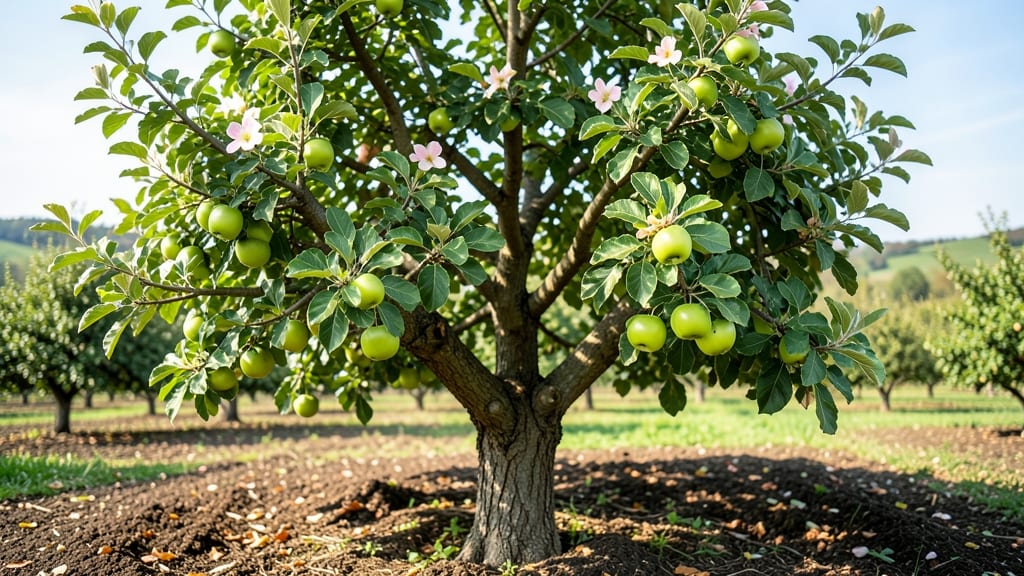
Granny Smith apple tree size can dwarf your dreams—or your garden space. 🌳 The standard variety grows 12-16 feet tall with a spread of 10-15 feet, but compact varieties stay under 8 feet, making them perfect for small yards.
I learned this the hard way when my first tree outgrew its spot, blocking sunlight for my herbs and crowding the patio.
The key to managing size lies in choosing the right variety and pruning early. Dwarf trees need 6-8 feet of space, while semi-dwarf varieties fit 10-12 feet of clearance. Rootstock determines this—M9 and B9 rootstocks keep trees small, while MM106 lets them grow taller.
Prune in late winter to shape the tree and encourage airflow, which prevents disease and boosts fruit production.
With the right care, you’ll end up with a tree that fits your space but still produces bushels of tart, crisp apples each fall. The trade-off? Smaller trees need more frequent pruning and protection from strong winds. But the payoff—fresh Granny Smiths straight from your backyard—makes it worth it.
For urban gardeners or those with limited space, consider espaliering. This training method turns your tree into a living work of art while keeping it compact. Just remember: the smaller the tree, the more attention it needs to thrive.
📚 In This Guide
- What you need
- Instructions
- Tips and common mistakes
- Wrapping up and next steps
What you need
- ● Granny Smith apple tree: Dwarf (6–8 ft tall): Best for containers or small spaces (e.g., M.9 rootstock)
- ● Semi-dwarf (10–12 ft tall): Ideal for small gardens (e.g., MM.106 or MM.111 rootstock)
- ● Standard (15+ ft tall): For larger yards (e.g., seedling or B.9 rootstock)
- ● Planting site: Full sun (6+ hours/day), well-draining soil, and space per tree: Dwarf: 4–6 ft diameter (or container with 15+ gallon size)
- ● Semi-dwarf: 8–10 ft diameter
- ● Standard: 12–15 ft diameter
- ● Soil amendments: Compost (2–3 gallons per planting hole)
- ● Balanced fertilizer (10-10-10, 1 cup per hole)
- ● Mulch: 2–3 inches of organic mulch (e.g., wood chips or straw)
- ● Drip irrigation or hose: For consistent watering (1–2 gallons/day for young trees)
- ● Shovel (round-point for digging)
- ● Pruning shears (bypass, sharp and clean)
- ● Grafting knife (if grafting your own tree)
- ● Measuring tape (for spacing and pruning)
- ● Gloves (gardening or pruning gloves)
- ○ Staking kit (optional, for young trees in windy areas)
- ○ Tree guard or cage (optional, to protect from pests like deer)
- ● ✅ Check local frost dates: Plant after the last frost in spring or 6–8 weeks before the first frost in fall.
- ● ✅ Soil test: Test pH (ideal: 6.0–7.0) and nutrient levels before planting.
- ● 💡 Pollination: Granny Smith is self-pollinating, but planting a second variety nearby (e.g., Gala or Fuji) can boost fruit production!
- ● 🌡️ Climate note: Granny Smith thrives in USDA Zones 5–9—adjust care for extreme heat or cold.
Step-by-Step guide to selecting and planting compact Granny Smith apple trees
Here's how to choose the perfect small-space variety and get it thriving in your garden.
☀️ Step 1: Choose a Dwarf or Semi-Dwarf Granny Smith Variety
Standard Granny Smith trees can reach 20-30 feet tall, but dwarf varieties stay under 8 feet while semi-dwarfs top out at 12-15 feet. Look for certified dwarf rootstocks like M.9 or B.9—these are bred to stay compact while still producing full-sized fruit. I always check the nursery tag for the rootstock designation, as this determines mature height.
For urban spaces, columnar varieties like 'Urban Apple' or 'Columnar Granny Smith' grow just 6-8 feet tall but only 3-4 feet wide, making them ideal for narrow spaces. These trees produce fruit along the entire trunk, not just at the tips, so you get more apples per square foot. Just remember that columnars need full sun and consistent moisture to prevent fruit drop.
🪴 Step 2: Select the Right Planting Location
Even compact apple trees need at least 6 hours of direct sunlight daily, but I’ve found they thrive with 8+ hours for best fruit production. Avoid low spots where cold air settles—apple blossoms are frost-sensitive, and late spring frosts can ruin the year’s crop. A south-facing wall or fence provides extra winter protection while reflecting sunlight back to the tree.
Check your soil’s drainage before planting. Granny Smiths hate soggy roots, so if your soil stays wet for more than 24 hours after rain, amend with 2-3 inches of compost mixed into the top 12 inches of soil. I like to dig a posthole digger’s width wider than the root ball to loosen compacted soil around the edges—this encourages roots to spread outward instead of circling.
🌱 Step 3: Plant at the Correct Depth and Stake for Support
Dig a hole twice as wide as the root ball but only as deep—the top of the root flare (where roots meet trunk) should sit 1-2 inches above ground level. Burying too deep suffocates the graft union, which is critical for maintaining the dwarf size. Fill the hole halfway with water, then place the tree in the center and backfill with native soil, tamping gently to remove air pockets.
Stake the tree immediately using two 2-inch-wide stakes placed 6 inches from the trunk on opposite sides. Tie the trunk loosely with soft tree tie material (never wire or plastic that can girdle the bark) and bury the stakes halfway up to provide stability. Water deeply after planting—you’ll know it’s enough when water pools 1 inch deep around the base and drains within 30 minutes.
✂️ Step 4: Prune for Shape and Airflow in First Season
Remove any branches that cross or rub against each other—they’ll create wounds where disease enters. I always look for suckers (shoots growing below the graft union) and cut them off at the base, as they divert energy from fruit production. Leave 3-4 scaffold branches spaced evenly around the trunk, pruning back to an outward-facing bud to encourage an open center.
Thin out crowded branches to improve airflow, which reduces fungal diseases like apple scab. A well-pruned dwarf tree should have a vase-like shape with branches spreading outward. Avoid heavy pruning in late summer—new growth won’t harden off before winter, making it vulnerable to frost damage. Instead, do most pruning in late winter or early spring before buds swell.
💧 Step 5: Water and Fertilize for Compact Growth
Water deeply once a week (or twice in extreme heat) to encourage deep root growth. Let the top 3-4 inches of soil dry out between waterings—consistent moisture prevents biennial bearing (where a tree fruits heavily one year and barely the next). I use a soaker hose to deliver water at the base, avoiding wetting the leaves to reduce fungal spores.
Fertilize in early spring with a balanced 10-10-10 formula, applying ½ cup per year of tree age (e.g., ½ cup for a 1-year-old tree). Avoid high-nitrogen fertilizers—they promote leafy growth at the expense of fruit. Instead, focus on potassium-rich amendments like wood ash or greensand to improve fruit quality. Mulch with 2-3 inches of wood chips in a 3-foot-wide ring around the tree, keeping mulch 6 inches away from the trunk to prevent rot.
Tips & tricks for perfectly compact Granny Smith apple trees
These insider tricks will help you maximize fruit production while keeping your dwarf apple tree in perfect bounds.
Rootstock Selection: The rootstock designation (like M.9 or B.9) is the single most important factor in controlling tree size. I've seen many gardeners overlook this detail and end up with trees that outgrow their space. Always verify the rootstock when purchasing—even labeled "dwarf" trees can vary if grafted onto different stock. For urban spaces, columnar varieties offer the ultimate space-saving solution with their vertical growth habit, but they require consistent moisture to prevent fruit drop.
Sunlight Optimization: While the instructions mention 6-8 hours of sunlight, I've found that positioning your tree near a south-facing wall can actually increase effective sunlight exposure by 20-30% through reflection. This is especially valuable in early morning or late afternoon when sunlight is less intense. Just be mindful that walls can create microclimates—some areas may get too hot, so monitor leaf health during summer months.
Pruning Precision: When establishing your 3-4 scaffold branches in Step 4, I recommend selecting branches that are evenly spaced around the trunk at about 12-18 inches apart. This creates an optimal framework for airflow while preventing branch competition. One common mistake I see is leaving too many small branches—remember that each branch you keep will require future pruning to maintain the open center shape. The vase-like structure isn't just aesthetic; it's crucial for preventing disease and ensuring even fruit distribution.
Soil Preparation Strategy: The instructions mention amending with 2-3 inches of compost, but I've found that adding a handful of mycorrhizal fungi to the planting hole can significantly boost root development. These beneficial fungi form symbiotic relationships with apple roots, improving nutrient uptake and drought resistance. Think of it as giving your tree a natural growth booster right from planting day. The posthole digger width tip is excellent—this loosening encourages roots to spread horizontally rather than circling, which is critical for stability in compact varieties.
Pro Tips for Granny Smith Apple Tree Size
- These insider tricks will help you maximize fruit production while keeping your dwarf apple tree in perfect bounds.
- Rootstock Selection: The rootstock designation (like M.9 or B.9) is the single most important factor in controlling tree size.
- Sunlight Optimization: While the instructions mention 6-8 hours of sunlight, I've found that positioning your tree near a south-facing wall can actually increase effective sunlight exposure by 20-30% through reflection.
Frequently asked questions
Got questions about growing compact Granny Smith apple trees? You’re not alone! Here are answers to the most common concerns—from space-saving tips to troubleshooting—so you can enjoy tart, crisp apples without the sprawl.
How big do dwarf Granny Smith apple trees get?
Dwarf varieties typically reach 6–10 feet tall with a spread of 4–6 feet, while semi-dwarf types can grow up to 12–15 feet. Choose a dwarf or columnar type (like ‘Columnar Granny Smith’) for the smallest footprint—ideal for patios or urban gardens!
How long does it take for a Granny Smith tree to bear fruit?
Dwarf Granny Smith trees usually produce fruit within 2–4 years of planting, while standard varieties may take 5–7 years. Patience pays off—young trees need time to establish roots and develop the energy for blooms!
Can I grow a Granny Smith tree in a container?
Yes! Dwarf or columnar Granny Smith varieties thrive in 15–25 gallon containers with well-draining soil. Ensure the pot has drainage holes, use a high-quality potting mix, and repot every 2–3 years for root health. Move containers to a sunny spot in winter.
Why aren’t my Granny Smith apples turning green?
If your apples lack the classic green hue, check for sunlight exposure (they need 6–8 hours dailynutrient deficiencies (test soil for nitrogen/phosphorus), or pesticide use (some chemicals dull color). Prune for airflow and fertilize with apple-specific blends in early spring.
What’s the best climate for a compact Granny Smith tree?
Granny Smiths prefer USDA Zones 5–9, with chill hours (300–800) for proper blooming. They handle heat well but may need afternoon shade in Zone 9+. In colder zones, mulch the base and protect young trees from late frosts with frost cloth.
Wrapping up and next steps
Growing a Granny Smith apple tree in a small garden is totally doable—especially with compact varieties like Columnar or Semi-Dwarf types! These trees thrive in tight spaces while delivering tangy, crisp fruit year after year.
Whether you’re a first-time gardener or a space-conscious pro, their manageable size and low-maintenance needs make them a fantastic choice.
Ready to plant? Start by checking your tools and picking the perfect spot—then watch your tiny orchard grow! 🌱