
Pruning
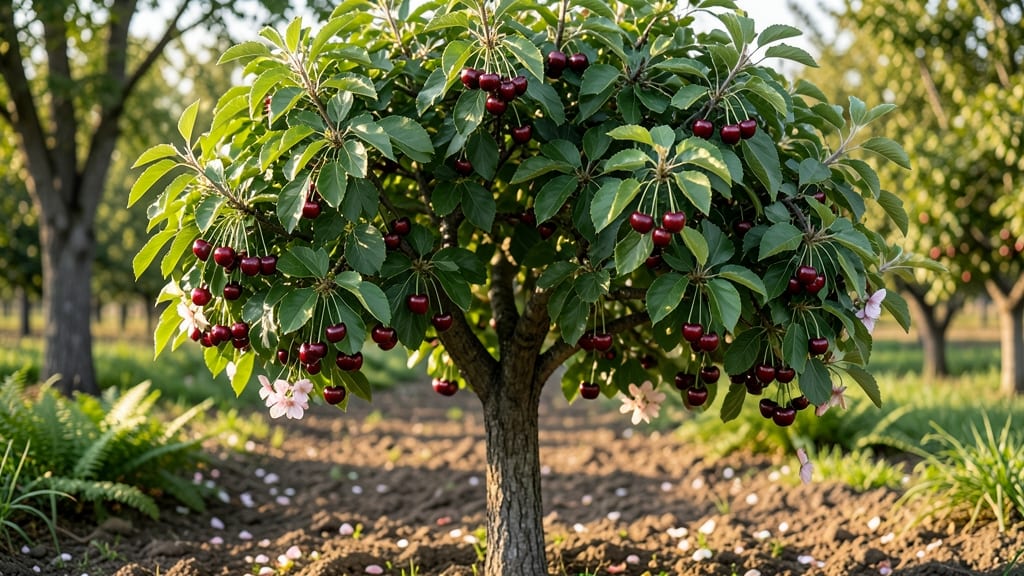
A Bing cherry tree’s height can reach 25 feet or more 🍒, but with the right approach, you can keep it compact without sacrificing fruit.
The key lies in choosing the right variety and pruning strategy early on—something I wish I’d known before my first tree shot past my fence line.
If you dream of a lush Bing cherry tree but worry about it towering over your backyard, you’re not alone—many gardeners struggle with controlling its height while maximizing fruit production. The right variety and pruning strategy can keep your tree manageable, productive, and visually stunning.
Most Bing cherry trees mature between 15 and 25 feet, but dwarf and semi-dwarf varieties stay between 6 and 18 feet, making them perfect for smaller spaces. The fastest-growing standard trees can add 3 feet per year in ideal conditions, so spacing and pruning matter early.
In this guide, I’ll break down the fastest-growing varieties, the best pruning techniques to control height, and how soil and climate affect growth. By the end, you’ll know exactly how to keep your Bing cherry tree at your desired size while still enjoying a bountiful harvest.

How tall do Bing cherry trees grow? Fastest varieties by mature height
Choosing the right Bing cherry tree variety is key to balancing fruit production with yard space. Standard Bing cherries typically reach 18–25 feet tall at maturity, but dwarf and semi-dwarf options can stay as short as 6–15 feet.
Your tree’s final height depends on both genetics and growing conditions, including pruning practices and soil fertility.
If you’re working with limited space, dwarf varieties like 'Stella' or 'Compact Stella' are game-changers—they mature at just 8–12 feet while still producing high-quality Bing cherries. Even semi-dwarf options (12–18 feet) fit well in suburban yards, leaving room for other plants and pathways.
Let’s break down the fastest-growing varieties by height so you can pick the perfect fit for your garden.
⚠️ Pro Tip: Always check your local USDA hardiness zone (Bing cherries thrive in zones 5–7) and spacing requirements—these dwarf varieties still need 10–15 feet between trees for airflow and sunlight.
Standard Bing cherry trees grow the fastest—expect 6–10 feet per year in ideal conditions—but their height makes them impractical for most home gardens. Semi-dwarf varieties like 'Gisela 5' strike a balance, growing 4–6 feet annually while staying under 14 feet.
These are perfect if you want early fruit production without sacrificing space for other plants.
For the smallest spaces, dwarf Bing cherries like 'Stella' or 'Compact Stella' are my top picks. They grow just 2–4 feet per year and mature at 6–12 feet, making them ideal for container growing or tight urban yards.
Just remember: even dwarf trees need full sun (6+ hours daily) and well-draining soil to thrive.
One factor that often surprises new growers is how pruning frequency affects height. Without regular pruning, even dwarf varieties can grow taller over time. I recommend annual winter pruning to maintain shape and summer light pruning to encourage bushier growth.
This keeps your tree at its ideal height while boosting fruit yield.
If you’re planting multiple Bing cherry trees, spacing is critical. Standard trees need 20–25 feet between them, while dwarf varieties can get by with 8–12 feet. Poor spacing leads to disease spread, reduced airflow, and even smaller fruit.
Think of it like a dance floor—your trees need room to move and grow without bumping into each other!
Another pro tip: Soil quality directly impacts growth rate. Amend your soil with compost and a balanced fertilizer (10-10-10) in early spring to give your Bing cherry tree a nutrient boost.
Well-fed trees grow 10–20% faster and produce larger, sweeter cherries. Just avoid over-fertilizing—too much nitrogen can lead to excessive leafy growth at the expense of fruit.
For fastest results, pair your chosen
Pruning Bing cherry trees to control height: Step-by-Step guide
Controlling the height of your Bing cherry tree starts with strategic pruning—timing, technique, and tools all play critical roles. Without proper care, your tree can quickly reach 15–25 feet tall, overshadowing your yard and making harvests difficult.
The key is to prune at the right time and with the right approach to maintain a manageable height while keeping fruit production strong.
For young trees, structural pruning in their first few years sets the foundation for controlled growth. Older trees benefit from annual maintenance pruning to remove excess height and shape the canopy.
Whether you choose winter or summer pruning, the goal is to redirect energy toward fruit-bearing branches rather than vertical growth.
- 🌱 Step 1: Gather Tools
- Sharp pruning shears (for small branches)
- Loppers (for 1–2 inch branches)
- Hand saw (for thick branches over 2 inches)
- Disinfectant (to prevent disease)
- Gloves and safety glasses
- 🌿 Step 2: Prune in Late Winter
- Best time: Dormant season (Jan–Feb in most zones)
- Remove dead, diseased, or crossing branches
- Cut back suckers and water sprouts at the base
- Aim to open the canopy for sunlight penetration
- 🪴 Step 3: Summer Pruning (Light)
- Time: June–July after harvest
- Trim overly vigorous shoots to control height
- Avoid heavy pruning—focus on shaping and thinning
- Remove suckers and weak growth promptly
- ✂️ Step 4: Structural Pruning for Young Trees
- First 3 years: Train the central leader
- Remove competing leaders to avoid forked trunks
- Space scaffold branches 12–18 inches apart
- Prune to encourage outward growth
- 🌳 Step 5: Annual Maintenance
- Inspect tree in late winter for deadwood
- Thin overcrowded branches to improve airflow
- Limit height reduction to no more than 25% per year
- Fertilize after pruning to support recovery
- 💡 Step 6: Avoid Common Mistakes
- Don’t prune in fall (invites pests/disease)
- Avoid topping (creates weak regrowth)
- Never remove more than 1/3 of foliage at once
- Disinfect tools between cuts to prevent spread
When pruning, always make cuts just outside the branch collar to promote faster healing. For Bing cherries, focus on removing branches that grow straight up—these are the biggest contributors to height. Instead, encourage horizontal branches, which produce more fruit and keep the tree compact.
Remember, patience is key—don’t rush to reduce height drastically in one season. Gradual pruning over 2–3 years yields the best results while maintaining tree health and fruit production. With consistent care, your Bing cherry tree will stay at a manageable height without sacrificing those sweet, juicy cherries you love.