
Pruning
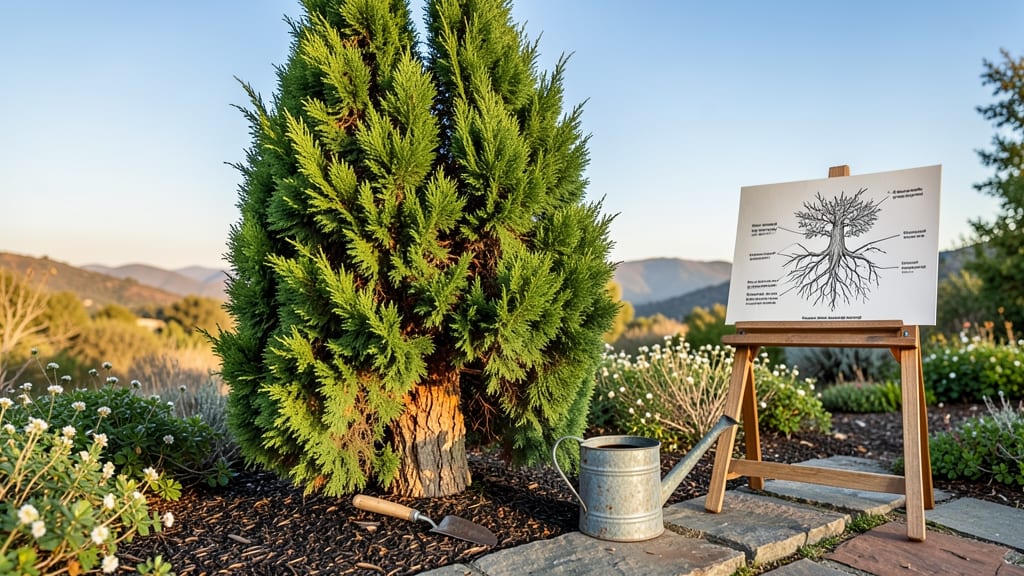
Your cypress tree’s health starts with the right cuts—done at the right time. ✂️ I’ve seen browning needles, fungal cankers, and weak growth turn around with just a few strategic pruning sessions.
The key isn’t just trimming dead branches; it’s understanding when and how to shape your tree to prevent disease and encourage dense, vibrant foliage year-round.
Most problems—like Seiridium canker or Phytophthora root rot—start with poor air circulation or overwatering. Pruning opens up the canopy, but timing matters: late winter or early spring is ideal for most cypress varieties.
I’ve saved trees by removing infected branches immediately and sterilizing tools between cuts. Even bagworms and spider mites can’t hide in an open, well-maintained tree.
By summer’s end, you’ll notice fuller branches, fewer yellowing needles, and a tree that looks thriving instead of struggling. The secret? Regular checks, early intervention, and pruning that mimics nature’s balance. No more guessing—just healthier growth with every season.
Works for both evergreen and deciduous cypress, from small shrubs to towering specimens. Let’s get your tree back to its best in just a few steps.
Root causes of cypress decline
Cypress trees are hardy and adaptable, but even these resilient evergreens face health struggles when their basic needs aren’t met. Understanding the why behind common issues is the first step to restoring your tree’s vigor.
Below, we break down the most frequent culprits—from soil mismanagement to hidden pests—and explain the science behind their damage.
---
Cypress trees thrive in well-drained, slightly acidic soils (pH 5.0–7.0), but when water pools around their roots, oxygen deprivation triggers a cascade of problems:
- Anaerobic stress: Roots suffocate in soggy soil, unable to absorb oxygen, which is critical for nutrient uptake.
This leads to chlorosis (yellowing foliage) and root rot caused by fungi like Phytophthora. - Salt buildup: Overwatering or poor drainage concentrates salts in the soil, burning fine root hairs and restricting water flow—even if the soil appears moist. - Nutrient lockout: Waterlogged conditions leach essential nutrients (like nitrogen and phosphorus) beyond the root zone, starving the tree despite frequent watering.
Actionable insight: Test your soil’s drainage by digging a 12-inch hole, filling it with water, and timing how long it takes to drain. If it takes more than 6 hours, amend with sand, perlite, or organic matter (like pine bark fines) to improve aeration.
---
Cypress trees are particularly vulnerable to foliar and root fungi when water droplets linger on needles or bark. The most damaging offenders include:
| Fungus | Symptoms | Trigger Conditions | |---------------------|---------------------------------------|-------------------------------------------------| | Seiridium canker | Sunken, oozing cankers on branches | Wounds from pruning + high humidity | | Phytophthora | Brown, wilting needles (bottom-up) | Waterlogged soil + poor air circulation | | Botryosphaeria | Dieback in branches, black streaks | Stress (drought or overwatering) + weak bark |
Why it spreads: Fungal spores thrive in moist, shaded environments. Overhead irrigation or dense foliage traps water, creating the perfect breeding ground. Even a single infected branch can spread spores via wind or splashing water.
Pro tip: 💡 Use drip irrigation or soaker hoses to deliver water at the base, and prune for airflow—remove 20–30% of dense growth to reduce humidity in the canopy.
---
Cypress trees in urban or heavily trafficked areas often suffer from soil compaction, which crushes root systems and limits nutrient access. Common deficiencies include:
- Iron (Fe) or manganese (Mn) chlorosis: Yellowing between leaf veins (interveinal chlorosis) signals poor uptake due to alkaline soil (pH >7.0) or compacted layers blocking root expansion. - Nitrogen (N) starvation: Brown, sparse needles or stunted growth often mean the tree isn’t accessing nitrogen, either because the soil is depleted or roots can’t reach it. - Magnesium (Mg) deficiency: Yellowing between veins (like chlorosis) but with purple undersides on older needles—common in sandy or leached soils.
Soil science alert: Compacted soil reduces root growth by up to 50%, cutting nutrient absorption. Aerate annually with a manual aerator or gypsum amendments (for clay soils) to restore porosity.
---
Cypress trees are a buffet for pests like bagworms, spider mites, and scale insects, which weaken the tree by siphoning sap and spreading diseases. Here’s how they do it:
- Bagworms (Thyridopteryx ephemeraeformis): Their silk nests block sunlight, causing needle burn and defoliation.
A single caterpillar can consume 1 square foot of foliage per season. - Spider mites (Tetranychus spp.): These microscopic pests thrive in hot, dry conditions, piercing cells to suck out chlorophyll, leading to bronzing or stippling on needles. - Scale insects: They excrete honeydew, a sticky residue that fosters sooty mold (a black fungal growth), further reducing photosynthesis.
Hidden danger: 🔥 Root-feeding larvae (like those from Diabrotica beetles) chew on roots, causing sudden wilting even if the tree appears healthy above ground. Inspect roots during pruning for galleries or frass (insect droppings).
--- Improper pruning—especially topping or over-thinning—accelerates decline by:
- Creating entry points for pathogens: Ragged cuts expose xylem tissue, inviting fungal infections like Seiridium canker. - Disrupting the canopy’s energy balance: Removing too many branches at once forces the tree to redirect resources, weakening its root-to-foliage ratio and increasing drought stress. - Stimulating epicormic sprouts: Poor cuts trigger water sprouts (weak, vertical shoots) that compete for nutrients, further stressing the tree.
Pruning protocol: Always use clean, sharp tools and make cuts just outside the branch collar (the swollen area where the branch meets the trunk). Avoid pruning in wet conditions (fungi love moisture!).
--- Cypress trees hate moisture extremes—both drought and soggy soil trigger physiological stress:
- Drought stress: Needles turn brown and crispy as the tree sheds foliage to conserve water.
Chronic drought weakens the tree, making it susceptible to pest attacks and sunburn (when new growth emerges after a dry spell). - Overwatering: Leads to root suffocation, as seen in ‘Leyland cypress’ (a hybrid prone to Seiridium canker when overwatered).
Symptoms include yellowing needles, stunted growth, and mushy roots.
Watering hack: 🎯 Deep but infrequent watering (1–2 inches per week) encourages deep root growth. Use a moisture meter to check soil—1–4 inches deep should be slightly dry between waterings.
Revitalize Your Cypress Tree Now
A healthy cypress tree thrives when you address its needs proactively. Below, we break down common issues and their practical fixes, so you can restore your tree’s vibrancy—without stress or guesswork.
---
Cause: Overwatering, underwatering, nutrient deficiency, or fungal stress. Fix: - 🔥 Adjust Watering: Cypress trees hate soggy roots. Water deeply once a week (or less in winter) and ensure proper drainage. If soil feels compacted, aerate it with a garden fork. - 🍳 Fertilize Smartly: Use a slow-release, balanced fertilizer (10-10-10 or 12-4-8) in early spring. Avoid high-nitrogen fertilizers—they burn roots. - ✂️ Prune Dead Branches: Snip off brown, brittle needles with clean, sharp shears (sterilize with rubbing alcohol between cuts). Focus on inner branches where airflow is poor. - 🌡️ Fungal Check: If needles have black spots or mold, treat with neem oil spray (1 tsp neem oil + 1 quart water) every 2 weeks until symptoms fade.
💡 Prevention Tip: - Mulch properly (2–3 inches of organic mulch, keeping it 6 inches away from the trunk) to retain moisture and deter fungal growth.
---
Cause: Over-pruning, poor soil, or root damage. Fix: - 👨🍳 Boost Soil Health: Test soil pH (ideal: 5.5–7.0). Amend with compost or peat moss if soil is too alkaline. For sandy soil, mix in organic matter to retain moisture. - 🌿 Light Pruning: Instead of heavy cuts, thin out 10–20% of the densest branches to improve airflow. Avoid topping (cutting the top flat)—it stresses the tree. - 💧 Deep Watering: Water slowly at the base (not overhead) for 30–60 minutes once a week. Use a soaker hose for efficiency.
✨ Pro Tip: - Avoid pruning in extreme heat or cold—do it on a cool, overcast day to reduce stress.
---
Cause: Spider mites, bagworms, or scale insects sucking sap. Fix: - 🔪 Manual Removal: Bagworms? Handpick them into soapy water. Scale insects? Scrape them off with a plastic scraper (metal can damage bark). - 🌿 Organic Sprays: - Neem oil (1 tbsp per gallon of water + a drop of dish soap) for mites and soft-bodied pests. - Horticultural oil (applied in early spring or fall) smothers eggs and adults. - 🐝 Beneficial Insects: Release ladybugs or parasitic wasps (available at garden centers) to control pests naturally.
🎯 Prevention Tip: - Inspect trees monthly (especially undersides of branches) for early signs (webbing, tiny holes, sticky residue = sap).
---
Cause: Broken branches, split trunks, or uprooted trees. Fix: - ⏰ Act Fast: If a branch is hanging but not broken, do not force it—call an arborist. For small, broken branches, cut 1/4 inch above a healthy bud (use three-cut pruning to avoid bark tears). - 🪵 Support Weak Trees: If the trunk is cracked but standing, wrap the split with tree wrap or rubber tape to prevent further damage. - 🌳 Stake if Needed: For shallow-rooted young cypress, use soft ties and stakes to stabilize it while roots recover.
💡 Emergency Tip: - Remove large, dead branches immediately to prevent safety hazards or further damage to healthy parts.
--- Keep your cypress tree thriving with this simple schedule:
| Season | Task | When | |-------------|-----------------------------------|------------------------| | Spring | Fertilize, prune dead wood | March–April | | Summer | Deep water, monitor pests | June–August | | Fall | Light pruning, apply mulch | September–October | | Winter | Minimal water, check for damage | November–February |
--- Final Thought: A cypress tree’s health is about balance—water, nutrients, airflow, and timely care. Follow these steps, and your tree will reward you with year-round lushness and disease resistance! 🌲✨
Frequently asked questions
Why are my cypress tree needles turning brown from the bottom up?
This is often a sign of Phytophthora root rot, caused by waterlogged soil. Cypress trees hate soggy roots—improve drainage by amending soil with sand or perlite, and water only when the top 1–2 inches of soil are dry. If the problem persists, test for fungal infections with a soil sample.
Can I prune my cypress tree in summer?
Pruning in summer stresses the tree, especially during heatwaves. Wait until late winter or early spring (before new growth starts) to avoid encouraging pests or fungal infections. If you must prune in summer, do it on a cool, cloudy day and keep cuts small.
How do I know if my cypress has Seiridium canker?
Look for sunken, oozing cankers on branches or trunk—often with orange-brown fungal growth around the wound. Remove infected branches 12 inches below the canker with sterilized tools, and dispose of them in the trash (not compost). Sterilize pruners with rubbing alcohol between cuts.
Are bagworms killing my cypress?
Yes—they create silk nests that block sunlight, causing needles to turn brown. Handpick them into soapy water or spray with neem oil (1 tbsp per gallon) in late summer when caterpillars are most active. Check undersides of branches for webbing.
Why does my cypress look healthy above ground but has mushy roots?
This suggests root rot from overwatering or poor drainage. Dig carefully around the base—healthy roots are firm and white, while rotten roots are dark, soft, and smelly. Reduce watering immediately, improve drainage, and consider fungal treatments like copper fungicide.