
Pests and Diseases
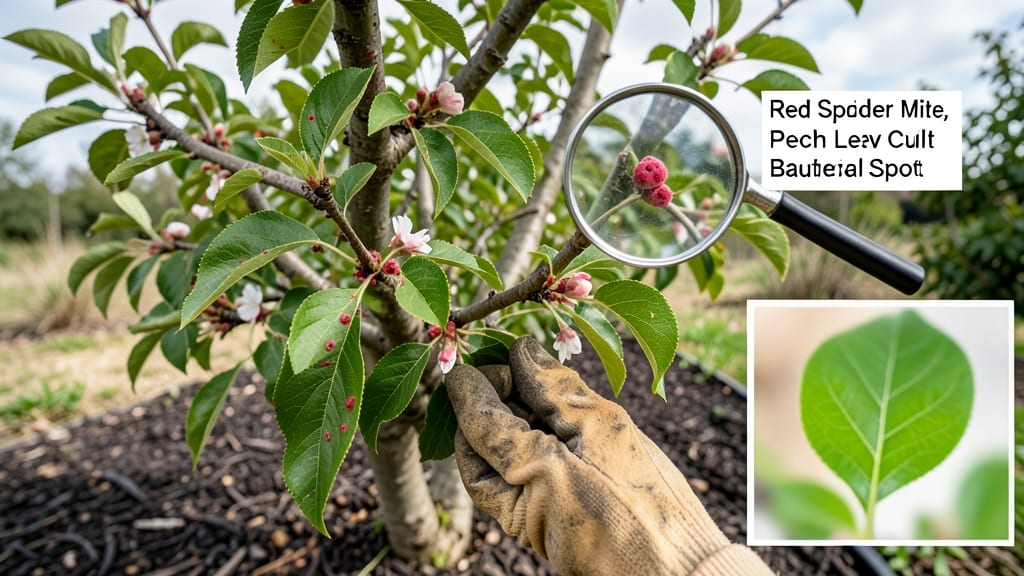
Those tiny red bumps on your peach tree leaves aren’t just unsightly—they’re a warning sign your tree is fighting something. 🌿 I’ve seen rust fungus, spider mites, and even environmental stress cause these irritating spots, and the fix depends on what’s really going on.
The good news? Most cases respond well to simple, targeted care once you know the culprit.
Start by examining the undersides of leaves and checking for patterns—rust fungus creates orange pustules, while mites leave behind fine webbing and stippled damage. Environmental stress often shows up as scattered, raised bumps without other symptoms.
Grab a magnifying glass and a spray bottle of water (mites hate humidity), then compare what you see to the common causes I’ll walk through next.
Once you identify the problem, solutions are straightforward: prune affected branches for fungus, blast leaves with water for mites, or adjust watering for stress. Organic options like neem oil or copper fungicide work well for mild cases, while severe infections might need stronger chemical treatments.
The key is acting fast—before the bumps spread to new growth.
If your tree looks worse after a week of treatment, don’t hesitate to call an arborist. Some issues, like bacterial infections, require professional intervention. But in most cases, you’ll have your peach tree looking healthy again in just a few weeks—with fewer red flags next season.
Root Causes of Leaf Bumps
When your peach tree’s leaves develop red or rust-colored bumps, it’s rarely a coincidence—these spots are usually a visible sign of stress, infection, or pest activity. Understanding the why behind these bumps is the first step toward saving your tree.
Below, we break down the most common culprits, their biology, and how they trigger this symptom.
Fungal pathogens are the #1 cause of red or rusty bumps on peach leaves. These microscopic invaders thrive in warm, humid conditions and exploit weak spots in the tree’s defenses. Two key fungi stand out:
- Leaf Curl (Taphrina deformans):
This fungus overwinters in buds and infects new growth in spring. It causes leaves to thicken, pucker, and develop reddish-purple bumps on the upper surface. The lower side may appear pale or powdery. Leaf curl weakens the tree by reducing photosynthesis, leading to stunted fruit production.
- Rust Fungi (e.g., Tranzschelia discolor):
Rust fungi produce pustules—tiny, blister-like bumps that burst open to release orange spores. These bumps often appear on the undersides of leaves first, then spread. Rust thrives in wet springs and can jump between peach trees and alternate hosts like blackberry bushes.
💡 Pro Tip: Fungal spores spread via wind, rain, and tools. Avoid overhead watering and sterilize pruners with 70% isopropyl alcohol to prevent cross-contamination.
While fungi get the spotlight, pests like mites and insects can also cause red bumps—though their methods differ. These tiny troublemakers feed on leaf tissues, triggering the tree’s defensive response:
- Spider Mites (Tetranychus spp.):
These arachnids (not insects!) pierce leaf cells to suck out sap, causing reddish stippling or bumps as the tree attempts to isolate damaged areas. Severe infestations lead to webbing and leaf drop. Mites thrive in dry, hot weather and are often missed until the damage is visible.
- Peach Leaf Curling Mite (Eriophyes spp.):
Unlike spider mites, this microscopic pest burrows into leaf tissue, causing thickened, curled leaves with red or purple bumps. Infested leaves may resemble those affected by fungal leaf curl—but check for no visible spores (mites leave none).
🔍 Key Difference: Pest bumps are often localized to feeding sites, while fungal bumps spread more uniformly. Tap leaves gently—mites may be visible as tiny moving dots with a magnifying glass.
Not all red bumps are caused by pathogens or pests. Environmental factors can also provoke this symptom, often as a secondary stress response:
- Extreme Heat or Sunburn:
Peach trees in hot climates may develop reddish, raised bumps on leaves due to sun scald. This occurs when leaves receive too much direct sunlight, especially after pruning or transplanting. The bumps are often dry and crusty, resembling mild blistering.
- Nutrient Deficiencies (Iron or Zinc):
A lack of micronutrients like iron or zinc can cause interveinal chlorosis (yellowing between veins) and small red or purple bumps as the tree struggles to produce chlorophyll. This is common in alkaline soils (pH > 7.0), where nutrients become less available.
- Herbicide Drift or Chemical Burn:
If your peach tree is near a lawn or garden, glyphosate or other herbicides can drift onto leaves, causing red, blister-like bumps. These often appear within days of application and may be accompanied by leaf cupping or necrosis (dead tissue).
✨ Quick Fix: For environmental causes, focus on improving soil health (add compost or sulfur for pH adjustment) and providing afternoon shade for young trees.
Next, we’ll dive into how to diagnose which cause is affecting your tree—and what to do about it.
How to Fix Leaf Bumps Fast
Now that you’ve identified the culprit behind those pesky red bumps on your peach tree leaves, it’s time to roll up your sleeves and get to work! 🌿✨ The good news? Most issues are treatable with the right approach—whether it’s a fungal infection, pest invasion, or environmental stress.
Below, we’ve mapped out practical, step-by-step solutions for each common cause, plus prevention tips to keep your tree thriving long-term.
If your peach tree is battling rust or anthracnose, act quickly to prevent spread and restore health.
🔥 Remove Infected Leaves & Debris
- Gather tools: Wear gloves and a mask to avoid spores. Grab pruning shears, a trash bag, and a bucket of soapy water.
- Prune aggressively: Snip off all leaves, branches, or fruit showing red bumps, spots, or discoloration.
Don’t leave anything behind—fungi love hiding! 3. Dispose properly: Seal infected plant material in a plastic bag and toss it in the trash (not compost). Fungi can survive in compost piles.
🍳 Apply Fungicide 1. Choose the right treatment:
- For rust: Use a copper-based fungicide (like copper sulfate) or a biological option (e.g., Bacillus subtilis).
- For anthracnose: Opt for a systemic fungicide (e.g., chlorothalonil or propiconazole).
- Follow label instructions: Mix the fungicide in water and spray thoroughly on both sides of leaves, branches, and the trunk. Focus on new growth.
- Reapply as needed: Fungicides often require 2–4 applications, spaced 7–14 days apart, especially after rain.
👨🍳 Boost Tree Health
- Water at the base: Avoid wetting leaves (fungi love moisture!).
Water early in the day so foliage dries quickly. - Improve airflow: Thin out dense branches to reduce humidity and fungal spread. - Feed with compost: Add well-rotted compost or a balanced fertilizer (10-10-10) in early spring to strengthen the tree’s defenses.
Tiny pests can wreak havoc, but they’re no match for a multi-pronged attack.
🔪 Blast Off Pests with Pressure
- Hose them away: Use a strong stream of water (from a hose nozzle) to dislodge mites and scale insects. Do this early in the morning for best results.
- Repeat weekly: Pests reproduce fast—consistency is key!
🥘 Natural & Chemical Controls 1. Neem oil spray (🌿 best for organic growers):
- Mix 1 tbsp neem oil + 1 tsp mild soap + 1 quart water.
- Spray evenly on leaves (test a small area first).
- Reapply every 5–7 days until pests vanish.
- Insecticidal soap: - Spray directly on pests (avoid hot days—it can burn leaves). - Works well for soft-bodied insects like spider mites.
- Horticultural oil (for scale insects): - Apply dormant oil in late winter/early spring to smother overwintering pests. - Reapply after new growth appears.
🐝 Introduce Beneficial Predators
- Ladybugs and lacewings devour mites and aphids. Buy them online or attract them with dill or fennel plants nearby.
Sometimes, red bumps are your tree’s way of saying, “I need help!”
💡 Adjust Watering Practices
- Drought stress? Water deeply 1–2 times per week (check soil moisture 2 inches down—it should be slightly damp).
- Overwatering? Let the top 2–3 inches of soil dry out between waterings to prevent root rot.
🎯 Protect from Extreme Temperatures
- Heat stress: Provide afternoon shade with a lightweight shade cloth (30–50% coverage).
- Cold damage: Mulch around the base with 3–4 inches of straw or wood chips to insulate roots. Wrap the trunk with burlap in freezing temps.
📊 Fertilize Smartly
- Test your soil: Use a DIY soil test kit (available at garden centers) to check pH and nutrient levels.
- Fix deficiencies:
- Iron deficiency (yellow leaves with red veins)?
Apply chelated iron or use Epsom salt (1 tbsp per gallon of water). - Zinc or magnesium issues? Use a balanced fertilizer or kelp meal.
Once your tree is healthy, lock in those gains with these proactive steps:
- 🌱 Plant in the right spot: Peach trees need full sun (6–8 hours/day) and well-draining soil.
Avoid low-lying areas where water pools. - 🍃 Prune regularly: Remove dead, diseased, or crowded branches in late winter to improve airflow. - 🛡️ Monitor early: Check leaves weekly for early signs of pests or disease.
Catch problems before they spread! - 🌿 Rotate treatments: If you use fungicides/pesticides, alternate types to prevent resistance. - 🍑 Choose resistant varieties: Some peach cultivars (like ‘Redhaven’ or ‘Elberta’) are less prone to rust. Ask your local nursery for recommendations.
Final Thought: Most red bumps are manageable with prompt action and a little TLC. Start with the fixes above, and your peach tree will be back to producing juicy, blemish-free fruit in no time! 🍑💚
Frequently asked questions
Are red bumps on peach leaves always caused by pests or disease?
Not necessarily! While fungal infections and mites are common culprits, environmental factors like sun scald or nutrient deficiencies (especially iron or zinc) can also trigger red bumps. Check for other symptoms: sunburned leaves often appear dry and crusty, while deficiencies cause yellowing between veins.
How can I tell if the bumps are from mites vs. fungus?
Look closely: mites create tiny stippled bumps and often leave fine webbing on leaf undersides, while fungal bumps (like rust) appear as orange pustules that burst open. Tap leaves—mites may move, but fungi won’t. A magnifying glass helps spot the difference!
Will pruning infected branches alone fix the problem?
Pruning helps, but it’s just the first step! Remove all infected leaves/debris, then apply fungicide or pest control to prevent reinfection. Fungal spores and mites spread quickly—combine pruning with treatment for best results. Sterilize tools with rubbing alcohol between cuts!
Can I use home remedies like baking soda for red bumps?
Baking soda can help with fungal issues (mix 1 tbsp baking soda + 1 tsp oil + 1 gallon water), but it’s not a cure-all. For mites, it’s ineffective. Organic options like neem oil or copper fungicide work better for most cases. Always test remedies on a small leaf first!
When should I call an arborist instead of treating myself?
If the bumps spread rapidly, leaves wilt or drop, or the tree shows signs of bacterial infection (oozing sap, dark streaks), consult a professional. Severe cases may need systemic treatments or pruning beyond basic DIY fixes. Don’t wait—act if symptoms worsen after 2 weeks of care.