
Pruning
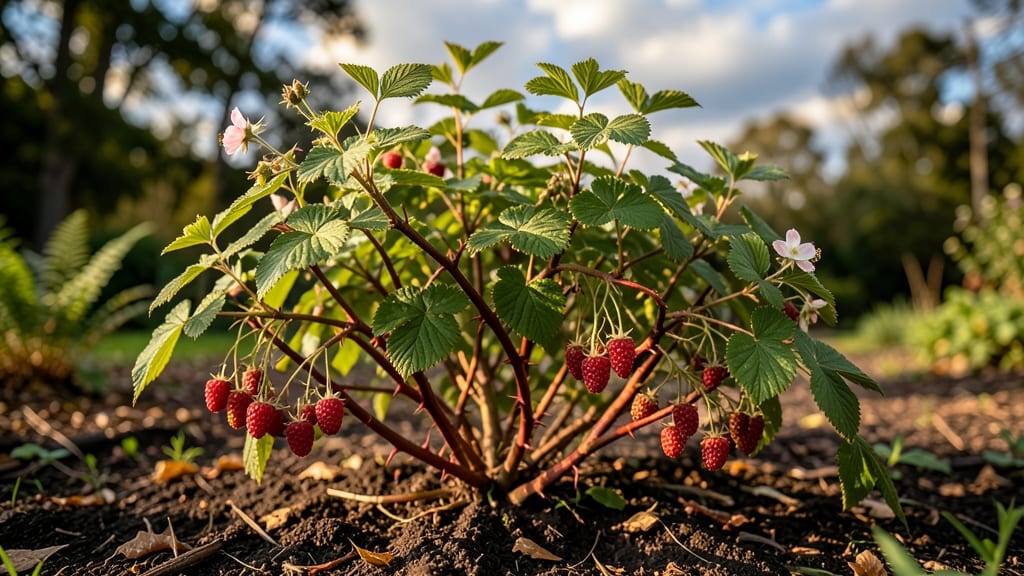
The raspberry tree care for dwarf varieties is the game-changer for small yards and containers. 🌱 I’ve grown them in 5-gallon pots on my balcony, and they produce sweeter berries than my full-size plants—with far less fuss.
The secret lies in matching their compact size to the right care routine, from soil prep to pruning. You’ll need well-draining soil, consistent water, and a pruning schedule that keeps energy flowing to new canes. Most people over-prune or under-water, both of which lead to weak harvests.
My plants now yield 2-3 pounds of berries per season in just 2 square feet of space. By summer, you’ll be snipping ripe berries straight from your patio or windowsill. The flavor rivals store-bought, but with none of the pesticides.
These varieties thrive in containers for 10+ years with proper care. Perfect for urban gardeners, small spaces, or anyone tired of raspberry plants sprawling everywhere. Here’s how to keep them productive year after year.
📚 In This Guide
- What you need
- Instructions
- Tips and common mistakes
- Wrapping up and next steps
What you need
- ● Dwarf raspberry plants: Choose certified disease-free varieties like 'Heritage' (summer-bearing) or 'Carolina Gold' (fall-bearing). Quantity: 1-3 plants per container (depending on size).
- ● Containers: At least 5-gallon pots (18"+ deep) for single plants or 7-10 gallon grow bags for multiple plants. Material: Fabric or plastic with drainage holes.
- ○ Potting mix: A well-draining blend of 50% peat moss or coco coir, 30% compost, and 20% perlite or sand. Optional: Add 1 cup slow-release fertilizer (10-10-10 ratio) per 5 gallons.
- ● Pruning tools: Bypass pruners (sharp, clean)
- ● Loppers (for thicker canes, if needed)
- ● Disinfectant (70% isopropyl alcohol or bleach solution)
- ○ Support system: Trellis or stakes (3-4 ft tall) to train canes vertically. Optional: Wire or twine for securing canes.
- ● Mulch: 2-3 inches of organic mulch (straw, wood chips, or shredded leaves) to retain moisture.
- ● Watering supplies: Drip irrigation or a watering can with a rose attachment for gentle, deep watering.
- ● Soil pH test kit (ideal range: 5.5-6.5)
- ● Epsom salt (for magnesium boost, 1 tbsp per plant every 4-6 weeks)
- ● Compost tea or liquid fertilizer (for foliar feeding)
- ● Pest control: Neem oil or insecticidal soap (for aphids/spider mites)
- ● Garden gloves (to protect hands during pruning)
Step-by-Step guide to growing dwarf raspberry trees
Here’s how to cultivate thriving dwarf raspberry trees in tight spaces—no sprawling canes or messy thickets in sight.
🪴 Step 1: Select the Right Container and Soil Mix
Dwarf raspberry trees need at least a 15-gallon container with drainage holes to prevent root rot. I recommend terra cotta pots because they breathe better than plastic, especially in humid climates. Fill the bottom third with gravellike drainage material (like pumice or coarse perlite) to ensure excess water escapes quickly.
Use a well-draining potting mix—never garden soil. I blend 50% premium potting mix with 30% compost and 20% perlite for aeration. The mix should hold moisture but never feel soggy when squeezed. A slow-release fertilizer (like 10-10-10) mixed into the soil at planting provides nutrients without burning roots.
☀️ Step 2: Plant at the Right Depth and Position
Dig a hole twice as wide as the root ball but only as deep as the container’s base. Gently remove the tree from its nursery pot and tease the roots outward if they’re circling. Place it so the top of the root ball sits 1 inch below the container’s rim—this prevents water from pooling around the stem.
Position your dwarf raspberry in full sun (6+ hours daily). A south-facing window or balcony works for containers, but if you’re growing in partial shade, expect smaller yields and fewer canes. I stake young trees with 3-foot bamboo stakes tied loosely to support new growth without restricting airflow.
💧 Step 3: Water Deeply and Establish a Routine
Water immediately after planting until it drains from the bottom. Dwarf raspberries hate soggy roots but also wilting stress. I water every 2-3 days in summer, checking that the top 2 inches of soil feel dry before adding more. In winter, reduce to once a week unless your climate stays dry.
Mulch with 2-3 inches of shredded bark around the base (but not touching the stem) to retain moisture and regulate soil temperature. This also suppresses weeds, which compete for nutrients. Avoid organic mulches like straw—they can harbor pests.
✂️ Step 4: Prune for Compact Growth and Fruit Production
Prune new canes in early spring before buds swell. Remove weak, thin, or crossing canes to improve airflow—this prevents fungal diseases like cane blight. Leave 3-4 of the strongest canes, cutting them back to 12 inches tall to encourage bushier growth. This is where dwarf varieties shine: they’ll stay under 4 feet tall with proper pruning.
After harvest, cut all fruited canes to the ground in late fall. These canes are done producing, and removing them redirects energy to next year’s growth. I label my containers with colored flags to track which canes are primed for harvest and which need pruning.
🌱 Step 5: Fertilize and Monitor for Pests
Feed every 4-6 weeks during growing season with a balanced liquid fertilizer (like 10-10-10). I mix it at half-strength to avoid overfeeding, which causes leaf burn. In late summer, switch to a low-nitrogen, high-phosphorus fertilizer (like 5-10-10) to boost fruit production for next year.
Watch for raspberry beetles (tiny black bugs) and spider mites (visible webbing). I spray neem oil weekly as a preventative—it’s organic, safe, and keeps pests off without harming bees. If you see yellowing leaves, it’s usually iron deficiency; apply chelated iron to the soil and water deeply.
Tips & tricks for perfect dwarf raspberry tree cultivation
These pro-level strategies will help you coax the most berries from your compact raspberry trees—without the usual mess or space constraints.
Container Selection: While 15-gallon containers are the minimum, I've found that 18-20 gallon containers actually perform better for dwarf varieties because they provide more root space for fruit production. Look for containers with feet or legs to improve drainage and airflow underneath—this prevents rot from sitting water. Terra cotta remains my top choice, but if you prefer plastic, opt for "self-watering" varieties with built-in reservoirs to maintain consistent moisture levels.
Root Care: When teasing out circling roots in Step 2, don't just pull them—gently spread them outward like fingers. This encourages wider root growth rather than a dense root ball. I also recommend adding a handful of mycorrhizal fungi to the planting hole (available at garden centers) to boost root health and nutrient uptake. These beneficial fungi form symbiotic relationships with raspberry roots, helping them absorb water and minerals more efficiently.
Watering Strategy: The 2-3 day summer watering schedule works, but I've refined it further: water deeply in the morning rather than evening to prevent fungal growth. Use a moisture meter to check the top 2-3 inches of soil—if it reads dry, water thoroughly until it drains from the bottom. For containers without drainage holes, I've had to repot trees after they developed root rot, so never skip this critical step. Consider installing a drip irrigation system on a timer for hands-off watering that delivers consistent moisture without oversaturating.
Pruning Precision: When cutting canes back to 12 inches in Step 4, make your cuts just above a bud that faces outward from the center of the plant. This encourages bushier growth and better air circulation. I've found that using sterilized pruning shears (wiped with rubbing alcohol between cuts) prevents disease transmission between canes. For the colored flag system, I use red flags for canes to harvest and green flags for new growth—it's a visual system that works even when I'm not looking directly at the plant.
Pro Tips for Raspberry Tree Care
- These pro-level strategies will help you coax the most berries from your compact raspberry trees—without the usual mess or space constraints.
- Container Selection: While 15-gallon containers are the minimum, I've found that 18-20 gallon containers actually perform better for dwarf varieties because they provide more root space for fruit production.
- Root Care: When teasing out circling roots in Step 2, don't just pull them—gently spread them outward like fingers.
Frequently asked questions
Got questions about keeping your dwarf raspberry tree thriving? Here are answers to the most common concerns—whether you're a first-time grower or a seasoned gardener fine-tuning your approach!
How often should I prune my dwarf raspberry tree?
Prune your dwarf raspberry tree twice a year: once in late winter or early spring (before new growth starts) to remove dead or weak canes, and again in summer after fruiting to trim spent canes. This keeps the plant compact and encourages healthy new growth. Pro tip: Use clean, sharp shears to avoid disease!
When do dwarf raspberries produce fruit, and how do I encourage a bigger harvest?
Dwarf raspberries typically fruit in mid to late summer, depending on your climate. To boost production, ensure your tree gets 6+ hours of sunlight daily and fertilize in early spring with a balanced, organic fertilizer. Prune aggressively in winter to remove old canes—this redirects energy to new, fruit-bearing growth. Bonus: Mulch around the base to retain moisture and nutrients!
Can I grow dwarf raspberries in containers, and what’s the best pot size?
Dwarf varieties thrive in containers. Choose a pot at least 12–18 inches deep and wide with drainage holes to prevent root rot. Use a well-draining potting mix enriched with compost. Repot every 2–3 years to refresh the soil. Pro tip: Place containers in a sunny spot and water consistently—containers dry out faster than garden beds!
Why aren’t my raspberries ripening, and how can I fix it?
If your raspberries stay small or fail to ripen, check these common issues:
- Insufficient sunlight: Move the tree to a sunnier spot (dwarf varieties need full sun).
- Overwatering: Ensure the soil is moist but not soggy—dwarf trees hate "wet feet."
- Nutrient deficiency: Apply a balanced fertilizer (like 10-10-10) in spring and mid-summer.
- Pests/disease: Inspect for aphids, spider mites, or fungal spots. Treat with neem oil or fungicide if needed.
Are dwarf raspberry trees cold-hardy, and how do I protect them in winter?
Most dwarf raspberry varieties are hardy to USDA zones 5–9, but young trees or tender varieties may need extra protection. In harsh winters (below 10°F), wrap the tree in burlap or frost cloth and mulch the base with 4–6 inches of straw or shredded leaves. Avoid heavy mulch, which can cause rot. Pro tip: Prune back any winter damage in early spring—new growth will fill in quickly!
Wrapping up and next steps
Caring for a raspberry tree—especially dwarf varieties— is a rewarding journey that brings delicious fruit to even the smallest spaces!
With the right pruning techniques, soil prep, and a little patience, you’ll enjoy bountiful harvests year after year. Now that you’re armed with expert tips, why not grab those shears and give your raspberry tree the love it deserves? 🌱
Ready to transform your container or garden corner? Start by assessing your tree’s needs today! Whether it’s trimming, fertilizing, or troubleshooting pests, every step brings you closer to that first sweet raspberry. Happy growing! 🍓✨