
Pruning
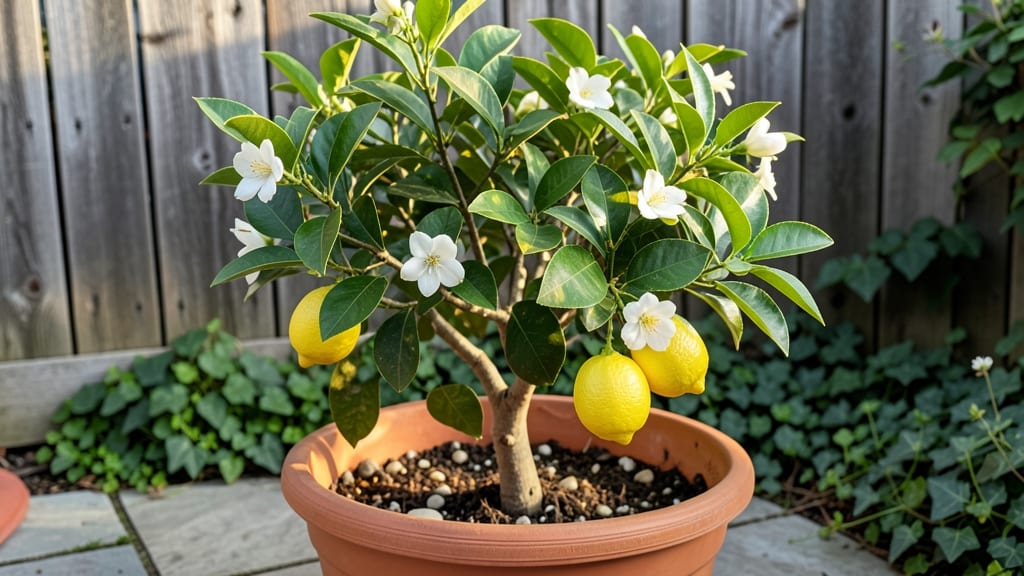
Your patio lemon tree care isn’t just about tending a plant—it’s a sunlit promise of homegrown lemons year after year. 🌿 The key to keeping it lush and fruitful lies in year-round pruning, which I’ve perfected after watching my Meyer lemon go from bare branches to heavy with fruit.
Most people only prune in winter, but citrus trees respond best when you shape them gradually, encouraging both growth and blooms.
Start with the basics: a 15-20 gallon container, well-draining soil, and 6-8 hours of sunlight daily. Pruning isn’t just about cutting back—it’s about opening the tree’s center to air and light, which prevents disease and encourages new growth where fruit forms.
I prune lightly every 3 months, removing only dead or crossing branches, and avoid heavy cuts that stress the tree.
By summer, you’ll see the payoff: glossy new leaves and tiny white flowers that’ll turn into lemons by fall. The tree stays compact enough for a patio but produces 50-100 lemons per season with proper care.
Even better, the pruning process gets easier each year as you learn the tree’s rhythm.
For winter, cut back only the very tips of branches to shape the tree, and reduce watering slightly. This keeps it healthy through cooler months while setting it up for another flush of growth in spring.
The secret? Consistency—prune a little often, and your lemon tree will reward you with fruit every season.
📚 In This Guide
- What you need
- Instructions
- Tips and common mistakes
- Wrapping up and next steps
What you need
- ● Lemon tree (Meyer or Eureka varieties recommended) – Choose a dwarf or semi-dwarf variety (3–6 feet tall) for patio spaces.
- ● Well-draining potting mix – A blend of 60% potting soil, 20% perlite or pumice, and 20% compost (avoid garden soil—it compacts!).
- ● Container – A 15–25 gallon pot with drainage holes (terracotta or fabric pots work best).
- ● Pruning shears – Sharp, bypass-style shears (avoid anvil shears—they crush stems).
- ● Gloves – Heavy-duty gardening gloves to protect against thorns and sap.
- ○ Pruning sealant (optional but helpful) – A tree wound sealant to prevent disease on large cuts.
- ● Fertilizer – A balanced citrus fertilizer (6-6-6 or 8-3-9) or slow-release granules.
- ● Watering can or hose with a gentle spray nozzle – Lemon trees hate soggy roots!
- ● A sunny spot – At least 6–8 hours of direct sunlight daily (south- or west-facing is ideal).
- ● Temperature control – Protect from frost (below 28°F/-2°C) with a frost cloth or move indoors temporarily.
- ● Patience – Lemon trees take 2–5 years to bear fruit, but proper pruning speeds up the process!
- ● Citrus food supplement – Liquid iron or magnesium for yellowing leaves.
- ● Support stake or trellis – For heavy fruit-bearing branches.
- ● Humidity tray or pebble tray – If your climate is dry.
- ● Lemon tree-specific pruning guide – A printed diagram or app for reference.
Step-by-Step instructions for patio lemon tree care
Here's how I keep my patio lemon tree thriving year-round with simple, seasonal pruning.
✂️ Step 1: Prune for Airflow and Light in Late Winter
Start your pruning in late winter (February-March) when the tree is still dormant. This is the ideal time because the tree isn't actively growing, so it won't be stressed by trimming. Look for branches that are crossing, rubbing against each other, or growing inward—they'll compete for sunlight and nutrients. Use clean, sharp pruning shears to make cuts just above a leaf node or outward-facing bud. This ensures new growth will sprout in the right direction.
Remove any dead, diseased, or damaged branches first—they won't produce fruit and can spread problems to healthy wood. You'll know a branch is dead if it's brittle, doesn't bend, or has no green underneath when you scrape it. Cut back to a healthy outward-facing bud or the main trunk. Aim to open up the center of the tree so light and air can circulate freely. This prevents fungal diseases and encourages more fruit production on the outer branches.
☀️ Step 2: Encourage Fruit Production in Early Spring
Once the tree starts showing signs of new growth in early spring (around March-April), focus on shaping the tree to maximize sunlight exposure. Lemon trees need 6-8 hours of full sun daily to produce fruit, so prune to create an open, rounded canopy. Remove any suckers—those are the small shoots growing from the base of the tree or along the trunk. They drain energy from the main tree and don't contribute to fruit production.
If your tree has branches growing straight up, prune them back by about one-third to encourage a more horizontal growth habit. Horizontal branches produce more fruit because they receive more sunlight. You'll see new growth emerging from the sides of the cuts within a few weeks. Avoid heavy pruning now—just light shaping to guide the tree's energy toward fruit production rather than excessive leaf growth.
🌿 Step 3: Light Maintenance Pruning in Summer
During summer (June-August), your focus shifts to light maintenance. Remove any branches that are shading the center of the tree too much—this keeps the interior from staying too dark and humid. You'll also want to trim back any overly vigorous growth that's making the tree look leggy. Look for branches that are growing too long or too thin; these often produce smaller, less flavorful fruit.
If you notice any branches with yellowing leaves or signs of pest damage, prune those out immediately to prevent the problem from spreading. Use rubbing alcohol to wipe down your pruning shears between cuts to avoid transferring pests or diseases. Summer is also a good time to check for water sprouts—these are fast-growing, weak shoots that appear after heavy pruning or fertilization. Remove them promptly so they don't drain the tree's resources.
⏰ Step 4: Prepare for Winter Dormancy in Fall
In fall (October-November), your final pruning task is to prepare the tree for winter dormancy. Remove any dead or dying branches that may have appeared over the summer. Also, trim back any new growth that hasn't hardened off—these tender shoots won't survive frost. You'll want to shape the tree lightly to maintain its open form, but avoid heavy pruning now. The tree needs to enter winter with enough energy reserves to produce flowers and fruit in spring.
Look for any branches that are growing too close together and prune the weaker of the two. This opens up the canopy and reduces competition for sunlight. If you live in a cold climate, consider moving your potted lemon tree to a sheltered location or wrapping the pot in burlap for extra protection. Even with pruning, winter care is crucial for a healthy tree. You'll know your tree is ready for winter when it has a balanced, open shape with no dead wood or overcrowded branches.
Tips & tricks for perfect patio lemon tree pruning
Keeping your lemon tree productive and healthy isn't complicated—just a few seasonal adjustments make all the difference.
Seasonal Timing Matters: The late winter (February-March) pruning in Step 1 is crucial because the tree's dormant state means it won't be stressed by cuts. I've learned this the hard way—trying to prune in spring when growth is active can shock the tree and reduce fruit production. Always check for buds starting to swell before you begin; that's your cue to wait. The same goes for fall pruning in Step 4—avoid heavy cuts when the tree needs to store energy for winter.
Pruning Technique Tip: When making cuts in Step 1 or Step 2, always cut just above an outward-facing bud or leaf node. This simple technique ensures new growth will develop away from the center, creating that open canopy we want. I use a small white marker to circle the bud before cutting—it helps me visualize where the new growth will emerge. For thicker branches, make the cut at a slight angle to prevent water from pooling on the cut surface.
Sunlight Strategy: The 6-8 hours of full sun mentioned in Step 2 is non-negotiable for fruit production. If your patio doesn't get that much direct sunlight, consider using a sun reflector or moving your tree to a sunnier spot during the peak afternoon hours. I've found that even partial shade can reduce lemon production by up to 40%. Watch for leaves that turn yellow between the veins—this is a classic sign your tree isn't getting enough light.
Pest Prevention: The summer maintenance in Step 3 includes wiping down your pruning shears with rubbing alcohol, but I take it one step further. I keep a small bottle of neem oil in my gardening kit for spot treatments on any branches showing early signs of pest damage. Apply it in the evening when bees aren't active, and you'll see fewer problems with scale insects and spider mites. This proactive approach saves me from dealing with full-blown infestations later.
Pro Tips for Patio Lemon Tree Care
- Keeping your lemon tree productive and healthy isn't complicated—just a few seasonal adjustments make all the difference.
- Seasonal Timing Matters: The late winter (February-March) pruning in Step 1 is crucial because the tree's dormant state means it won't be stressed by cuts.
- Pruning Technique Tip: When making cuts in Step 1 or Step 2, always cut just above an outward-facing bud or leaf node.
Frequently asked questions
Got questions about keeping your patio lemon tree thriving?
Here are some of the most common concerns—plus expert answers to help you grow a fruitful, beautiful tree all year round.
When is the best time to prune my patio lemon tree for fruit production?
Prune your lemon tree in late winter or early spring (just before new growth starts) to encourage fruiting. Avoid heavy pruning in summer—it can stress the tree and reduce fruit set. Light shaping trims in fall (after harvest) also work to maintain airflow and sunlight exposure.
How do I protect my lemon tree from frost if I live in a cold climate?
Move potted lemon trees indoors or to a sheltered spot before temperatures drop below 30°F (-1°C). Use frost cloths or blankets to wrap the tree, and avoid pruning in late fall—it removes protective foliage. For outdoor trees, plant in microclimates (like near walls) where heat lingers longer.
Why isn’t my lemon tree producing fruit, even after pruning?
Lemon trees need full sun (6+ hours/day), well-draining soil, and regular watering (but not soggy roots). Lack of fruit can also mean young age (wait 2–3 years), lack of pollination (hand-pollinate with a brush), or nutrient deficiencies (feed with citrus-specific fertilizer in spring/fall).
Can I prune my lemon tree too much? What are the signs?
Yes! Over-pruning leads to leaf drop, stunted growth, or no fruit. Signs include bare branches, yellowing leaves, or weak new shoots. Aim to remove no more than 25% of the canopy per year, focusing on dead wood, crossing branches, and overcrowded growth.
What’s the difference between pruning for fruit vs. pruning for shape?
| Fruit Pruning | Shape Pruning |
|---|---|
| Remove suckers (shoots from the base) and overly dense growth to improve airflow. | Trim long, leggy branches to maintain a compact form. |
| Cut back last year’s fruit clusters to encourage new blooms. | Shape the tree evenly to avoid lopsided growth. |
| Best done in late winter for spring blooms. | Can be done year-round (lightly) for aesthetics. |
Still stumped? Snap a photo of your tree’s pruning needs and ask in the comments—we’re happy to help!
Wrapping up and next steps
Caring for your patio lemon tree is all about patience, consistency, and a little green thumb love! 🌿 With the right pruning techniques—whether you’re shaping for aesthetics, boosting fruit production, or maintaining health—you’ll enjoy a thriving tree year-round.
Remember, healthy roots, balanced branches, and seasonal trims are the secrets to lush foliage and sweet lemons.
Now that you’re armed with the know-how, roll up your sleeves and give your tree the attention it deserves. Start with a quick assessment of its current state, then grab your tools and follow the steps.
Before you know it, you’ll be harvesting homegrown lemons and basking in the pride of a well-tended patio treasure! 🍋✨