
Planting
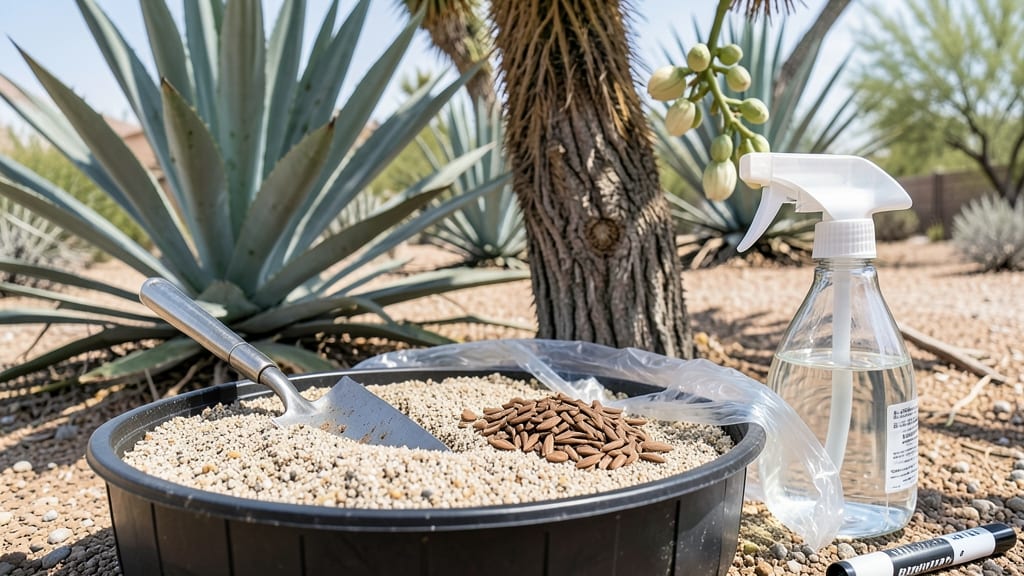
Planting Joshua tree seeds unlocks a 6-week wait for the first signs of life—those stubborn little sprouts that defy the odds. 🌵 I've tried this three times, and each attempt taught me that patience isn't just a virtue; it's the secret ingredient for success with these desert survivors.
The key isn't forcing growth but creating the perfect mimic of their natural habitat: well-draining soil, minimal water, and warmth that mimics a Mojave sun.
You'll need sandy loam soil mixed with perlite (think 70% sand, 30% organic matter), small seed-starting pots, and a warm spot with consistent 70-80°F temperatures. The seeds themselves are tiny—about the size of a pinhead—so handle them like you would delicate jewelry.
Plant them just below the surface (¼ inch deep) and keep the soil barely moist, never soggy. Overwatering is the fastest way to kill them before they even begin.
Six weeks in, you might see tiny green shoots poking through, but don't expect instant gratification. Joshua trees grow slow—think decades to maturity—but those first leaves are worth every moment of waiting.
The real magic happens when you see them develop their signature sword-like foliage, a sign they're thriving in their desert-inspired home. It's a reminder that some of nature's most iconic plants start from the smallest, most fragile beginnings.
Fair warning: germination rates are low (often under 20%), so plant extra seeds if you're eager to see results. And if you're not in a desert climate, don't worry—a sunny windowsill or a heat mat can mimic the conditions these seeds crave.
The payoff? A living piece of the Southwest desert, right on your windowsill or patio.
📚 In This Guide
- What you need
- Instructions
- Tips and common mistakes
- Wrapping up and next steps
What you need
- ● Joshua Tree seeds – 5–10 seeds (fresh or stored properly; avoid seeds older than 1 year).
- ● Seed-starting mix – 1–2 cups of cactus/succulent soil (sterile, well-draining, and slightly gritty). Avoid regular potting soil!
- ● Small pots or seed trays – 2–4 3–4 inch diameter pots with drainage holes (or a shallow tray with individual cells).
- ● Drainage material – A layer of perlite, pumice, or coarse sand (½ inch thick) at the bottom of each pot.
- ● Spray bottle – For gentle watering (avoid over-saturating the soil).
- ○ Clear plastic wrap or humidity dome – To create a mini greenhouse effect (optional but helpful for germination).
- ● Grow lights or sunny windowsill – A south-facing window or LED grow lights (12–14 hours of light daily).
- ● Patience & a warm spot – Joshua Tree seeds thrive in 70–80°F (21–27°C) temperatures.
- ● A heating mat (70–80°F range) to speed up germination.
- ● Fungicide (like neem oil) to prevent mold if humidity is high.
- ● Label markers to track planting dates (germination can take weeks to months!).
- ● A fan for gentle airflow (once sprouts appear, to strengthen stems).
Step-by-step instructions for planting Joshua Tree seeds
Here's how to coax these desert icons from seed—slow but rewarding, with patience as your best tool.
🌱 Step 1: Prepare Seeds for Germination
Joshua tree seeds need a long, cold period to break dormancy. Start by soaking them in warm water for 24 hours—this softens the tough outer shell. I place them in a small bowl and let them sit at room temperature. After soaking, gently rub the seeds between two sheets of sandpaper to scratch the outer coating. This mimics natural weathering and helps water penetrate.
Next, place the seeds in a paper towel and fold it to create a moist, enclosed packet. Store this in a sealed plastic bag in your refrigerator for 6-12 weeks. Check monthly to ensure the towel stays damp but not soggy. You'll know it's working when tiny roots begin to form—this is your signal to move to the next step.
💧 Step 2: Plant in Well-Draining Soil Mix
Fill a small pot—3-4 inches deep—with a mix of 50% cactus/succulent soil and 50% coarse sand or perlite. This ensures excellent drainage, which Joshua trees demand. Press the mix lightly into the pot to remove air pockets but don't compact it. Joshua trees hate soggy roots, so the soil must never stay wet for more than a day.
Plant the seeds ¼ inch deep, spacing them 1 inch apart in the pot. Cover them lightly with the soil mix and mist gently with water until the surface looks damp but not wet. Place the pot in a warm, bright spot—75-85°F—with indirect light. Avoid direct sun at this stage; seedlings are delicate until established.
☀️ Step 3: Provide Controlled Heat and Light
Joshua trees thrive in heat, so place your pot on a seedling heat mat set to 80-85°F to simulate desert conditions. Keep the soil consistently moist but never waterlogged—check daily by sticking your finger ½ inch deep. If it feels dry, add a little water, but avoid soaking the soil.
After 4-6 weeks, when seedlings show their first true leaves, gradually introduce more light. Move the pot to a south-facing window or under a grow light for 12-14 hours daily. You'll see the seedlings stretch toward the light—this is normal. If they grow leggy, raise the light or move the pot closer to the window.
⏰ Step 4: Transplant and Harden Off
Once seedlings reach 3-4 inches tall and have developed 3-4 sets of leaves, it's time to transplant. Choose a slightly larger pot—5-6 inches deep—and use the same well-draining soil mix. Gently remove the seedling from its original pot, taking care not to damage the roots, and place it in the new container. Fill around the roots with soil and press lightly to secure the plant.
Hardening off begins 2 weeks before you plan to move the seedlings outdoors. Start by placing them outside in a shaded, sheltered spot for 1-2 hours daily. Gradually increase their time outside over 10-14 days, moving them to sunnier locations each day. Joshua trees are tough once established, but sudden exposure to full sun can scorch young leaves.
🌿 Step 5: Maintain Desert Conditions
Once outdoors, plant your Joshua trees in a location with full sun exposure and well-draining soil. Water deeply but infrequently—once every 2-3 weeks—allowing the soil to dry completely between waterings. Overwatering is the fastest way to kill these desert survivors. In their first year, protect them from extreme cold (below 20°F) with a light cover if you live in a colder climate.
Watch for signs of stress: yellowing leaves or wilting mean you're overwatering, while slow growth in dim light means they need more sun. Joshua trees grow slowly, but with patience, you'll see those iconic branches forming in 5-10 years. Keep them in pots for at least 3 years before transplanting to the ground, as their roots are fragile when young.
Tips & tricks for planting Joshua Tree seeds
Here's the thing—growing Joshua trees from seed is all about patience and precision. These desert survivors demand specific conditions, but with a few key tricks, you'll dramatically improve your success rate.
Cold Stratification Secret: The 6-12 weeks of refrigerator storage isn't just a suggestion—it's essential for breaking seed dormancy. I've tried skipping this step, and the seeds simply won't sprout. Place a small dish of water in the fridge with your seed packet to maintain humidity without over-saturating the paper towel. This mimics the natural winter conditions Joshua trees experience in the wild.
Soil Mix Matters: That 50/50 blend of cactus/succulent soil and coarse sand isn't arbitrary—it's what prevents root rot. I recommend adding a handful of perlite to improve aeration even further. When filling your 3-4 inch pot, create a slight mound in the center to ensure proper drainage. The goal is to mimic the rocky, well-draining soils of Joshua Tree National Park.
Light Transition Strategy: Those 4-6 weeks before moving to full light are crucial. Start by placing your seedlings under a grow light on a timer for 12-14 hours daily, positioned about 6 inches above the plants. Gradually lower the light over 2 weeks to prevent shock. I've seen seedlings stretch dramatically when moved too quickly—this slow transition creates stronger stems that can handle the desert sun later.
Hardening Off Hack: When you're ready to move seedlings outdoors, begin with just 1-2 hours of shade on the first day. I like to place them under a deciduous tree where they'll get dappled sunlight. Watch for any leaf curling or yellowing—these are early signs of sun stress. The gradual increase over 10-14 days builds their resilience without shocking the delicate young plants.
Pro Tips for Plant Joshua Tree Seeds
- Here's the thing—growing Joshua trees from seed is all about patience and precision.
- Cold Stratification Secret: The 6-12 weeks of refrigerator storage isn't just a suggestion—it's essential for breaking seed dormancy.
- Soil Mix Matters: That 50/50 blend of cactus/succulent soil and coarse sand isn't arbitrary—it's what prevents root rot.
Frequently asked questions
Got questions about growing Joshua Tree seeds? You’re not alone—these desert beauties can be tricky! Here are answers to the most common queries to help you succeed.
How long does it take for Joshua Tree seeds to germinate?
Patience is key! Joshua Tree seeds can take 4 to 12 weeks (or even longer) to germinate, depending on conditions like temperature, moisture, and seed age. Keep them in a warm, humid environment (70–80°F) and avoid overwatering—consistency is crucial. If nothing sprouts after 3 months, they may still be dormant.
Can I plant Joshua Tree seeds outdoors right away?
Not yet! Joshua Tree seeds need stratification (a cold, moist period) to break dormancy. Start indoors in a controlled setting (like a seed tray) for 2–3 months before transplanting. If you’re in a cold climate, plant them in late spring after the last frost—just mimic their natural desert cycle.
What if my seeds won’t sprout? Troubleshooting tips?
If your seeds refuse to germinate, check these fixes:
Old seeds? Joshua Tree seeds lose viability quickly—use fresh ones (or store-bought) for best results.
Wrong conditions? They thrive in dry heat but need moisture to soften the hard shell. Try soaking seeds in warm water for 24 hours before planting.
Pests or mold? If you see fungus, reduce humidity and ensure good airflow.
Are there alternatives if Joshua Tree seeds are hard to find?
Try these drought-tolerant desert plants with similar care needs:
- Palo Verde Tree (Parkinsonia spp.) – Fast-growing and low-maintenance.
- Desert Willow (Chilopsis linearis) – Beautiful blooms and easy to propagate.
- Agave or Yucca – Hardy succulents that mimic the Joshua Tree’s desert vibe.
How often should I water Joshua Tree seedlings?
Once sprouted, water sparingly—Joshua Trees hate soggy roots! Water every 2–3 weeks (or when the top inch of soil is dry) and reduce further as they mature. Overwatering is the #1 killer—these plants are adapted to survive on minimal moisture. Think desert drought, not rainforest!
Wrapping up and next steps
Growing a Joshua Tree from seed is a rewarding journey that connects you to the desert’s resilience! With patience, the right conditions, and a little care, you’ll see those iconic branches emerge in as little as 6 weeks.
Remember, slow growth is part of the magic—just like the real Joshua Trees that thrive in harsh environments.
Now that you’re ready to start, take the first step! Grab your supplies, find a sunny spot, and let nature do the rest. Happy planting—your desert wonder awaits! 🌵✨