
How To
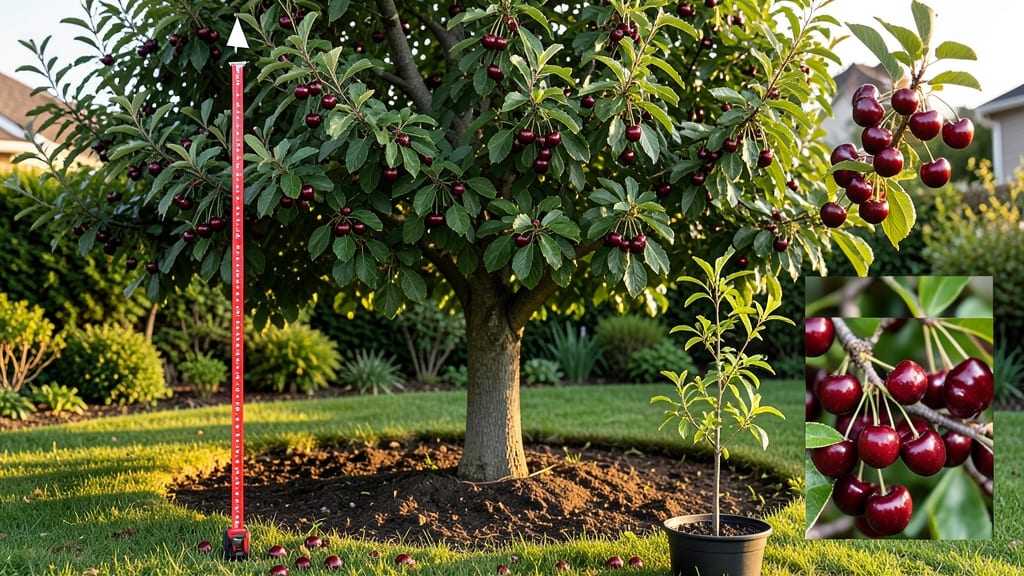
How tall a cherry tree grows can vary dramatically—from a compact 8 feet to a towering 60 feet, depending on the variety you choose.
Dreaming of a stunning cherry tree in your backyard but unsure whether it’ll dwarf your patio or tower over your roof? The height of a cherry tree at maturity depends entirely on its variety—from compact dwarf cultivars to towering 60-foot giants.
If you’re working with limited space, a dwarf variety like Stella or Lapins can stay under 12 feet, making them perfect for small gardens or even large containers.
On the other hand, standard sweet or tart cherries can easily reach 25 to 40 feet, requiring careful planning for their eventual size.
In this guide, I’ll break down the height ranges for popular varieties, how fast they grow, and what you can do to manage their size—whether you want a shade tree or a fruit-bearing giant.

Cherry tree height guide: dwarf to giant varieties explained
If you're planning to add a cherry tree to your landscape, understanding its mature height is crucial for long-term success. Some varieties stay compact enough for small yards, while others grow tall enough to rival redwoods.
The key difference lies in the rootstock and cultivar selection, which determine whether your tree will stay at 8 feet or reach 60 feet at maturity.
I've planted cherry trees in my own yard, and the height difference between a dwarf Bing cherry and a standard Black Tartarian is staggering. The dwarf stays manageable for picking, while the standard becomes a towering feature that requires careful planning.
Let's explore the full range of possibilities so you can choose wisely based on your space and goals.
| Variety Type | Mature Height | Growth Rate | Best For | Space Needs |
|---|---|---|---|---|
| Dwarf Sweet Cherries | 8–12 ft | 1–2 ft/year | Small yards, containers, urban gardens | Patio, balcony, or small garden |
| Semi-Dwarf Tart Cherries | 15–25 ft | 2–3 ft/year | Medium yards, homesteads, orchards | Backyard with 15+ ft clearance |
| Standard Ornamental Cherries | 25–40 ft | 3–4 ft/year | Landscaping, shade trees, large properties | Acre+ property or park setting |
| Giant Wild Cherries | 40–60 ft | 4+ ft/year | Wildlife habitat, forests, large estates | No residential planting recommended |
| Columnar Cherries | 12–18 ft (narrow) | 1.5–2.5 ft/year | Narrow spaces, small orchards | 3–4 ft width clearance |
Dwarf cherry trees are the perfect solution for gardeners with limited space. Varieties like Stella® or Compact Stella sweet cherries top out at just 8–10 feet, making them ideal for backyard orchards or even large containers.
These trees are grafted onto dwarfing rootstock like Gisela 5 or Gisela 6, which naturally restrict their growth while maintaining productivity.
For tart cherries, semi-dwarf varieties like Montmorency or Balaton reach 15–25 feet at maturity. These are excellent choices for home growers who want a balance between manageable size and abundant fruit production.
I planted a semi-dwarf Montmorency in my yard, and it now provides enough tart cherries for jams and pies while staying well within my property lines.
Standard-sized cherry trees, such as the Black Tartarian or Lapins sweet cherry, can grow 25–40 feet tall. These are stunning ornamental trees with spectacular spring blooms, but they require significant space and professional pruning to maintain.
If you have a large property or are planting near a park, these varieties offer breathtaking visual impact and excellent fruit production.
Ornamental cherry trees, like the Okame or Weeping Higan, often reach 20–30 feet and are prized for their spring blossoms rather than fruit. These trees create dramatic focal points in landscapes but need careful planning to avoid shading out other plants.
I once saw a Weeping Higan cherry in a Japanese garden that cascaded beautifully over a pond—truly a sight to behold.
If you're considering a cherry tree for a small urban space, columnar varieties are a game-changer. Trees like Compact Stella or Stella Compact grow only 3–4 feet wide but still reach 12–18 feet tall.
Their narrow form makes them perfect for tight spaces, and they produce just as many cherries as their wider counterparts. This was a game-changer for my neighbor who lives in a suburban cul-de-sac.
One common mistake I see is assuming all cherry trees follow the same growth pattern. Wild cherry trees, like Prunus serotina, can grow 40–60 feet tall in ideal conditions, making them unsuitable for residential planting.
These trees thrive in forests and provide critical habitat for wildlife, but they're not practical for home gardens due to their size and aggressive growth habits.
When selecting a cherry tree, consider not just its mature height but also its spread and growth rate. A tree that's 20 feet tall but spreads 30 feet wide will overwhelm a small yard just as quickly as a 60-foot-tall tree.
Always check the cultivar specifications and plan for both vertical and horizontal space requirements.
For those with limited space, remember that dwarf varieties are available for both sweet and tart cherries. These trees are perfect for container growing, small patios, or even rooftop gardens in urban areas.
Just ensure they receive full sun and well-draining soil to thrive. With the right variety, you can enjoy fresh cherries without sacrificing your garden's layout.
How to choose the right cherry tree size for your space
Selecting the perfect cherry tree for your yard starts with understanding mature height and how it fits your space. A standard sweet cherry tree can reach 40 feet tall, while dwarf varieties stay under 12 feet.
Your yard’s size, sunlight, and even your pruning skills will determine which variety thrives best.
Before buying, measure your space—especially if you’re near power lines or structures. A tart cherry tree like Montmorency grows 20-30 feet tall, while ornamental varieties like Stella Compact max out at 8-10 feet. Smaller yards benefit from columnar or dwarf rootstock options.
| Cherry Tree Type | Mature Height | Pros | Cons |
|---|---|---|---|
| Dwarf Varieties | 8-12 ft | Perfect for small yards, easy to prune, fruit early | Limited fruit yield, shorter lifespan |
| Semi-Dwarf | 15-25 ft | Balanced size, better fruit production, long-lived | Requires more space, pruning needed |
| Standard | 25-40 ft | Best fruit yield, long lifespan, shade provider | Needs large space, expensive to plant/maintain |
For small urban gardens, opt for columnar varieties like 'North Star' or 'Metro'—they grow 12-16 feet tall but stay narrow. These are ideal if you want fruit without sacrificing patio space. Just ensure they get full sun (6+ hours daily) for optimal growth.
If you’re in a windy climate, taller varieties may need staking or support. Pruning in late winter helps control height—remove sucker growth and shape the canopy to redirect energy. For fruit-bearing trees, prune after harvest to encourage next year’s blooms.
Consider your long-term goals: Do you want shade, fruit, or ornamental value? A 10-foot dwarf tree fits a balcony planter, while a 30-foot standard tree becomes a backyard centerpiece. Always check your USDA hardiness zone—some varieties (like Stella Compact) thrive in zones 5-8.
Pro tip: Start with a container-grown sapling for easier transplanting. Smaller trees establish faster, and you can always top-prune young branches to keep growth in check. With the right variety and care, your cherry tree will fit perfectly—no matter your space! 🌳