
Plants
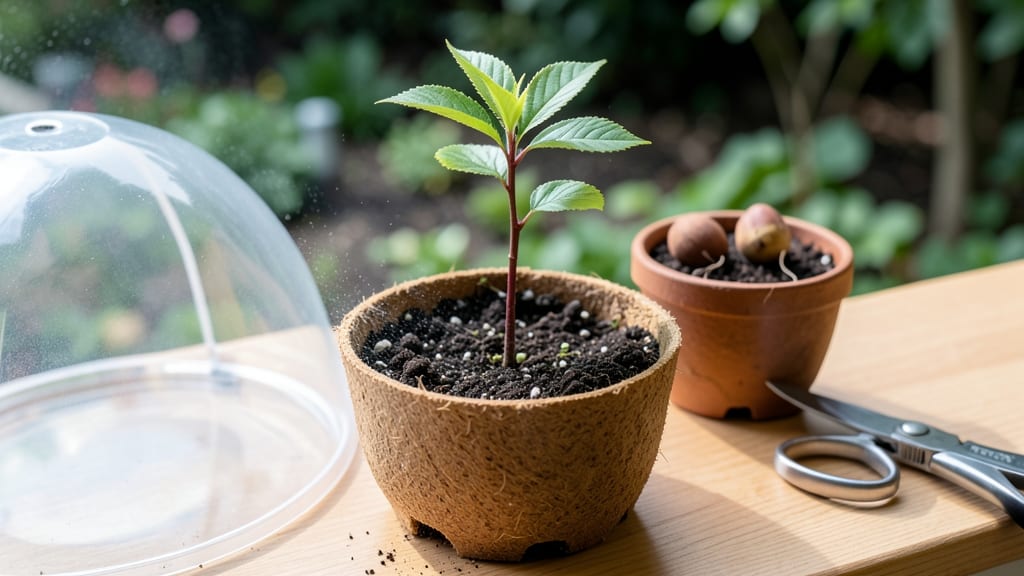
You can plant a cherry tree from a cherry pit, but the process requires patience and specific conditions to succeed. Most attempts fail due to strict dormancy needs and slow germination rates, but with proper cold stratification and spring planting, you can improve your chances significantly.
Growing a cherry tree from a pit is a rewarding but finicky project that mimics nature's own timing. 🌱 The key lies in breaking the seed's natural dormancy through cold stratification—simulating winter's chill to trigger germination.
Unlike store-bought seedlings, pit-grown trees may take 2-3 years to bear fruit (if they survive at all), but the satisfaction of nurturing a tree from scratch makes it worthwhile for dedicated gardeners.
I've found that sour cherry pits germinate slightly more reliably than sweet varieties, thanks to their built-in double dormancy mechanism.
For best results, focus on these three critical factors: proper pit preparation, consistent moisture during germination, and choosing the right planting season. Spring planting gives seedlings a head start on establishing roots before summer heat arrives.
Remember, even with perfect technique, success rates hover around 5-10%—so consider this more of a long-term experiment than a guaranteed harvest.
💡 In This Article
- Cherry Pit Germination Science: Why Most Fail
- Step-by-Step Cherry Pit Planting Guide for Beginners
Cherry pit germination science: why most fail
The biological hurdle begins with cherry pits' natural dormancy—a survival mechanism that prevents germination during unfavorable conditions. Sweet cherries have double dormancy: first, the seed requires a period of cold to break its physical dormancy, then a warm spell to trigger chemical changes.
This two-step process explains why even well-intentioned gardeners often see nothing after months of waiting. The pit's hard outer shell contains cyanogenic glycosides, compounds that need to break down before the embryo can grow.
Temperature plays a critical role in this process. Ideal stratification occurs at 34-40°F—mimicking winter's chill. Below 32°F, the seed risks freezing damage, while above 45°F, dormancy remains unbroken.
Moisture levels must stay between 30-50% humidity during stratification; too dry and the seed won't hydrate properly, too wet and it risks rotting. Sour cherry pits often succeed slightly better because their natural habitat includes more extreme temperature fluctuations, which has selected for more resilient seeds.
What most people miss is the light requirement after stratification. Once the pit sprouts, it needs 12-16 hours of daylight daily to continue growing. Without proper light, seedlings become leggy and weak, often failing to develop strong root systems.
This explains why indoor germination attempts often underperform—most household windows don't provide sufficient light intensity for young cherry seedlings.
The germination timeline adds another layer of challenge. Even under perfect conditions, cherry pits can take 4-8 weeks to sprout, with some requiring up to 12 weeks.
During this time, the seedling's energy comes solely from the stored nutrients in the pit—once those are exhausted, the young plant must establish roots quickly or perish. This is why consistent moisture becomes critical during the first 60 days after planting.
Consider this comparison: A store-bought cherry tree seedling has already undergone these dormancy-breaking processes and is genetically selected for vigor. Your homegrown specimen starts from a random pit that may carry recessive traits for poor germination.
The odds stack against you from the beginning—but that's exactly why succeeding feels so rewarding when it happens.
Here's what's actually happening at the cellular level: The cold stratification period activates enzymes that break down the cyanogenic glycosides and other inhibitory compounds. This creates a biochemical environment where the embryo can begin cell division.
Without this precise sequence of temperature and moisture exposure, the seed remains in a state of suspended animation—biologically alive but metabolically inactive.