
Container Gardens
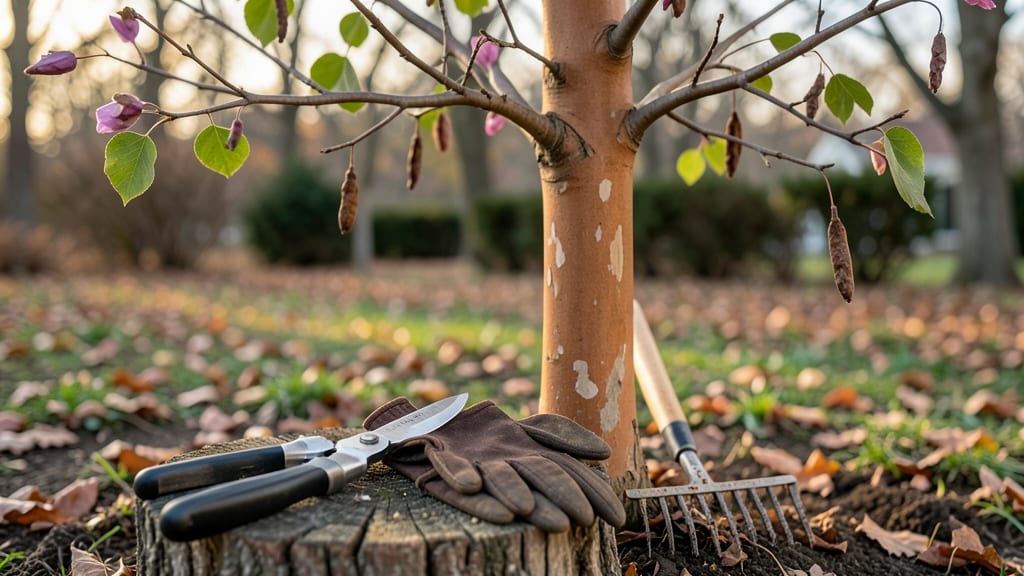
You can't safely prune a redbud tree in the fall because it triggers tender new growth that won't harden off before winter, making the tree highly susceptible to frost damage. The ideal time is late winter or early spring, just as buds begin to swell.
Redbud trees are particularly sensitive to late-season pruning because their growth cycle doesn't align with fall's cooling trends. 🌳 When you cut branches in autumn, the tree responds by sending out fresh shoots that lack the time to develop cold-resistant tissues.
This leaves them vulnerable to freezing temperatures, which can blacken or kill new growth entirely. I've seen this happen firsthand with clients who pruned too late—what looked like a routine trim turned into a winter recovery battle.
For best results, wait until the tree's dormant season is nearly over. Late winter or early spring pruning (just before buds swell) gives the tree time to heal before summer heat arrives.
This timing also removes winter-damaged branches while the tree is still inactive, reducing stress. Always use sharp tools and make clean cuts to minimize infection risks.
💡 In This Article
- Why Fall Pruning Damages Redbud Trees
- Best Redbud Tree Pruning Schedule for Healthy Growth
Why fall pruning damages redbud trees
Redbud trees (Cercis canadensis) enter dormancy later than many deciduous species, typically between late fall and early winter. When you prune in autumn, you trigger the tree's natural response to produce new growth—a process called epinasty—as the plant perceives the cut as a signal to regenerate.
This new growth lacks the time to develop lignification, a hardening process where cell walls thicken to resist cold. Without this protection, tender shoots can freeze solid in a single hard frost, often blackening or dying back entirely. 🌡️
The problem worsens because redbuds are shallow-rooted trees with a growth habit that prioritizes early spring blooms. Their buds swell as early as February in many climates, meaning any fall-stimulated growth has just 3-4 months to mature before winter.
Compare this to oak trees, which can produce late-season growth that hardens off by late fall—redbuds simply don't have that luxury. The tree's energy is also diverted from root development and storage carbohydrate production, weakening its overall resilience.
What makes this particularly dangerous is how frost interacts with new growth. When temperatures drop below 28°F, the water inside these tender shoots expands and ruptures cell walls—a process called freeze-thaw damage.
You'll often see this as crispy, browned edges on leaves or stems that were once vibrant green just weeks earlier. In severe cases, the entire branch can die back to the ground, creating unsightly stubs that take years to recover. 🌳
Another critical factor is disease vulnerability. Fall-pruned redbuds with fresh cuts are more susceptible to fungal infections like canker diseases because their defense mechanisms are compromised. The open wounds provide entry points for pathogens that thrive in autumn's damp conditions.
Unlike spring pruning, where the tree can quickly seal cuts before pathogens become active, fall cuts remain exposed through winter's wet periods.
Consider this real-world example: A redbud tree pruned in October in Zone 6** (where winters average 15°F) will likely produce new growth by November. If a 20°F freeze hits in December, that growth has only 4 weeks of potential hardening time—far too short for survival.
The tree's energy that could have gone toward root expansion or next year's blooms is instead wasted on doomed shoots. This is why arborists universally recommend avoiding fall pruning for redbuds.