
Diseases
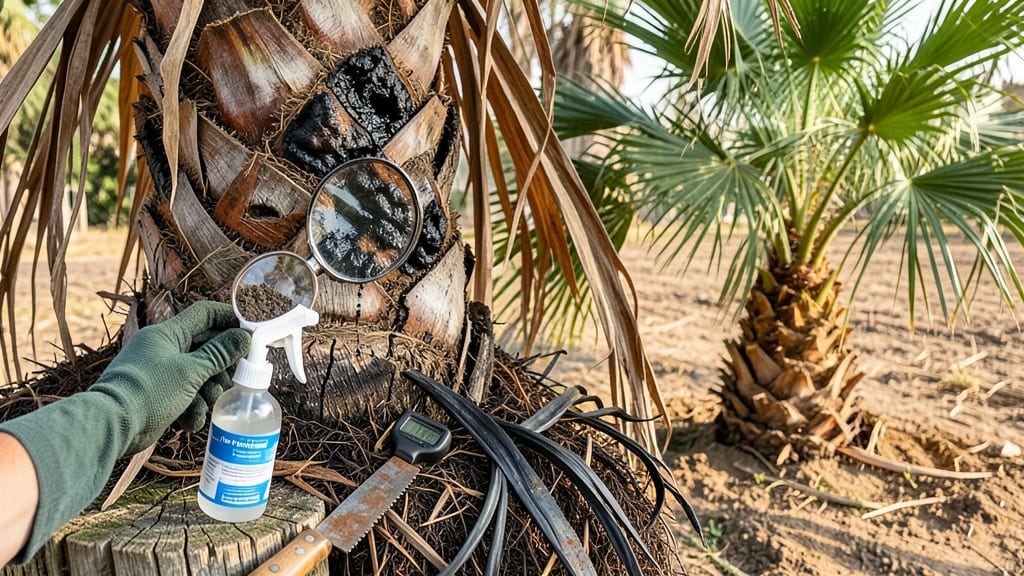
That black fungus creeping up your palm tree trunk isn’t just unsightly—it’s a silent threat that can weaken or even kill your tree if ignored. 🌿 I’ve seen it turn a healthy palm into a brittle, struggling mess within months, but early action can save it.
This guide covers how to spot it, what’s causing it, and the exact steps to stop it before it spreads to your entire yard.
The fungus thrives in damp, shaded conditions, often starting as tiny black specks that multiply into thick, velvety growth. Common culprits include sooty mold (from sap-sucking insects) or more aggressive pathogens like Phytophthora, which rot the trunk from the inside.
The key to treatment? First, identify whether it’s a surface issue or a deeper infection—because that determines whether you can fix it yourself or need a professional.
You’ll learn how to prune infected fronds safely, apply fungicides (organic options like copper soap or chemical solutions like propiconazole), and adjust care to prevent recurrence. With the right approach, your palm can recover its vibrant green fronds and sturdy trunk within a growing season.
The sooner you act, the better the outcome—so let’s get started on saving your tree.
Whether you’re dealing with a single palm or a whole grove, these steps work for most common varieties like date palms, canary palms, or Mexican fan palms.
Just remember: safety first—wear gloves and avoid disturbing the fungus unless you’re ready to treat it properly. Your palm’s future depends on acting now.
Underlying Causes Of Dark Growths
When you spot black fungus creeping up your palm tree trunk, it’s rarely a random act of nature—it’s usually a sign of environmental stress or biological invasion. Understanding the root causes helps you address the issue before it weakens or kills your tree.
Below are the most common triggers, explained in simple terms with actionable insights.
Palm trees thrive in well-draining soil, but when water pools around the trunk or stays trapped for long periods, it creates the perfect breeding ground for fungal spores. Here’s why it happens:
- Overwatering or heavy rainfall: Saturated soil cuts off oxygen to the roots, weakening the tree’s defenses. Fungi like Phytophthora (a water-loving pathogen) exploit this vulnerability, causing black, slimy growths.
- Compacted or clay-heavy soil: These soils repel water, preventing proper drainage. Roots suffocate, and the trunk becomes a fungal magnet.
- Irrigation issues: Drip lines too close to the trunk or overhead sprinklers that soak the base encourage fungal colonization.
Actionable fix: Improve drainage by amending soil with organic matter (like compost or perlite) and avoid watering the trunk directly. Elevate the base with mulch or gravel to promote airflow.
Not all black growths are the same—some are harmless stains, while others signal aggressive pathogens. Here’s how fungi take hold:
- Spores in the air or soil: Fungi like Botryosphaeria or Thielaviopsis (which causes black leaf scorch) latch onto wounds, weak spots, or even healthy tissue if conditions are right.
- Weakened tree defenses: Stress from pests (like palm weevils), nutrient deficiencies, or physical damage (e.g., lawnmower cuts) makes the trunk an easy target.
- High humidity & warmth: Tropical climates with 70–90% humidity accelerate spore germination. Dark, damp trunks are ideal incubators.
Actionable fix: Prune dead fronds to reduce humidity near the trunk, and apply copper fungicide (like Copper Sulfate) as a preventive barrier. For severe infections, consult an arborist for systemic fungicides.
When palms lack essential nutrients or endure extreme conditions, their immune systems falter—inviting fungal invaders. Key stressors include:
- Nitrogen or potassium deficiency: These nutrients strengthen cell walls. Without them, the trunk becomes soft and susceptible to fungal penetration.
- Salt buildup (in coastal areas): Salty soil or windborne salt can burn the trunk, creating entry points for pathogens like Cercospora.
- Temperature swings: Sudden cold snaps or heatwaves shock the tree, reducing its ability to resist infections.
Actionable fix: Conduct a soil test to check pH and nutrient levels. Amend soil with balanced palm fertilizer (high in nitrogen and potassium) and flush salt-affected soil with fresh water. Mulch with pine bark to regulate temperature.
Wounds from pests or human activity create perfect gateways for fungi. Common culprits:
- Palm weevil larvae: These borers tunnel into the trunk, leaving behind decaying tissue that black fungi colonize.
- Mechanical damage: Lawnmowers, string trimmers, or even bird perches can scratch the bark, exposing the tree to spores.
- Root damage from construction: Disturbed roots weaken the tree’s ability to transport nutrients, making it easier for fungi to take hold.
Actionable fix: Seal fresh wounds with pruning paint (like Tanglefoot Tree Wound Pruning Sealer) and monitor for pest activity. If weevils are suspected, treat with fipronil-based insecticides (follow label instructions).
Quick Fixes for Palm Tree Fungus
If you’ve spotted black fungus creeping up your palm tree trunk, don’t panic—there are practical ways to tackle it before it spreads. The key is identifying the root cause (whether it’s overwatering, poor drainage, or pest damage) and applying the right treatment.
Below, we break down cause-specific solutions with step-by-step instructions and prevention tips to keep your palm tree healthy and fungus-free.
Fix: Improve airflow and reduce moisture buildup.
- Prune Affected Areas 🔪 Use sterilized pruning shears to trim away blackened or discolored patches of bark. Cut just beyond the healthy tissue to prevent further spread.
- Adjust Watering Habits 💧
- Water deeply but less frequently—palm trees prefer dry soil between waterings.
- Check drainage—ensure pots or soil have holes to prevent waterlogging.
- Apply Fungicide 🛡️ Spray a copper-based fungicide (like Bordeaux mixture) or a neem oil solution (1 tbsp neem oil + 1 quart water) on the trunk and fronds. Reapply every 2–3 weeks until the fungus clears.
- Mulch Strategically 🌿 Use gravel or pine bark mulch (not organic mulch) around the base to improve airflow and reduce humidity near the trunk.
Fix: Strengthen the tree’s defenses and eliminate pests.
- Inspect for Pests 🔍 Look for signs of palm weevils, scale insects, or mealybugs, which weaken trees and invite fungal growth. If found, treat with insecticidal soap or horticultural oil.
- Fertilize Properly 🌱
- Use a balanced palm fertilizer (high in potassium) to boost immunity.
- Avoid over-fertilizing, which can burn roots and stress the tree.
- Seal Wounds 🛠️ If pests created entry points (e.g., holes in the trunk), apply pruning sealant to prevent fungal invasion.
- Boost Air Circulation 🌬️ Thin out dense fronds or nearby plants to improve airflow around the trunk.
Fix: Adjust care based on climate and seasonal changes.
- Shade Management 🌳 If your palm is in direct, harsh sunlight, provide afternoon shade to reduce stress. Use lightweight shade cloth if needed.
- Winter Protection ❄️ In cold climates, wrap the trunk with burlap or frost cloth during frost periods to prevent fungal outbreaks from temperature shock.
- Soil pH Check 📊 Test soil pH—palms prefer slightly acidic to neutral (6.0–7.0). Amend with sulfur (to lower pH) or lime (to raise pH) if needed.
- Monitor regularly—check the trunk and fronds every 2 weeks for early signs of black fungus.
- Clean tools—sterilize pruners with rubbing alcohol between cuts to avoid spreading spores.
- Avoid overhead watering—water at the base to keep fronds dry.
- Plant in well-draining soil—mix sand or perlite into heavy clay soil if needed.
Pro Tip: 💡 If the fungus persists after 4–6 weeks of treatment, consult a local arborist—some cases may require systemic fungicides or deeper soil amendments.
By addressing the root cause and following these steps, you’ll give your palm tree the best chance to recover and thrive! 🌴💪
Frequently asked questions
Is black fungus on my palm tree always dangerous?
Not all black growths are harmful. Sooty mold (from sap-sucking insects) appears black but is harmless. However, black, velvety patches or slimy growths indicate serious pathogens like Phytophthora or Botryosphaeria. Check for soft, decaying trunk tissue—if present, act immediately to prevent spread.
Can I use household items to treat black fungus?
Yes! Mix 1 tablespoon neem oil with 1 quart water and spray the trunk and fronds every 2 weeks. For stubborn cases, a baking soda solution (1 tbsp baking soda + 1 quart water) can help, but it’s less effective than copper fungicides. Always test a small area first.
How do I know if my palm tree is beyond saving?
If the trunk is soft, hollow, or oozing liquid, the fungus has likely rotted internal tissue. Look for large dead patches or fronds that fall easily—these are signs of advanced decay. In such cases, removal may be the safest option to prevent spreading to other plants.
Will pruning help stop the fungus from spreading?
Remove all infected fronds and bark using sterilized tools, cutting 1 inch below the blackened area. Dispose of debris in sealed bags—never compost it. Pruning also improves airflow, reducing humidity where fungi thrive. Do this on a dry day to prevent spores from spreading.