
Diseases
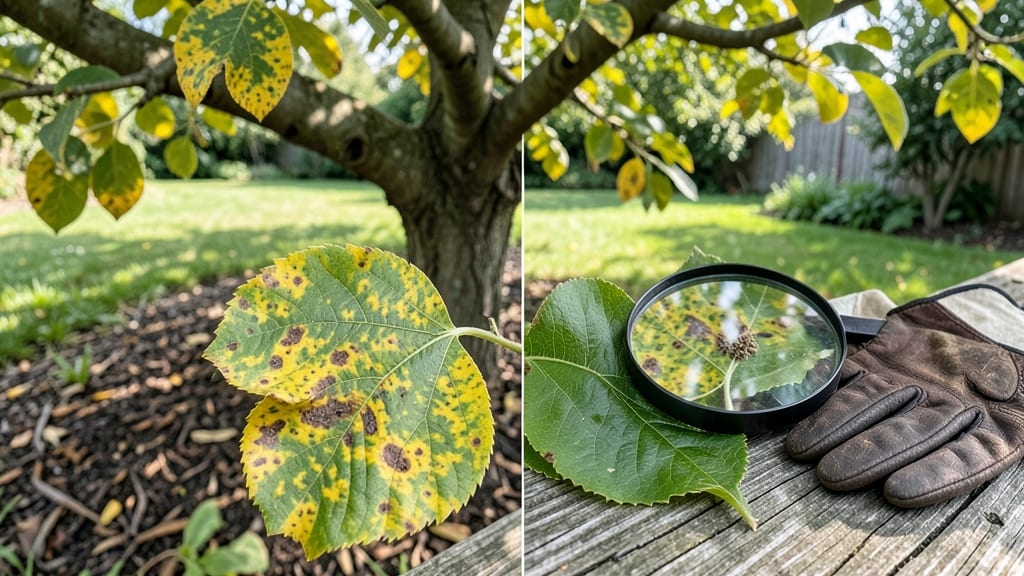
Your apple tree 🍎 leaves showing yellow spots could mean anything from a harmless nutrient imbalance to a fungal infection that spreads fast—don’t wait to act.
Picture this: You’ve spent months tending to your orchard, only to wake up one morning and spot those telltale yellow marks dotting the foliage. Before you panic, knowing the difference between a simple deficiency and a full-blown disease could save your harvest—and your tree.
In this guide, we’ll break down the five most common causes of yellow spots, from apple scab to iron chlorosis, and show you how to diagnose them by leaf texture, spot shape, and timing. More importantly, you’ll get fast fixes—organic and chemical—to stop the damage before it takes hold.
Whether it’s a quick spray or a deeper soil adjustment, early intervention is the key. Let’s get your tree back to healthy, vibrant green in no time.
5 Common causes of yellow spots on apple tree leaves (with visual clues)
When you spot yellow patches on your apple tree leaves, your first instinct might be panic—but don’t worry! These spots rarely mean your tree is doomed. Instead, they’re often early warning signs of treatable issues.
The key to saving your harvest lies in accurate diagnosis, which starts with examining the pattern, timing, and overall tree health. Some causes appear suddenly, while others develop slowly, and each requires a different approach.
I’ve diagnosed yellow leaf spots in my own orchard, and I’ve learned that fungal diseases like apple scab and powdery mildew are the most common culprits, especially in humid climates. But don’t overlook nutrient deficiencies like iron chlorosis or environmental stress from sunburn or overwatering.
Even tiny pests like mites or aphids can leave behind telltale yellow marks. Let’s break down the visual clues so you can act fast.
One of the first things I check when diagnosing yellow spots is whether the spots are oily or powdery. Apple scab leaves behind dark, greasy-looking spots that often have yellow halos, while powdery mildew creates a white, flour-like coating on the leaf surface.
These fungal diseases thrive in moist conditions, so if your area has had recent rain or high humidity, these are likely suspects. I’ve seen scab spread rapidly in my orchard after just three wet days, so acting quickly is crucial.
If the yellowing appears between the leaf veins—especially on new growth—you’re probably dealing with iron chlorosis. This nutrient deficiency is common in alkaline soils (pH above 7.0) and often affects young leaves first. The veins stay green while the rest turns yellow, creating a striking contrast.
I once had a young apple tree with severe chlorosis, and within weeks, the leaves were so weak they couldn’t support the fruit. Testing your soil’s pH is the first step to fixing this issue.
Magnesium deficiency often shows up later in the season, targeting older leaves first. Look for interveinal yellowing that progresses to brown patches as the deficiency worsens. Unlike iron chlorosis, magnesium issues appear on mature leaves and can lead to poor fruit development if ignored. A simple Epsom salt spray (1 tablespoon per gallon of water) can provide quick relief, but long-term solutions require organic matter like compost or mulch to improve soil
Fast fixes for yellow spots: organic and chemical solutions by cause
Once you’ve diagnosed the cause of those yellow spots on apple tree leaves, act fast to prevent spread. The right treatment depends on whether your tree is battling fungal infections, nutrient deficiencies, or pest infestations.
Organic options are ideal for mild cases, while chemical solutions may be necessary for severe outbreaks. Always prioritize preventive care—like proper pruning and mulching—to keep your tree thriving.
For fungal diseases like apple scab or powdery mildew, copper-based fungicides are my go-to. They’re effective, organic, and safe when used correctly. If your tree shows signs of nutrient deficiencies, such as iron chlorosis, chelated iron sprays can restore leaf health within weeks.
Meanwhile, pest-related damage often responds well to horticultural oils or insecticidal soaps. Let’s dive into the specifics for each cause.
- 1 Apple Scab: Apply copper fungicide (e.g., Bordeaux mixture) every 7-10 days during wet seasons. For organic control, spray neem oil mixed with water (1 tbsp per gallon) and add baking soda (1 tsp) to raise pH and deter spores. Prune infected branches and sterilize tools with rubbing alcohol to prevent spread.
- 2 Iron Chlorosis: Treat with chelated iron spray (e.g., Ironite) applied every 2-4 weeks during growing season. Improve soil drainage by adding compost and sand to heavy clay soils. Avoid overwatering, as soggy roots worsen iron uptake. For alkaline soils, apply elemental sulfur to lower pH gradually.
- 3 Powdery Mildew: Spray with potassium bicarbonate (1 tbsp per gallon of water) weekly until symptoms fade. For chemical control, use sulfur fungicide (follow label rates). Increase air circulation by pruning dense foliage and avoid overhead watering. Reflect sunlight with white mulch to reduce humidity around leaves.
- 4 Pest Damage (Aphids/Mites): Blast off pests with a strong spray of water, then apply horticultural oil or insecticidal soap. For severe infestations, use pyrethrin-based sprays (e.g., PyGanic). Introduce beneficial insects like ladybugs or lacewings to control populations naturally. Remove weeds and debris from the base to eliminate hiding spots.
- 5 Preventive Care: Apply mulch (3-4 inches) around the tree’s base to retain moisture and regulate soil temperature. Water deeply but infrequently (15-20 gallons per tree) in the morning to avoid fungal growth. Prune regularly to improve airflow, and fertilize with balanced NPK (10-10-10) in early spring and summer.
After treating the immediate issue, monitor your apple tree closely for recurrence. Yellow spots often reappear if environmental conditions—like high humidity or poor drainage—aren’t addressed. Adjust your watering schedule and mulching routine as needed, and consider seasonal fungicide sprays as a preventive measure during rainy periods.
If yellow spots persist despite your efforts, the problem may be systemic, such as a root rot infection or soil-borne disease. In these cases, consult a certified arborist to assess the tree’s health and determine whether root treatment or replacement is necessary.
Early intervention is key—don’t wait until the entire canopy turns yellow! 🌿
Remember, the goal isn’t just to treat the symptoms but to strengthen your tree’s defenses. Healthy soil, proper pruning, and consistent care will help your apple tree bounce back stronger than ever. With the right approach, those yellow spots will be a thing of the past! 🍏