
Pruning
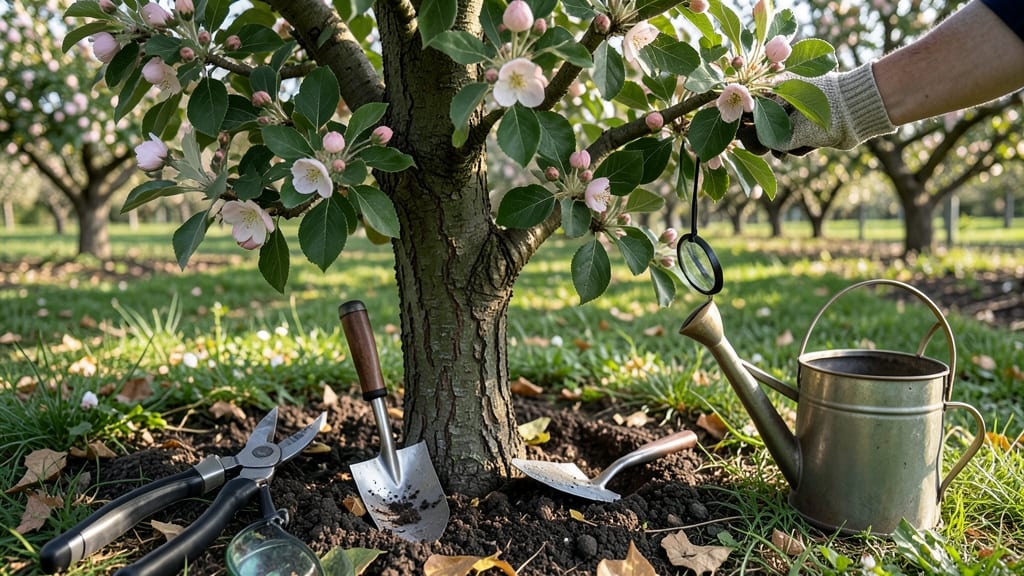
Determining whether your apple tree is dead requires checking for signs of life like new buds, green shoots, or flexible branches—but also examining bark cracks, canker disease, or root health to confirm. Many trees appear lifeless but can recover with proper care.
Apple trees often trick us into thinking they're dead when they're actually just dormant or struggling. 🌳 The key is looking beyond the obvious—flexible branches (not brittle ones) and small green shoots hidden under bark are strong indicators of life.
Canker disease, which creates sunken, oozing patches, is a common culprit that can mimic death, while root health (test by gently probing with a screwdriver) reveals whether the tree can still draw nutrients.
Even if your tree looks barren, these subtle clues could mean it's just waiting for the right conditions to bounce back.
What this answer covers: We'll break down how to distinguish between true death and dormancy, what to look for in bark and roots, and how to give your tree a fighting chance with targeted care.
Whether you're dealing with a winter slump or disease, these steps could save your tree before it's too late.
💡 In This Article
- How to Diagnose an Apple Tree’s Vital Signs
- 5 Immediate Steps to Revive a Stressed Apple Tree
How to diagnose an apple tree’s vital signs
Apple trees enter a state of dormancy during winter, where metabolic activity slows dramatically to conserve energy. This natural process can make them appear dead, but the key difference between dormancy and death lies in the tree's ability to respond to environmental cues like temperature shifts and moisture.
When spring arrives, a living tree will begin producing hormones like auxin and gibberellins, which trigger bud break and new growth. These hormones are what you're indirectly observing when you spot tiny green shoots or swollen buds—signs the tree's vascular system is still active.
Branch flexibility is another critical diagnostic tool.
A dead branch will snap like dry kindling, while a living one bends slightly without breaking—think of how a willow branch sways in the wind. 🌿 For a more precise test, use a screwdriver to probe the bark: if it sinks easily into soft, spongy tissue, the tree is likely dead.
Healthy bark should resist penetration. Additionally, canker disease—a fungal infection causing sunken, oozing lesions—often mimics death. These lesions appear as dark, cracked patches that ooze gum-like sap when active, and they can girdle the tree by disrupting nutrient flow.
The root system holds the most definitive clues about a tree's true condition. Living roots should be white or light tan when freshly cut, with a firm texture similar to a carrot. Dark, mushy roots indicate rot or death.
To test without damaging the tree, gently scrape away soil with a shovel near the trunk—healthy roots will have fine, fibrous hairs. Remember, apple tree roots extend far beyond the drip line, so a localized inspection might miss larger-scale issues.
If roots appear healthy but the canopy is bare, the problem might be environmental stress rather than death.
Seasonal timing plays a crucial role in diagnosis. In late winter or early spring, when buds should be swelling but aren't, this is your first red flag.
However, if you're examining the tree in summer and it's completely bare, it might simply be a non-fruiting variety or suffering from heavy crop loss the previous year. The key is comparing your observations to the tree's normal growth patterns—what's unusual for this specific variety?
For example, 'Granny Smith' apples typically have glossy green leaves, while 'Fuji' varieties develop reddish hues. 🍎
Advanced gardeners often use a simple scratch test: peel back a small section of bark (about the size of a quarter) and look for green tissue underneath. If you see green, the cambium layer (the tree's growth layer) is active.
This test is most reliable in late winter when the tree should be preparing for growth. Another technique involves checking the tree's "bleeding" sap in early spring—healthy trees exude a watery, clear sap when pruned, while dead ones produce nothing.
These methods combine to give you a comprehensive picture of the tree's internal health.
What most people overlook is how environmental factors interact with these signs. A tree might appear dead after a harsh winter freeze, but if the roots remain viable and buds eventually swell, it's likely just recovering. Similarly, drought stress can cause premature leaf drop that mimics death—until rainfall returns.
The science here involves understanding how trees balance water uptake (through roots), photosynthesis (in leaves), and nutrient transport (via vascular tissues). When one system fails, the others compensate, which is why a single test might not tell the whole story.