
Pruning
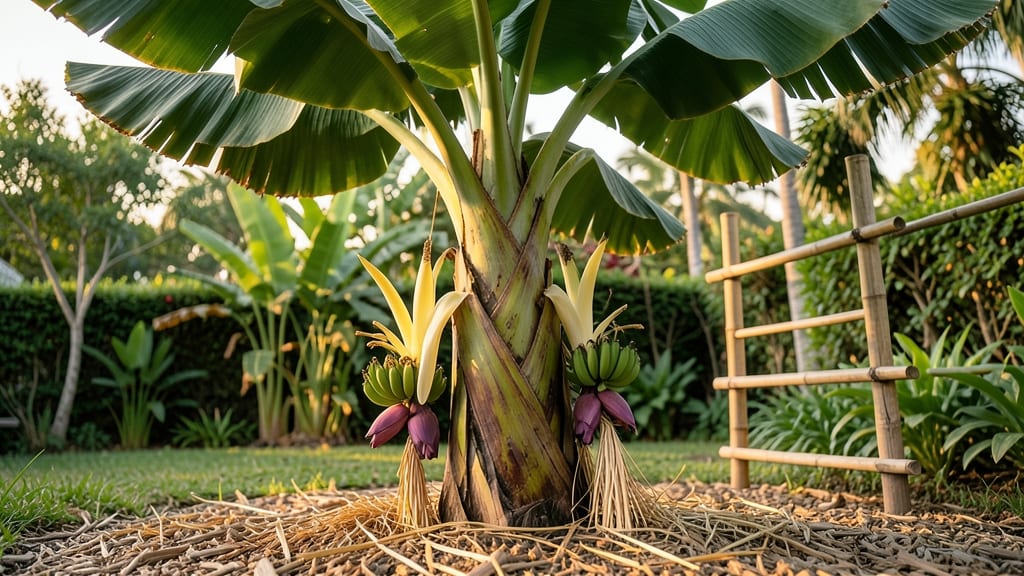
Your backyard could have a lush, year-round privacy screen in just three years—no fence required. 🌿 Banana trees (Musa spp.) grow fast, block unsightly views, and add tropical flair to any yard, even in mild climates where frost isn’t a threat.
I’ve watched mine transform from awkward saplings into dense, 10-foot walls of glossy leaves that outperform any store-bought screen.
The key is spacing them 8-10 feet apart in a row, giving them room to spread without overcrowding.
Plant in full sun where they’ll get at least 6 hours of light daily, and pair them with drought-tolerant ground covers like ferns or ornamental grasses to fill gaps while you wait for the bananas to mature.
Maintenance is minimal—just prune away dead fronds and fertilize twice a year—but the payoff is immediate shade and privacy within the first growing season.
By year three, you’ll have a tropical oasis that doubles as a windbreak and a wildlife magnet. The broad leaves rustle in breezes, the occasional banana fruit adds whimsy, and the dense foliage blocks noise and prying eyes better than any lattice.
Plus, the roots help stabilize soil, reducing erosion where they’re planted. It’s the kind of screen that makes neighbors ask, “What are those?”—and then wish they’d planted one too.
If you live in a frost-prone area, opt for cold-hardy varieties like Musa basjoo or grow them in large containers you can winter-protect. For extra height, layer them with bamboo or tall ornamental grasses.
The secret? Start small, be patient, and let nature do the heavy lifting—your privacy screen will grow into something truly special.
📚 In This Guide
- What you need
- Instructions
- Tips and common mistakes
- Wrapping up and next steps
What you need
- ● Banana Tree Saplings: 3–5 Musa spp. (dwarf or ornamental varieties like Musa acuminata or Musa basjoo for cold-hardy options).
- ● Quantity: 1 plant per every 3–4 feet of space (adjust for desired density).
- ● Soil Amendments: 5–10 lbs compost or well-rotted manure per planting hole.
- ○ 1 cup balanced fertilizer (10-10-10) per plant (optional at planting).
- ● Mulch: 2–3 inches of wood chips or pine straw (cover entire root zone).
- ○ Support Structures (Optional but Recommended): Bamboo stakes or tree ties (for young plants).
- ● Lightweight privacy netting (if planting in windy areas).
- ● A sunny to partially shaded location with 6+ hours of direct sunlight daily.
- ● Well-draining sandy loam soil (amend clay soil with perlite or sand).
- ● Space for mature height: 10–15 feet tall and 6–10 feet wide (prune regularly to control size).
- ● Access to water (deep watering 2–3 times per week for the first year).
- ● Local climate check: Ensure your zone is USDA 9–11 (or choose cold-hardy varieties for zones 7–9).
Instructions for planting a banana tree privacy screen
Here’s how to create a fast-growing, tropical privacy screen that thrives year-round with minimal fuss.
🌱 Step 1: Choose the Right Location and Prepare the Soil
Banana trees love warmth and moisture, so pick a spot that gets full sun (6+ hours daily) and stays sheltered from strong winds. The soil should drain well but retain moisture—think rich, slightly acidic loam. If your soil is heavy clay, amend it with 2-3 inches of compost and a handful of perlite to improve aeration.
Dig a hole twice as wide as the root ball but only as deep. This encourages roots to spread horizontally rather than settling too low, which can cause instability. Work in a handful of balanced, slow-release fertilizer (10-10-10) into the soil at the bottom of the hole to give your trees a nutrient boost right away.
🪴 Step 2: Plant Banana Trees in a Staggered Pattern
For a lush, continuous screen, plant trees 8-10 feet apart in staggered rows. This spacing allows them to fill in quickly while leaving room for growth. Dig the hole, then gently remove the tree from its container and loosen any circling roots with your fingers—this prevents root-bound stress.
Place the tree in the hole so the top of the root ball sits 1-2 inches below the soil line. Banana trees need stability, and burying slightly helps anchor them. Backfill with native soil mixed with compost, tamping lightly as you go to eliminate air pockets. Water deeply right after planting to settle the soil and eliminate gaps.
☀️ Step 3: Mulch and Water for Optimal Growth
Spread 3-4 inches of organic mulch (like wood chips or straw) around the base of each tree, keeping it 6 inches away from the trunk to prevent rot. Mulch retains moisture, regulates soil temperature, and suppresses weeds—critical for banana trees, which thrive in consistently moist conditions. Replenish mulch annually as it breaks down.
Water newly planted trees 2-3 times per week for the first month, giving them 1-2 gallons per tree each time. After that, aim for 1 inch of water weekly, adjusting for rain. You’ll know they’re getting enough water when the soil feels moist 2 inches below the surface. Avoid overhead watering to prevent fungal diseases like leaf spot.
✂️ Step 4: Prune and Fertilize for a Dense Screen
Banana trees grow fast, but they need occasional pruning to encourage bushiness. Once the screen reaches 6-8 feet tall, trim back any leggy or overcrowded stems to 12-18 inches above the ground. This stimulates new shoots from the base, creating a fuller, denser barrier. Remove any dead or yellowing leaves immediately—they rob energy from the plant.
Fertilize every 6-8 weeks during the growing season with a high-potassium fertilizer (like 5-10-10) to promote leafy growth. Banana trees are heavy feeders, so don’t skimp—follow package instructions for application rates. In winter, reduce fertilizing to once every 2-3 months unless your climate stays mild year-round.
⏰ Step 5: Monitor for Pests and Seasonal Adjustments
Check leaves regularly for signs of pests like spider mites or aphids. A strong spray of water can dislodge many pests, but for stubborn infestations, use neem oil or insecticidal soap. Banana trees are generally low-maintenance, but they do appreciate a light pruning in late winter to remove any damaged or crossing branches before new growth begins.
In colder climates, protect young trees with burlap wraps or frost cloth during unexpected frosts. Mature banana trees can handle brief dips to 28°F, but anything colder risks damage. If you’re in a frost-prone area, consider planting near a south-facing wall to absorb and radiate heat back to the plants.
Tips & tricks for perfect banana tree privacy screens
Creating a lush, tropical privacy screen doesn't have to be complicated—just strategic. Here are the key insights that'll help your banana trees grow into a dense, beautiful barrier faster and healthier.
Site Selection is Everything: While the instructions highlight full sun, I can't stress enough how critical this is—banana trees need at least 6 hours of direct sunlight daily for optimal growth. If your yard has partial shade, consider planting near a south-facing wall or fence that can reflect additional sunlight. This subtle adjustment can mean the difference between a thriving screen and one that struggles to fill in. The soil's moisture retention is equally important; if your area gets heavy rainfall, consider adding a French drain around the perimeter to prevent waterlogging, which can suffocate roots.
Root Ball Preparation Makes All the Difference: When removing your banana trees from their containers, don't just pull them out—gently squeeze the sides of the pot to loosen the root ball first. This prevents root damage that can stress the plant. I've seen many gardeners skip this step, only to watch their trees take longer to establish. After loosening the roots, run your fingers through them to untangle any circling roots—this encourages outward growth rather than a compacted root mass. The slight burial (1-2 inches below soil line) in Step 2 isn't just about stability; it helps protect the crown from temperature fluctuations that can stress the plant.
Mulching Strategy for Year-Round Success: The 3-4 inches of organic mulch mentioned is perfect, but here's the pro move: use a combination of wood chips and straw. The wood chips break down slowly, improving soil structure over time, while the straw provides immediate moisture retention. Keep that 6-inch clearance from the trunk to prevent rot—wet mulch sitting against the bark is a common issue that can kill your trees. In winter, add an extra 1-2 inches of mulch to insulate roots from cold snaps, especially in frost-prone areas. This simple layer can protect against temperatures just below that critical 28°F threshold mentioned in the instructions.
Watering Wisdom: The 2-3 times weekly watering for the first month is spot-on, but timing matters just as much as quantity. Water in the early morning to allow foliage to dry before evening, reducing fungal risks. For the ongoing 1-inch weekly target, consider using a rain gauge or tuna can buried near the trees to track moisture accurately—this prevents over- or under-watering. If your soil drains extremely fast (like sandy soil), you might need to water more frequently, but always check that 2-inch soil moisture level before watering again. Deep, infrequent watering encourages deeper root growth, which makes your screen more resilient.
Pro Tips for Banana Tree Privacy
- Creating a lush, tropical privacy screen doesn't have to be complicated—just strategic.
- Site Selection is Everything: While the instructions highlight full sun, I can't stress enough how critical this is—banana trees need at least 6 hours of direct sunlight daily for optimal growth.
- Root Ball Preparation Makes All the Difference: When removing your banana trees from their containers, don't just pull them out—gently squeeze the sides of the pot to loosen the root ball first.
Frequently asked questions
Got questions about using a banana tree as a privacy screen?
Here are answers to the most common ones—from planting to maintenance—so you can grow your own tropical barrier with confidence!
How fast does a banana tree grow for privacy?
A banana tree can grow 10–20 feet tall in just 3–5 years under ideal conditions (warm climate, well-drained soil, and regular watering). For faster results, plant multiple trees in a row or choose faster-growing varieties like the Dwarf Cavendish. Expect lush foliage to fill gaps within 1–2 years!
Can banana trees survive cold winters?
Most banana trees are tropical and thrive in USDA zones 10–11. In colder climates (zones 8–9), plant them in containers for winter moves indoors or use hardy varieties like the Red Dacca. Mulch heavily and protect young trees with frost cloth. Pro tip: Avoid planting outdoors if temps drop below 25°F—they’re frost-sensitive!
Do banana trees need pruning for privacy?
Pruning keeps your privacy screen dense and healthy. Remove dead or yellowing leaves year-round and trim back old fronds after harvest. For shape, prune selectively to encourage bushier growth. Warning: Never prune more than 1/3 of the tree at once—banana trees regenerate slowly!
What’s a good alternative if banana trees don’t grow well in my area?
If your climate isn’t banana-friendly, try these fast-growing privacy alternatives:
- Bamboo: Grows 6–12 feet/year (clumping varieties like Fountain Bamboo won’t spread invasively).
- Leyland Cypress: Evergreen, 3–4 feet/year, and drought-tolerant.
- Bamboo Palm: Hardy to 20°F and mimics a banana tree’s tropical look.
- Hornbeam or Arborvitae: Slower but low-maintenance options.
Are banana trees prone to pests or diseases?
Yes, but most issues are preventable! Watch for:
- Spider mites/scale insects: Spray with neem oil or insecticidal soap.
- Fungal diseases (like sigatoka): Improve airflow, avoid overhead watering, and remove infected leaves immediately.
- Root rot: Plant in well-draining soil and avoid soggy conditions.
Pro tip: Inspect leaves weekly during growing season—early action keeps your privacy screen thriving!
Wrapping up and next steps
Transforming your outdoor space with a banana tree privacy screen is a rewarding project that combines beauty, functionality, and low maintenance. In just three years, you’ll enjoy lush, year-round screening that thrives in diverse climates—all while adding tropical charm to your yard. 🌿
Ready to take the next step? Start by selecting the perfect spot, gathering your supplies, and planting with confidence. Whether you’re a seasoned gardener or a beginner, your privacy oasis is within reach—just dig in and watch your green sanctuary grow!