
Pruning
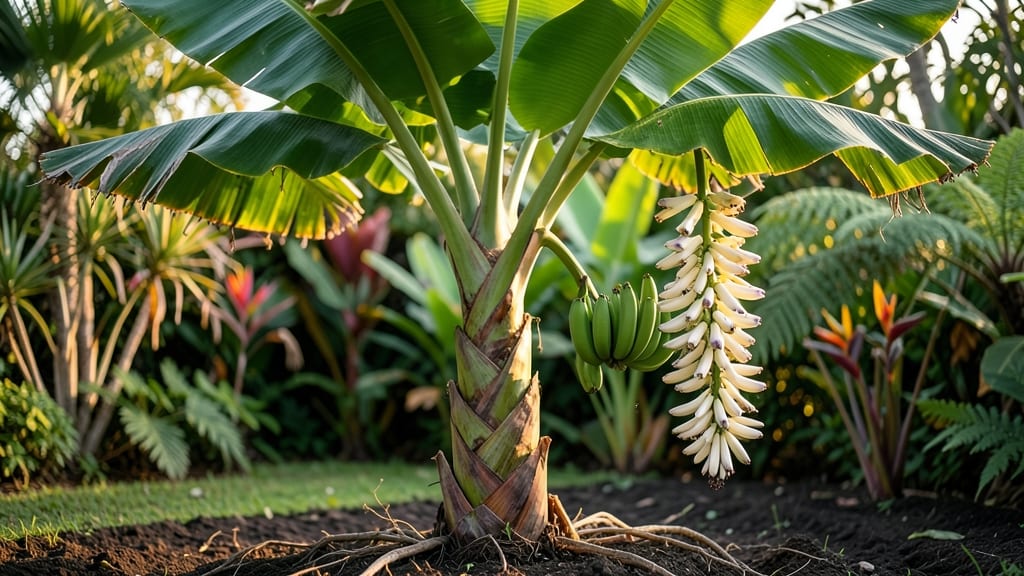
Banana trees thrive where most plants freeze—because they’ve mastered tropical survival. 🌿 I’ve grown them in containers for years, and the secret lies in their natural adaptations: pseudostems that store water, aerial roots that anchor and breathe, and leaves that self-prune in drought.
These aren’t just quirks; they’re the plant’s built-in cheat codes for compact spaces.
The biggest adaptation you can mimic is their water-loving roots—they need consistently moist (not soggy) soil, but hate soggy feet. A 5-gallon container works for dwarf varieties like ‘Dwarf Cavendish,’ while larger pots need drainage holes and a mix of 50% potting soil, 30% perlite, and 20% compost.
Mulch helps retain moisture without suffocating those aerial roots.
What you’ll notice first is how they grow year-round in warm climates—even indoors near a sunny window. Mine pushes out new leaves every 6-8 weeks, and the pseudostem thickens with each flush.
The trade-off? They’re heavy feeders: fertilize monthly with balanced 10-10-10 in growing season, then cut back in winter. Pests? Mostly ignored, but watch for spider mites on dry leaves.
For colder zones, treat them as tender perennials: overwinter in a garage with 50°F+ temps and minimal water. Even in small spaces, their vertical growth habit saves room—just rotate the pot monthly for even light exposure.
The payoff? Fresh bananas (or flowers!) in 8-12 months, depending on variety. Here’s how to keep them happy through every season.
📚 In This Guide
- What you need
- Instructions
- Tips and common mistakes
- Wrapping up and next steps
What you need
- ● Banana plant (Musa spp.) – Choose a dwarf variety (e.g., Musa acuminata ‘Dwarf Cavendish’ or Musa balbisiana ‘Ice Cream’) for small spaces.
- ● Containers – 1–2 large pots (15–20 gallons each) with drainage holes, or a raised bed (minimum 3’ x 3’ for outdoor planting).
- ● High-quality potting mix – 2–3 bags of well-draining, peat-based mix (e.g., Miracle-Gro Potting Mix) or a blend of coconut coir, perlite, and compost (60:20:20 ratio).
- ● Slow-release fertilizer – 1–2 bags of organic banana fertilizer (e.g., Espoma Garden-Tone) or a balanced 10-10-10 NPK blend.
- ● Pruning tools – 1 pair of sterilized pruning shears (for trimming leaves) and 1 sharp bypass pruner (for suckers/stems).
- ● Watering can or hose – With a gentle spray nozzle for even moisture distribution.
- ● Mulch – 1–2 bags of organic mulch (e.g., straw or wood chips) to retain moisture and regulate temperature.
- ● Grow lights – 1–2 full-spectrum LED grow lights (e.g., Samsung LM3000) for indoor setups (12–14 hours/day).
- ● Humidity tray – 1–2 shallow trays with pebbles and water to boost humidity (especially for indoor plants).
- ● Support stakes or trellis – 2–3 bamboo stakes or a lightweight trellis to guide heavy stems.
- ● Soil moisture meter – 1 digital meter to monitor root-zone hydration (bananas hate soggy soil!).
- ● Epsom salt – Small bag for magnesium boosts (mix 1 tbsp per gallon of water monthly).
- ● Compost tea – 1 gallon of homemade or store-bought tea (e.g., Fox Farm Big Bloom) for microbial health.
Step-by-step adaptations for growing banana trees in small spaces
Here’s how I turn even the tiniest balcony into a thriving banana tree oasis—no tropical climate required.
🌱 Step 1: Select the Right Dwarf Variety for Your Space
Not all banana trees are created equal. For compact spaces, choose a dwarf Cavendish or Lady Finger variety—these stay under 10 feet tall at maturity and produce fruit in 6-9 months instead of years. Avoid larger types like Grand Nain, which can reach 15+ feet and need serious yard space.
I always check the plant tag for ‘Dwarf’ in the name—this guarantees a manageable size. If you’re starting from seed, look for ‘Musa acuminata’ varieties, which are bred for smaller stature. The key here is growth habit: these types grow in clumps rather than single, towering stalks, making them perfect for containers.
☀️ Step 2: Mimic Tropical Light with Smart Placement
Banana trees crave full sun (6-8 hours daily), but they’ll tolerate partial shade (4+ hours) if you supplement with a grow light. Place your tree in the brightest spot you have—south-facing windows or a covered patio work best. If indoors, rotate the pot quarter-turn weekly so the tree grows evenly toward the light.
Watch for yellowing leaves—this is your signal the tree isn’t getting enough light. In low-light conditions, the older leaves will drop first. If you see stunted growth or leggy stems, move the tree closer to the light source or add a 12-hour LED grow light daily. I keep mine under a full-spectrum bulb in winter when natural light fades.
💧 Step 3: Master the Watering Balance for Year-Round Growth
Banana trees drink heavily but hate soggy roots. Water when the top 2 inches of soil feel dry—stick your finger in the pot to check. In summer, this might mean daily watering, while winter slows growth and reduces needs to every 5-7 days. Always use room-temperature water to avoid shocking the roots.
Here’s the thing—banana trees thrive on humidity. If your air feels dry (like most indoor spaces), mist the leaves 2-3 times weekly or place the pot on a pebble tray with water. You’ll see shiny, vibrant leaves when humidity is right. Overwatering is the #1 killer—yellowing leaves with brown edges mean you’re drowning the roots.
🪴 Step 4: Repot and Prune for Compact, Productive Growth
Banana trees grow fast, so repot every 2 years into a container 2-4 inches larger than the current one. Use a well-draining potting mix with perlite or orchid bark to prevent compaction. The pot should have drainage holes—bananas despise wet feet. I upgrade to a 15-20 gallon container for mature dwarf varieties.
Pruning keeps your tree manageable. Remove dead or yellow leaves at the base with clean, sharp scissors. If the tree gets too leggy, cut back overgrown pseudostems (the "trunk") by 1/3 in early spring. This encourages new suckers (baby plants) to grow at the base, giving you more harvests. Just don’t prune during flowering—this stresses the plant and can kill the fruit.
⏰ Step 5: Protect and Encourage Flowering in Unusual Climates
Banana trees flower when they sense long days and warmth. If your tree isn’t blooming, try supplemental light to extend daylight to 14 hours. Once a flower spike (called a "bunch") emerges, reduce water slightly to stress the plant just enough to trigger fruit set. Too much water now can cause the spike to drop.
For cold snaps, move the pot indoors to a bright, cool spot (50-60°F). If temps drop below 40°F, the leaves will blacken—this is irreversible, but the rhizome (underground stem) often survives. In spring, new shoots will emerge from the base. I’ve revived trees this way even after near-freezing nights—just don’t give up if the leaves look crispy.
Tips & tricks for perfect compact banana tree adaptations
Real talk: Growing banana trees in small spaces takes patience, but these tricks make all the difference. Here's what nobody tells you about keeping your tropical plant thriving without the yard space.
Variety Selection: When choosing your dwarf Cavendish or Lady Finger, look for plants labeled "container-friendly" at nurseries. These have been bred specifically for pot culture and won't outgrow your space. I've found that plants labeled "miniature" varieties often have even more compact growth habits—just check the maturity height on the tag before buying. The key is finding a plant that stays under 8 feet rather than pushing 10 feet, especially if you're limited to balconies or small patios.
Light Optimization: The 6-8 hours of sunlight requirement can be tricky in urban settings. If your tree isn't getting enough natural light, invest in a quality LED grow light with full spectrum capabilities. Position it about 12 inches above the plant and run it for 12 hours daily—this mimics the long daylight periods banana trees need to thrive. I've had success with the SANSI 15W LED grow light for my indoor trees during winter months when natural light is scarce. Remember to rotate your tree weekly to prevent it from leaning toward one light source.
Watering Wisdom: That 2-inch soil dryness check is crucial, but don't rely solely on your finger—banana trees actually prefer slightly moist soil rather than bone dry. I've found it helpful to use a moisture meter in the pot to get an accurate reading, especially in the winter when watering needs change dramatically. During the growing season, I water mine in the morning to allow excess moisture to evaporate throughout the day, preventing root rot. The pebble tray trick works wonders for maintaining humidity, but be sure to refill it regularly—evaporation happens quickly in dry indoor environments.
Pruning Precision: When you're pruning those overgrown pseudostems in early spring, make your cuts just above a visible bud or node. This is where new suckers will emerge, giving you more harvest potential. I've learned the hard way that cutting too close to the base can damage the rhizome and stunt future growth. For the first year, I recommend being conservative with pruning—let your tree establish its root system before aggressive shaping. And remember, those suckers at the base are your future plants—you can propagate them to create new banana trees for friends or expand your own collection.
Pro Tips for Banana Tree Adaptations
- Real talk: Growing banana trees in small spaces takes patience, but these tricks make all the difference.
- Variety Selection: When choosing your dwarf Cavendish or Lady Finger, look for plants labeled "container-friendly" at nurseries.
- Light Optimization: The 6-8 hours of sunlight requirement can be tricky in urban settings.
Frequently asked questions
Got questions about maximizing your banana tree’s potential in small spaces? Here are some of the most common queries—plus straightforward answers to help you grow like a pro!
How cold can banana trees tolerate before they die?
Banana trees thrive in USDA Zones 10–11 (30–50°F) but struggle below 50°F (10°C). A light frost (32°F/0°C) can kill the plant, while cold snaps (40°F/4°C) may stunt growth. Prune back damaged leaves in spring, but protect young trees with mulch or frost cloth if temps dip.
When is the best time to prune a banana tree for compact growth?
Prune after harvest (late winter/early spring) or year-round if growing in warm climates. Focus on:
- Removing dead or yellowing leaves (never more than ⅓ of the plant at once).
- Trimming suckers (baby shoots) to redirect energy to fruit production.
- Lightly shaping the canopy to improve airflow (prevents disease).
Can I grow a banana tree in a pot indoors? What’s the trick?
Choose a 15–20 gallon container with drainage holes and use a well-draining potting mix (add perlite or coconut coir). Place near a south-facing window or under grow lights (12+ hours/day). Rotate the pot weekly for even growth. Pro tip: Fertilize monthly with a balanced liquid fertilizer (20-20-20) during spring/summer.
Why aren’t my banana tree’s fruits ripening? Is it a pruning issue?
Unripe bananas often signal nutrient stress, lack of sunlight, or improper pruning. Check these fixes:
- Ensure 6+ hours of direct sunlight daily (indoors? Supplement with grow lights).
- Feed with potassium-rich fertilizer (like banana peels steeped in water!) every 6 weeks.
- Avoid over-pruning—leave 3–4 mature leaves to support fruit development.
- Water deeply but reduce frequency when flowers appear (overwatering = poor fruit set).
What can I do with banana tree leaves after pruning?
Don’t toss those leaves! Here’s how to repurpose them:
- Compost them for nutrient-rich soil (adds potassium!).
- Mulch around the base to retain moisture and deter weeds.
- Steep in water (1:3 leaf-to-water ratio) for 24 hours, then use as a natural fertilizer.
- Weave into crafts (like hats or baskets) while fresh for durability.
Wrapping up and next steps
From maximizing compact spaces to harnessing year-round growth, banana trees are nature’s adaptable superstars! 🌱 Their clever tricks—like pruning for productivity, utilizing vertical space, and leveraging microclimates—prove that even small gardens can yield big rewards.
Whether you’re a seasoned gardener or a curious beginner, these adaptations show how smart planning turns limitations into opportunities.
Ready to put these hacks into action? Start small—try pruning one branch this week or repurposing a corner of your space. Your banana tree (and future harvests) will thank you! 🍌✨