
Plants
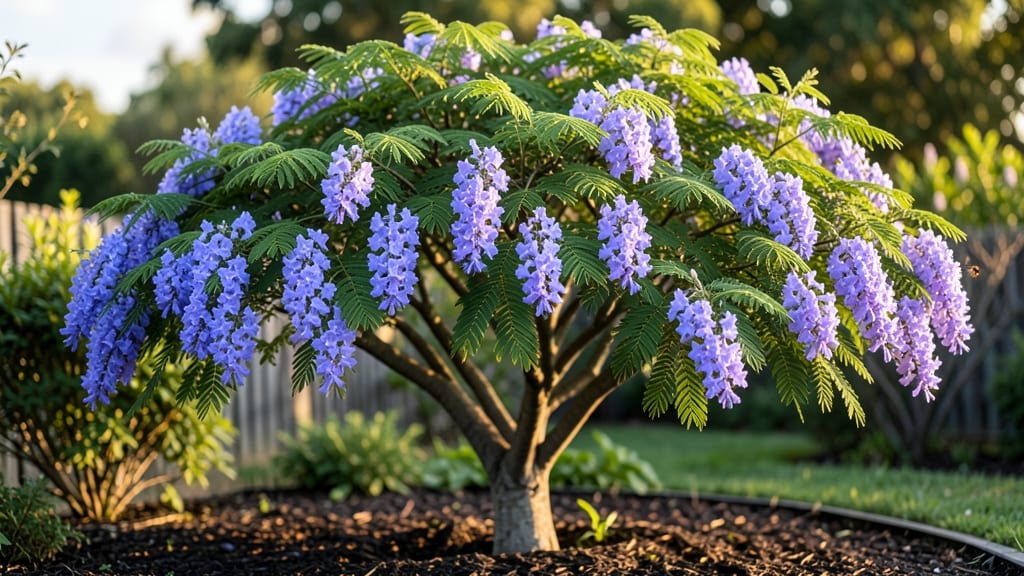
A jacaranda tree looks like a stunning tropical showstopper with its fragrant lavender-blue, trumpet-shaped flowers that bloom in dense, cascading clusters. The tree's feathery, fern-like leaves and smooth gray bark complete its elegant, umbrella-shaped silhouette that dominates spring landscapes.
A jacaranda tree's most eye-catching feature is its springtime flower display, which can cover the entire canopy in vibrant purple-blue blossoms that resemble grape hyacinths. 🌸 The flowers grow in dense, drooping clusters called panicles, with each individual bloom measuring about 1-2 inches long.
What makes them unique is their delicate, paper-thin petals that flutter in the breeze, creating a mesmerizing visual effect.
Beyond the flowers, the tree's fern-like foliage adds texture with its compound leaves that unfurl from fuzzy buds in early spring, while the smooth gray bark provides a striking contrast to the colorful canopy.
💡 In This Article
- Identifying Jacaranda Tree Flowers, Leaves, and Bark
- Jacaranda Tree Varieties and Their Visual Differences
Identifying Jacaranda tree flowers, leaves, and bark
The jacaranda's flowers are its signature feature, with each trumpet-shaped bloom measuring between 1-2 inches long and packed in dense, drooping clusters called panicles.
These flowers grow directly from the branches, creating a cascading effect that can blanket the tree in a lavender-blue haze during peak bloom—typically late spring to early summer.
The petals are delicate and paper-thin, with a subtle fragrance that's most noticeable in the early morning hours when the air is still cool. 🌸
The tree's leaves are another standout characteristic, featuring pinnate compound structure with 5-9 leaflets arranged in pairs along a central stem. Each leaflet is 1-3 inches long, oval-shaped, and has a slightly fuzzy texture when new, which smooths out as they mature.
This fern-like appearance creates a lush, textured canopy that contrasts beautifully with the vibrant flowers. The leaves emerge in early spring as fuzzy buds that unfurl over 2-4 weeks, adding to the tree's dynamic seasonal display.
The bark of a mature jacaranda tree is smooth and grayish-brown, with a slightly scaly texture that develops as the tree ages. Young trees have smoother bark that's more uniform in color, while older specimens develop deeper grooves and a more rugged appearance.
This bark provides a striking contrast to the bright flowers and foliage, especially when viewed against a clear sky. The tree's umbrella-shaped canopy can reach 30-50 feet wide at maturity, creating a dramatic focal point in any landscape.
Seasonal growth patterns play a crucial role in identifying jacaranda trees. The flowers typically bloom for 4-6 weeks in late spring, followed by the emergence of new leaves. By mid-summer, the tree enters a dormant phase where it sheds its flowers and leaves, preparing for the next growth cycle.
This seasonal rhythm makes the jacaranda particularly striking during its peak bloom period, when it becomes a vibrant centerpiece in gardens and urban landscapes alike.
What sets the jacaranda apart visually is its combination of texture and color. The delicate flowers, fuzzy new leaves, and smooth bark create a multi-layered aesthetic that's both elegant and bold.
Unlike many flowering trees that have either bright flowers or lush foliage, the jacaranda offers both simultaneously, making it a favorite among landscape designers and nature enthusiasts. 💫