
Plants
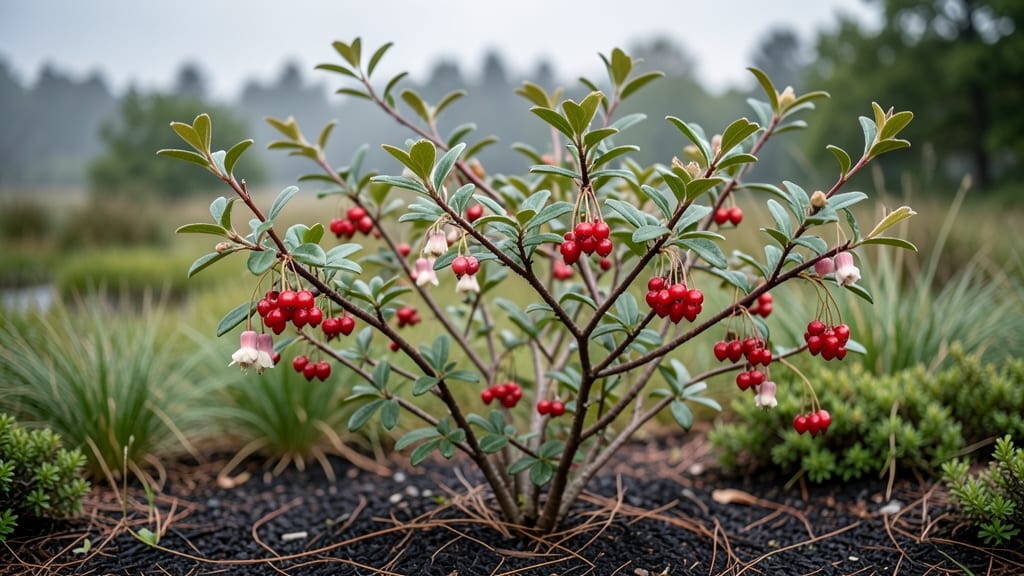
A cranberry tree looks like a compact, evergreen shrub with glossy, dark green leaves and delicate white blossoms in spring, followed by clusters of bright red berries in fall. Its sprawling, low branches create dense mats perfect for acidic wetland habitats.
A cranberry tree's appearance is unmistakable once you know what to look for. 🌿 The leaves are small, oval-shaped, and slightly leathery with a waxy coating that helps them thrive in damp conditions.
Unlike many shrubs, cranberry plants grow horizontally along the ground, sending up vertical stems that bear the fruit. This growth habit allows them to spread widely in their natural bog environments, where their roots can access both water and oxygen efficiently.
The berries themselves are another key identifier—they start green and ripen to a deep red color, often with a slightly wrinkled texture. Unlike blueberries or lingonberries, cranberries grow in clusters along the stems rather than in compact bunches.
What's fascinating is how these plants adapt to their environment: their roots spread out extensively to stabilize the plant in wet, acidic soils while their branches stay low to the ground.
💡 In This Article
- Distinctive Features of Cranberry Tree Leaves and Branches
- Identifying Cranberry Fruit vs. Similar Berries
Distinctive features of cranberry tree leaves and branches
The cranberry's leaves are one of its most distinctive features, measuring about 1-2 inches long with a smooth, oval shape that tapers to a point.
Their dark green color comes from a thick, waxy cuticle that repels water—a crucial adaptation for their waterlogged native habitats. 🌿 Unlike many evergreens, cranberry leaves have a slightly cupped appearance and feel slightly leathery to the touch, almost like miniature alligator skin.
This texture helps prevent water absorption while allowing gas exchange.
The branch structure is equally unique, growing horizontally along the ground in a sprawling pattern before sending up vertical stems that bear fruit. These stems can reach 6-12 inches tall but rarely exceed 18 inches, creating that signature low, dense mat.
The branches themselves are reddish-brown and have a slightly zigzag pattern when viewed from above. What's fascinating is how these plants spread—cranberries reproduce both through seeds and runners (horizontal stems), allowing them to form extensive colonies in bogs.
Beneath the surface, the root system plays a critical role in the plant's survival. Cranberry roots grow extensively in the top 6-12 inches of soil, forming a dense network that stabilizes the plant in wet, acidic conditions.
This shallow root system allows them to thrive in areas where other plants would drown, as their roots can access both water and oxygen efficiently. The plant's ability to grow in waterlogged soils is due to specialized root structures called "aerenchyma," which create air pockets for oxygen transport.
In spring, the plant produces delicate white flowers that hang in clusters along the stems. These flowers have 5 petals and 10 stamens, creating a striking contrast against the dark green foliage.
What's particularly interesting is how these flowers are pollinated—cranberries rely heavily on bees and other insects, but they also have a unique self-pollination mechanism that allows them to produce fruit even in isolated areas. This dual-pollination system ensures fruit production even when pollinators are scarce.
One of the most striking visual elements is how the plant changes with the seasons. In fall, the leaves turn a vibrant red or purple before dropping, while the berries ripen from green to deep red.
The berries themselves are another key identifier—they grow in clusters along the stems rather than in compact bunches. This growth pattern is a major distinguishing feature when compared to other berry-producing plants.
When identifying a cranberry plant, pay attention to these key characteristics: the horizontal growth habit, leathery leaves, and low-growing branches. These features are what make cranberry trees so well-adapted to their wetland environments and help them stand out among other shrubs. 💫