
Planting
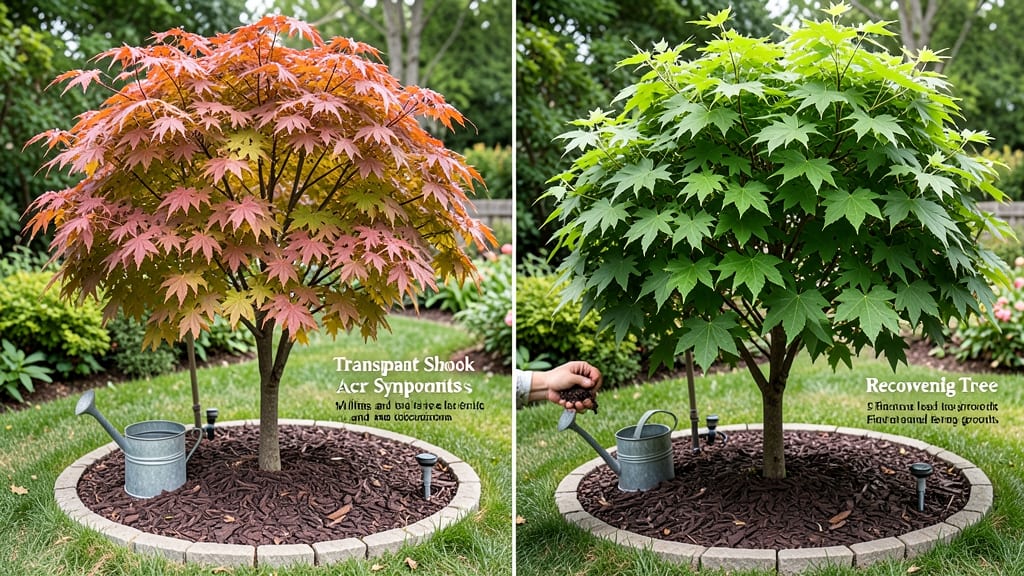
Tree transplant shock recovery time typically spans 4 to 12 weeks, depending on species, root ball size, and environmental conditions. Proper watering, mulching, and avoiding stress during the first 30 days are critical for survival and long-term health.
Transplant shock happens when a tree's roots get damaged during uprooting, disrupting its ability to absorb water and nutrients. 🌳 The recovery timeline varies because some species like oaks or maples are hardier and bounce back faster, while delicate varieties may take longer.
During the first 30 days, your focus should be on keeping the soil consistently moist—not soggy—and protecting the roots with a thick layer of mulch. What I've seen in my own garden is that trees planted in cooler seasons often recover more quickly because the slower growth pace reduces stress.
Beyond watering, proper pruning before transplanting can make a huge difference. Trimming roots and branches reduces the tree's water needs while it adjusts. 🌿 I always recommend avoiding heavy pruning after transplanting, as this adds extra stress.
The key is patience—most trees show visible signs of recovery after 6-8 weeks, but full stabilization can take up to a year, especially for larger specimens.
💡 In This Article
- Understanding Tree Transplant Shock Stages and Physiology
- Practical Steps to Reduce Tree Transplant Shock Duration
Understanding tree transplant shock stages and physiology
When a tree is transplanted, its roots experience physical trauma that disrupts the delicate balance of water and nutrient uptake. The most critical damage occurs during the root severing process, where up to 50-70% of fine root hairs—the tree's primary water absorbers—can be lost.
These tiny roots, which make up only 1-2% of the total root mass but handle 90% of water absorption, take weeks to regenerate. 🌱 The immediate aftermath triggers a physiological response where the tree prioritizes survival over growth, often leading to leaf wilting even if the soil appears moist.
Recovery unfolds in three distinct phases. The acute phase (0-7 days) is the most vulnerable, where the tree's water transport system struggles to keep up with demand. During this time, the tree's stomata (leaf pores) may close to conserve moisture, causing leaves to droop or yellow.
The adaptive phase (1-4 weeks) sees the tree redirecting energy toward root regrowth, with new fine roots emerging from the remaining root ball. By 6-8 weeks, most trees enter the long-term healing phase, where the root system stabilizes and begins functioning at 70-80% of pre-transplant capacity.
Species play a huge role in recovery speed due to inherent differences in root structure and resilience. For example, oak trees, with their extensive lateral root systems, often recover faster than maples, which have more delicate, fibrous roots.
Evergreens like pines face additional stress because they maintain photosynthesis year-round, making their recovery timeline 20-30% longer than deciduous trees. The root-to-shoot ratio also matters—trees with a higher root mass relative to foliage bounce back quicker because they have more stored energy reserves.
Environmental conditions accelerate or delay recovery by influencing root respiration and microbial activity in the soil. Ideal transplanting conditions include cool, cloudy days (60-70°F) and well-drained soil with a pH of 6.0-7.0, which supports beneficial mycorrhizal fungi that help roots re-establish connections.
Heatwaves or drought during the first month can extend recovery by 3-4 weeks, while consistent moisture keeps roots active and encourages faster regrowth. 🌿 What's fascinating is how trees "communicate" with nearby plants through root exudates—healthy transplanted trees can actually stimulate microbial activity in the surrounding soil, creating a more hospitable environment for their own recovery.
One often-overlooked factor is the tree's carbon-to-nitrogen ratio in the soil. A balanced ratio (around 20:1) ensures the tree has enough energy to fuel root regrowth while maintaining leaf function.
Poor soil quality can prolong recovery by up to 6 months, which is why amending the planting hole with compost or organic matter is so critical.
The goal is to create a microenvironment that mimics the tree's original growing conditions as closely as possible, reducing the physiological shock of transplantation.
Consider this comparison: A 5-gallon container-grown tree may recover in 4-6 weeks because its root system is less disrupted, while a 150-gallon balled-and-burlapped tree can take 10-12 weeks due to the extensive root damage.
The size of the root ball directly correlates with recovery time because larger root systems require more time to re-establish their vascular connections. 🌳 This is why proper root pruning before transplanting—removing up to 30% of the root ball—can actually speed recovery by reducing the tree's overall water demand during the critical first weeks.