
Pruning
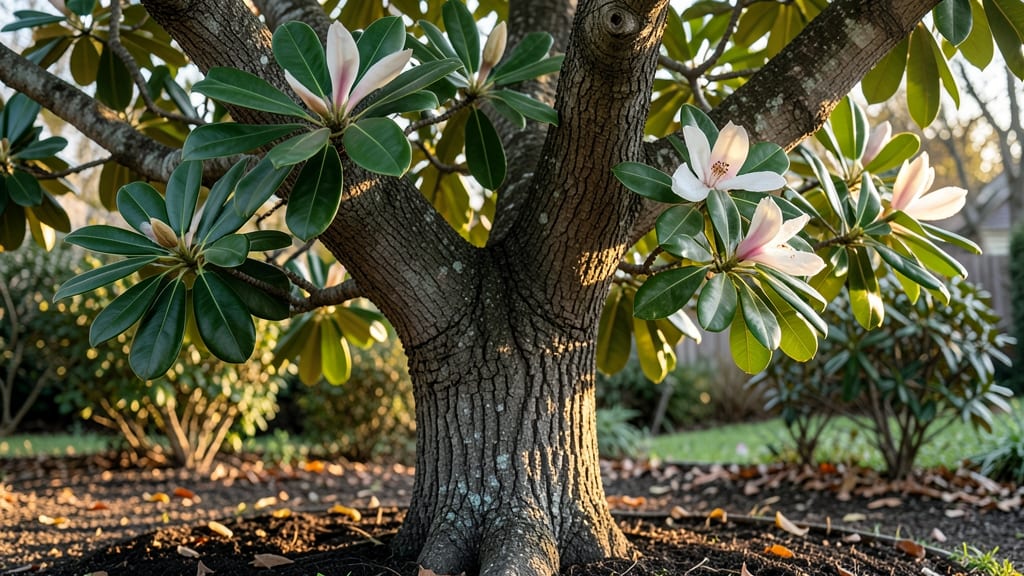
Southern magnolia tree bark peels like a snake's skin—thick, papery layers revealing creamy underbark that glows in sunlight. ✨ The way it naturally exfoliates makes it one of the most striking features of this iconic tree, but proper pruning keeps that smooth, sunlit canopy looking its best while preventing stress cracks.
The key is timing: prune in late winter when the tree is dormant, and use sharp tools to make clean cuts just above outward-facing buds. Avoid heavy pruning—this tree grows slowly, and aggressive cuts can leave ugly scars that never fully heal. Think of it as sculpting, not hacking.
You’ll notice the difference immediately: branches grow stronger, new growth emerges faster, and that signature creamy bark stays unblemished. The tree’s natural defense system works best when you work with it, not against its slow-but-steady growth rhythm.
For hot, humid climates like the South, proper pruning also improves airflow—critical for preventing fungal issues that can turn that gorgeous bark into a patchwork of discoloration. Here’s how to do it right without harming your tree.
📚 In This Guide
- What you need
- Instructions
- Tips and common mistakes
- Wrapping up and next steps
What you need
- ● Pruning shears: Bypass pruners (for small branches, 2–3 inches in diameter) – 1 pair (look for sharp, stainless-steel blades).
- ● Loppers: Bypass or anvil type (for medium branches, 3–6 inches in diameter) – 1 pair (extendable handles are a plus!).
- ● Pruning saw: Curved-tooth or folding pruning saw (for thick branches, 6+ inches) – 1 saw (avoid rust—opt for aluminum or stainless steel).
- ● Ladder: Aluminum or fiberglass (tall enough to reach the highest branches safely) – 1 ladder (check stability before climbing!).
- ● Gloves: Heavy-duty, cut-resistant (to protect hands from thorns and rough bark) – 1 pair (gardening or pruning-specific gloves work best).
- ● Disinfectant: 70% isopropyl alcohol or bleach solution (1 part bleach to 9 parts water) – small spray bottle or cloth (prevents disease spread).
- ○ Sealing wax or pruning paint: Optional but recommended (for large cuts to protect the tree) – small tub.
- ● Trash bags or bucket: (for collecting pruned branches) – 1–2 large bags or a sturdy bucket.
- ● Safety glasses: Protect your eyes from debris (especially if the tree is near power lines!).
- ● Pole pruner: For high branches without a ladder (extendable up to 10–12 feet).
- ● Tree wound dressing: Alternative to sealing wax (e.g., Tanglefoot Tree Wound Pruning Seal).
- ● Notebook & pen: To sketch a quick pruning plan or note branch sizes/thicknesses.
- ● First-aid kit: Just in case (thorns and tools can be tricky!).
- ● ✅ Timing: Prune Southern magnolias in late winter or early spring (before new growth starts). Avoid pruning in fall.
- ● ✅ Weather: Choose a dry, overcast day (wet bark can harbor fungal spores).
- ● ✅ Safety check: Ensure the tree is healthy (no signs of disease like anthracnose or root rot).
- ● ✅ Plan ahead: Sketch a rough map of branches to remove (aim for 10–20% of the canopy max per year!).
Instructions for pruning Southern magnolia trees
Here’s my go-to method for shaping a southern magnolia’s bark and canopy—keeping it healthy while showcasing that gorgeous, sunlit bark.
🌿 Step 1: Time Your Pruning for Best Healing
Prune your southern magnolia in late winter to early spring, just as new growth begins. This timing ensures wounds heal before summer heat and pests arrive. I always wait until after the last frost but before buds swell—usually February to March in most Southern climates.
Never prune in fall or winter when the tree is dormant, as cold stress slows healing. If you must prune later, do it in early summer—but expect slower recovery. Watch for new leaf buds forming as your cue to start.
✂️ Step 2: Remove Dead or Crossing Branches First
Start by cutting out dead, diseased, or crossing branches—these are the easiest to spot and remove. Use clean, sharp pruning shears to make 45-degree cuts just outside the branch collar (the swollen area where the branch meets the trunk). This prevents water from pooling and rotting the wound.
Look for branches rubbing against others or growing inward—they’ll eventually split or choke the tree. Remove any branches that are thinner than a pencil at the base, as they won’t heal well. I like to step back every few cuts to check the tree’s balance.
☀️ Step 3: Thin the Canopy for Sunlit Bark
Southern magnolias develop their signature smooth, sunlit bark when the canopy opens up. Selectively remove 10-20% of the tree’s branches to improve airflow and sunlight penetration. Focus on branches that are too close together or blocking light from reaching the trunk.
Cut branches back to a side branch or bud—never leave a stub. If a branch is larger than 2 inches thick, use a pruning saw instead of shears. Step back often to visualize how sunlight will hit the bark—you’re aiming for a gradual taper from top to bottom.
🪴 Step 4: Shape for Structure and Bark Display
Now’s the time to refine the tree’s shape. Southern magnolias naturally grow upright with horizontal branches, so I avoid heavy topping. Instead, I shorten overlong branches by one-third to encourage bushier growth. Never remove more than 25% of the tree’s foliage in one season.
Pay special attention to the lower branches—removing them too aggressively can leave a bare trunk. I leave at least 6-8 feet of foliage near the ground to protect the bark from sun scorch. Use a ladder if needed, but never overreach—unstable platforms cause accidents.
💧 Step 5: Clean Up and Protect the Tree
After pruning, sterilize your tools with rubbing alcohol to prevent spreading disease. Collect and dispose of all cuttings—don’t leave them on the ground, as they can harbor pests. Apply a wound sealant (like pruning paint) only on cuts larger than ½ inch—smaller wounds heal better on their own.
Water the tree deeply after pruning to reduce stress. Southern magnolias are drought-tolerant once established, but fresh cuts need moisture to heal. Mulch around the base with 2-3 inches of organic mulch, keeping it 6 inches away from the trunk to prevent rot.
Tips & tricks for pruning Southern magnolia trees
Real talk: Pruning magnolias isn't just about cutting branches—it's about sculpting a masterpiece that highlights that stunning bark. Here's what I've learned after years of shaping these beauties.
Timing is Everything: The late winter to early spring window (after last frost but before buds swell) is non-negotiable for optimal healing. I've seen trees pruned in summer develop fungal issues because the wounds just can't close properly in heat. If you absolutely must prune later, early summer is your second-best option—but be prepared for slower recovery. Watch for those tiny leaf buds forming as your green light to start.
Branch Selection Strategy: When thinning the canopy in Step 3, prioritize branches that create a gradual taper from top to bottom. I use the "step back and visualize" method—imagine sunlight hitting the trunk at different times of day. Remove branches that block light from reaching at least 60% of the trunk's surface. For thicker branches (over 2 inches), I always use my pruning saw—shears just can't handle the job cleanly, and jagged cuts invite disease.
Safety First: Never work from an unstable ladder—magnolia branches can be surprisingly heavy when you're trying to maneuver them. I invest in a sturdy step ladder with a wide base, and I always have someone nearby to spot me. Remember, you're dealing with branches that can weigh 50+ pounds when wet. And always wear gloves—those magnolia leaves have sharp edges that draw blood faster than you'd think.
Healing Acceleration: After pruning, I apply a thin layer of pruning paint only to cuts larger than ½ inch. For smaller wounds, I let nature take its course—they heal better without sealant. The key is deep watering immediately after pruning (20-30 gallons for mature trees) and maintaining that 2-3 inch mulch ring. I've seen trees recover twice as fast when they get consistent moisture during the healing process.
Pro Tips for Southern Magnolia Tree Bark
- Real talk: Pruning magnolias isn't just about cutting branches—it's about sculpting a masterpiece that highlights that stunning bark.
- Timing is Everything: The late winter to early spring window (after last frost but before buds swell) is non-negotiable for optimal healing.
- Branch Selection Strategy: When thinning the canopy in Step 3, prioritize branches that create a gradual taper from top to bottom.
Frequently asked questions
Got questions about pruning Southern magnolia tree bark for a healthy, sunlit canopy? You’re not alone! Here are answers to the most common queries to help you tackle the job like a pro.
When is the best time to prune a Southern magnolia?
The ideal time is late winter to early spring (February–March), just as the tree begins to show signs of new growth. Avoid pruning in fall or winter, as wounds may not heal properly before cold snaps. Pro tip: If you must prune in summer, do so early (June) to minimize stress on the tree.
How much of the Southern magnolia’s bark should I remove when pruning?
Never remove more than 25% of the tree’s canopy in a single pruning session. For bark health, focus on thinning out dense branches to improve airflow and sunlight penetration. Avoid stripping bark—only prune wood, leaving the protective outer layer intact.
Will pruning Southern magnolia bark help it grow faster?
Pruning won’t directly make the tree grow faster, but it encourages healthier, faster growth by removing dead or weak branches. Proper pruning also reduces disease risk and improves bark resilience. Think of it as a growth hack for a stronger, more vibrant canopy!
Can I use the pruned bark for mulch or compost?
No, never use Southern magnolia bark for mulch or compost—it’s highly resistant to decomposition and can smother soil. Instead, dispose of pruned branches properly or repurpose them for firewood (if dry) or craft projects. For mulch, opt for shredded hardwood or pine instead.
What should I do if the bark starts peeling or looks damaged after pruning?
Peeling bark is normal for Southern magnolias, but excessive damage (like deep cuts or torn sections) can invite pests or disease. If you see black spots, oozing sap, or fungal growth, clean the wound with a 10% bleach solution and apply pruning sealant (optional but helpful). Monitor the tree for a few weeks.
Wrapping up and next steps
Pruning your Southern magnolia tree bark isn’t just about aesthetics—it’s a love letter to your tree’s long-term health and beauty. 🌿 By mastering the right techniques, timing, and tools, you’ll encourage a smooth, sunlit canopy that thrives for decades. Remember, patience and precision are your best friends!
Ready to transform your tree into a stunning centerpiece? Grab your pruners and schedule that first trim—your magnolia (and your neighbors!) will thank you. And if you’re feeling adventurous, explore advanced pruning guides or consult a local arborist for personalized tips.