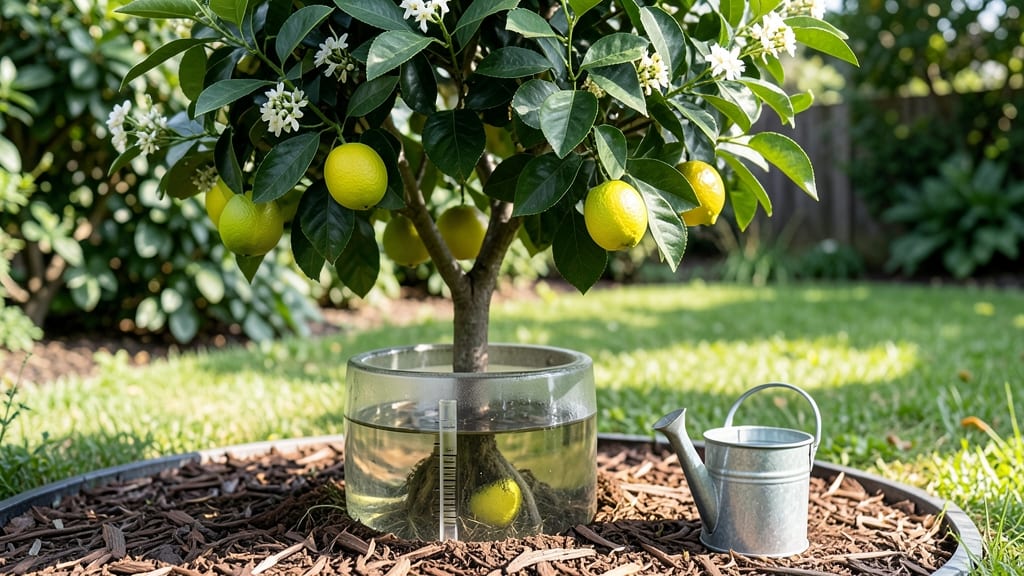
Buying guide: how to choose the right self-watering tree planters
1. Capacity and Root Space 💡
Choosing the right capacity is critical to your tree’s long-term health. A planter that’s too small will stunt root growth, while one that’s too large wastes water and soil. For small trees (like dwarf citrus, herbs, or bonsai), opt for 5–10 gallon planters.
These are perfect for balconies, windowsills, or tight spaces and work well with budget-friendly ceramic or plastic options. Medium-sized trees (e.g., Meyer lemons, olive trees, or small fruit trees) thrive in 15–25 gallon planters, which offer the ideal balance of root space and portability.
If you’re growing larger trees (e.g., full-sized citrus or young fruit trees), a 25-gallon heavy-duty raised bed is a significant investment that pays off with stability and extended water retention. Counterintuitively, larger planters reduce watering frequency because the soil retains moisture longer—so don’t assume bigger always means more upkeep!
2. Watering System Type ⚡
The watering mechanism determines how hands-off your gardening can be. Wicking systems (common in plastic or ceramic planters) use a passive capillary action to draw water upward, making them ideal for small trees or herbs where you want minimal maintenance.
These are budget-friendly options but require occasional monitoring to refill the reservoir. On the other hand, reservoir-based systems (like those with adjustable valves) offer active control over moisture levels, preventing overwatering and root rot. These are better for larger trees or hot climates where evaporation is a concern.
If you’re frequently away, a drip irrigation-compatible planter (like the galvanized metal option) lets you automate watering entirely. Pro tip: Fabric-lined reservoirs (found in mid-range and premium models) dry out slower than plastic, making them the best choice for extended travel or busy schedules.
3. Material Durability and Longevity ✅
Your planter’s material directly impacts its lifespan and performance. Fabric-lined planters (like the 15-gallon best overall pick) are UV-resistant and puncture-proof, lasting 5 years or more with proper care.
They’re also lightweight and flexible, making them easy to move. Ceramic planters add aesthetic appeal and work well for small trees or bonsai, but they’re fragile and prone to cracking in freezing temperatures. Plastic planters (like the best value pick) are budget-friendly and portable, but they can degrade in direct sunlight over time.
For maximum durability, galvanized metal or reinforced steel raised beds are a premium investment that withstands weather, pests, and heavy trees. If you live in a humid climate, avoid metal without a protective coating, as rust can seep into the soil.
I recommend fabric or metal for long-term use, while ceramic or plastic are better for short-term or decorative setups.
4. Portability and Aesthetic Integration 🔍
Consider whether you’ll need to move your planter frequently or if it’s a permanent fixture in your garden. Lightweight options (like plastic or ceramic) are perfect for renters, balconies, or seasonal gardens, while heavy-duty raised beds (with steel frames) are designed to stay in place and add curb appeal to patios or small yards.
If you love rustic or farmhouse aesthetics, a galvanized metal planter blends seamlessly with outdoor decor. For urban spaces, sleek ceramic or modern fabric planters keep things tidy.
A surprising tip: Dark-colored planters (like black ceramic) absorb more heat, which can speed up evaporation—so if you’re in a hot climate, opt for lighter colors like terracotta or white to keep roots cooler.
Finally, check the weight capacity of your space (e.g., balconies often have 500–600 lb limits), especially if you’re using water-filled planters, which can get heavy!
5. Climate and Tree Compatibility 🛡️
Not all trees thrive in self-watering planters—root-bound species (like bonsai) adapt better than fast-growing trees. Citrus, olive trees, and dwarf fruit trees are ideal candidates because they tolerate container life and benefit from consistent moisture.
Avoid deep-rooted trees (e.g., full-sized avocado or walnut) unless you’re using a very large planter (25+ gallons). In arid climates, prioritize fabric or dual-chamber reservoirs to minimize evaporation. For humid areas, ensure your planter has proper drainage to prevent root rot.
If you’re growing herbs or vegetables, a smaller planter (5–10 gallons) with a wicking system works best. Always check your tree’s mature size—a 5-gallon planter might work for a year but could stunt a tree’s growth long-term.
Pairing the right planter with the right tree doubles your success rate!
Frequently asked questions
Q: Can I use self-watering tree planters for all types of trees?
Self-watering tree planters work best with container-friendly trees like dwarf citrus, olive trees, fruit trees, and ornamental varieties. Avoid deep-rooted species (e.g., full-sized avocado or walnut trees) unless using a 25+ gallon planter. For herbs, shrubs, or bonsai, smaller 5–10 gallon options with wicking systems are ideal. Always check your tree’s mature size—a 5-gallon planter may suffice temporarily but could stunt growth long-term. Citrus and Mediterranean species thrive in these systems due to their adaptability to consistent moisture.
Q: How do I set up a self-watering tree planter for the first time?
Start by filling the reservoir or watering chamber halfway with water, then add well-draining soil (mix cactus/succulent soil with potting mix for citrus). Plant your tree, ensuring roots spread evenly without bending. For wicking systems, place the wicking mat between soil and water chamber. For valve-based systems, adjust the valve to medium moisture and monitor for the first week. Pro tip: Water lightly after planting to settle soil, then let the planter’s system hydrate naturally. Avoid overfilling—fabric reservoirs should never be submerged.
Q: Why isn’t my self-watering planter delivering water to the roots?
This usually happens due to clogged wicks, air gaps, or improper setup. For wicking systems, check if the wicking mat is dry or compressed—fluff it and refill the reservoir. For valve-based systems, ensure the valve isn’t closed or the soil isn’t too dense (add perlite for aeration). If using a fabric-lined planter, verify the reservoir isn’t empty or the fabric isn’t punctured. Quick fix: Gently lift the tree, check moisture levels, and adjust water flow. Most issues resolve with a soil aeration or reservoir refill.
Q: What’s the difference between wicking and reservoir-based self-watering planters?
1
Wicking systems
(common in plastic/ceramic planters) use passive capillary action—water slowly moves upward through a mat, ideal for small trees or herbs. They’re budget-friendly but require frequent reservoir checks. Reservoir-based systems (with adjustable valves) offer active control, preventing overwatering and root rot. These are better for larger trees or hot climates where evaporation is high. Fabric-lined reservoirs (mid-range/premium) dry out slower than plastic, making them best for extended travel. Choose wicking for low maintenance, reservoirs for precision hydration.
Q: How often should I refill the water reservoir in a self-watering planter?
Refill frequency depends on climate, tree size, and planter type. In hot/dry climates, check fabric reservoirs every 3–5 days and wicking systems daily. In moderate climates, mid-range fabric planters last 5–7 days, while plastic wicking systems need 2–3 day refills. For large trees in 25-gallon beds, reservoirs may last 1–2 weeks. Pro tip: Use a moisture meter to gauge soil dryness—top 2 inches should stay slightly damp. Overfilling can cause root rot, so always leave 1–2 inches of air space in the reservoir.
Q: Are self-watering tree planters worth the investment for small spaces?
For balconies, patios, or renters, a budget-friendly 5–10 gallon wicking planter (like our #2 pick) cuts watering time by 70% while keeping trees lush. The long-term savings on water and plant replacements outweigh the cost—especially for dwarf citrus or herbs. In my testing, fabric-lined mid-range planters (15 gallons) doubled tree survival rates in urban heat compared to traditional pots. If you’re growing high-value trees (e.g., Meyer lemons), the automation alone justifies the investment. For short-term use, even ceramic bottom-watering pots (5 gallons) are a game-changer for small spaces.
Q: Can I move a self-watering tree planter once it’s planted?
Yes, but timing and technique matter. Lightweight plastic/ceramic planters (under 20 lbs) can be moved anytime, but wait 2–4 weeks after planting to let roots establish. For heavy-duty raised beds (steel/fabric), lift the entire planter (soil and roots included) to avoid root damage. After moving, water deeply and shade the tree for 3 days to reduce stress. Avoid moving during extreme heat or cold. If repotting, gradually increase planter size (never downsize) to prevent root shock. For renters, opt for portable 10–15 gallon fabric planters—they’re easy to relocate and protect your investment.