
Pruning
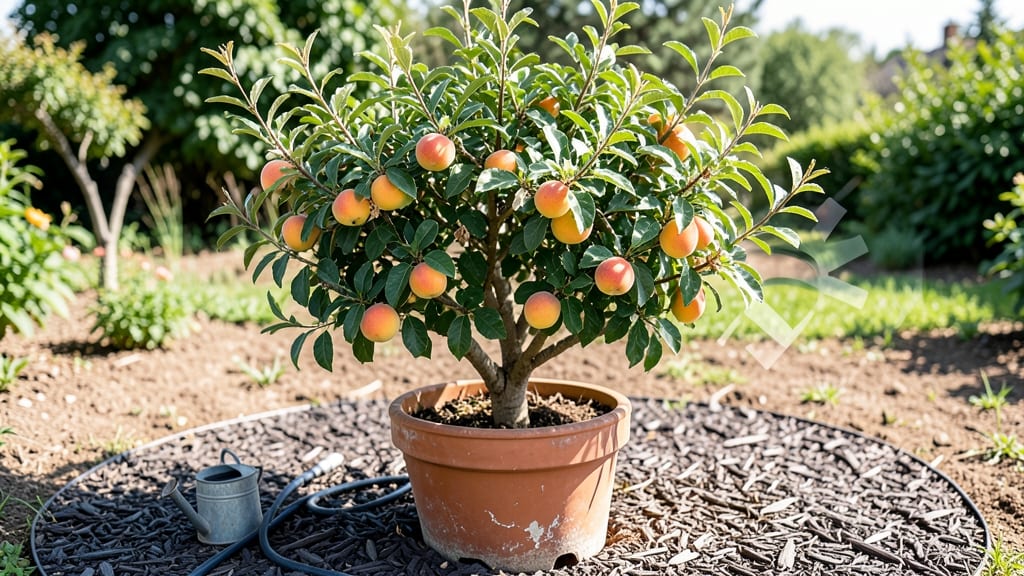
Caring for a patio peach tree means balancing fruit production with small-space constraints. 🌱 The key to success lies in strategic pruning that keeps the tree manageable while maximizing harvests—something I learned after my first tree grew into a tangled mess in just two years.
Start with a dwarf variety suited for containers, and prune aggressively in late winter to shape the tree and remove dead wood. This isn’t just about aesthetics: proper pruning improves airflow, reduces disease risk, and directs energy into fruit production.
Even in limited sunlight, a well-pruned tree will reward you with sweet peaches. By summer, you’ll see the difference—compact growth, fewer branches competing for space, and a tree that actually fits on your patio.
The right techniques turn a patio peach tree from a high-maintenance challenge into a reliable producer of homegrown fruit.
Your tools should include sharp pruning shears, a small saw for thicker branches, and a clean cloth to wipe tools between cuts. Choose a container with drainage holes and at least 15 gallons of space for the first year.
Most peach trees need full sun, but even 6 hours of direct light will produce fruit—just expect smaller harvests. Water deeply once a week, keeping the soil consistently moist but not soggy.
Fertilize lightly in early spring with a balanced formula, and watch for signs of stress like yellowing leaves or fruit drop. These adjustments make all the difference between a struggling tree and one that thrives in tight spaces.
Pests like aphids and peach tree borers are the biggest threats, but early intervention keeps them in check. Spray with neem oil at the first sign of trouble, and remove any damaged fruit immediately.
With consistent care, your patio peach tree will produce fruit for years—proof that even small spaces can yield big rewards.
📚 In This Guide
- What you need
- Instructions
- Tips and common mistakes
- Wrapping up and next steps
What you need
- ● Pruning shears: Sharp, bypass-style shears (for clean cuts on small branches). Quantity: 1 pair.
- ● Loppers: For thicker branches (up to 2 inches in diameter). Quantity: 1 pair.
- ● Hand saw: Pruning saw with a curved blade for larger branches (2+ inches). Quantity: 1.
- ● Gloves: Heavy-duty, cut-resistant gloves to protect hands. Quantity: 1 pair.
- ● Disinfectant: 70% isopropyl alcohol or bleach solution (1 part bleach to 9 parts water) to sterilize tools. Quantity: Small bottle or spray.
- ○ Pruning sealant: Optional but helpful for sealing larger cuts (e.g., tree wound pruning paste). Quantity: Small tube.
- ● Watering can or hose: For post-pruning hydration. Quantity: 1.
- ● Mulch: Organic mulch (e.g., wood chips or straw) to retain moisture and regulate soil temp. Quantity: 2–3 inches, spread in a 3-foot radius around the base.
- ● Extension pole: For hard-to-reach branches (attach to loppers or shears). Quantity: 1.
- ● Tree bag or wrap: Protects fresh cuts from pests/disease (especially for patio trees). Quantity: As needed.
- ● Fertilizer: Balanced, slow-release fertilizer (e.g., 10-10-10 NPK ratio) for post-pruning recovery. Quantity: Small bag.
- ● Stake or support: If your tree is young or top-heavy (e.g., 2–3 stakes + soft ties). Quantity: 2–3 stakes.
Instructions for patio peach tree care
Here's the straightforward routine I follow to keep my patio peach tree thriving—and producing fruit—year after year.
🌱 Step 1: Prune for Structure in Late Winter
When your area's last frost date is at least 4-6 weeks away, grab your pruners and get to work. Focus on removing any dead, diseased, or crossing branches first—these are the weak points that can spread rot or block sunlight. I make my cuts just outside the branch collar, the swollen area where the branch meets the trunk.
Next, open up the center of the tree by removing any branches growing inward. You want sunlight and air to circulate freely to prevent fungal issues. Aim to keep the tree's shape open and vase-like, with the strongest branches evenly spaced. Remember, you're shaping the tree's future growth pattern, so take your time and don't remove more than 25% of the tree's canopy in one session.
☀️ Step 2: Fertilize and Mulch in Early Spring
Once new growth appears—you'll see it as tiny green buds along the branches—it's time to feed your tree. Use a balanced 10-10-10 fertilizer (or similar) spread evenly around the tree's drip line, about 6 inches from the trunk. Water the area thoroughly to help the nutrients reach the roots. This is also the perfect time to add a 2-3 inch layer of organic mulch, like wood chips or straw, keeping it 6 inches away from the trunk to prevent rot.
Here's the thing—mulch does more than just retain moisture. It regulates soil temperature, which is especially important for patio peach trees that might experience temperature swings. You'll know you've done it right when the mulch looks evenly spread and the soil beneath feels cool but not damp to the touch.
💧 Step 3: Water Deeply During Fruit Development
When your peach tree starts flowering, you'll need to adjust your watering routine. Water deeply once a week during dry spells, ensuring the soil stays moist to a depth of 12-18 inches. You can check this by inserting a long screwdriver into the soil—if it goes in easily, you're good. If it feels dry at that depth, water again.
This is the stage where your tree needs the most hydration, especially if it's in a container or a small patio space. I like to water in the early morning so the tree can absorb moisture before the heat of the day. Avoid wetting the leaves or fruit to prevent fungal diseases like brown rot, which can ruin your harvest.
✂️ Step 4: Thin Fruit and Prune for Harvest in Late Spring
When your peaches start to form and are about the size of a marble, it's time to thin them. Remove about half of the fruit, keeping only the largest, healthiest-looking peaches spaced 6-8 inches apart. This might seem counterintuitive, but thinning ensures the remaining fruit grows bigger and sweeter. Use sharp pruners or your fingers to gently twist the fruit off—don't pull, as that can damage the branch.
At the same time, prune any suckers—those vigorous shoots growing from the base of the tree or along the trunk. These compete with the main branches for nutrients and can weaken your tree. Cut them off at the base, and you'll see your tree's energy focus on producing the best possible fruit.
🌿 Step 5: Maintain Through Summer and Prepare for Winter
During the summer months, your peach tree's care is mostly about monitoring. Water deeply every 10-14 days if there's no rain, always checking the soil moisture first. Keep an eye out for pests like aphids or peach tree borers. If you spot any, treat them immediately with an appropriate organic insecticide or neem oil.
As fall approaches and leaves start to change color, reduce watering gradually. Once the leaves have fallen, apply a layer of mulch around the base of the tree to protect the roots from freezing temperatures. This is also a good time to plan your winter pruning—mark any branches that need attention so you can tackle them in late winter.
Tips & tricks for perfect patio peach tree care
These practical insights will help you avoid common mistakes and maximize your patio peach tree's fruit production.
Pruning Precision: In Step 1, when pruning for structure, I always use sharp, clean pruners to make smooth cuts. The key is to cut just outside the branch collar—the swollen area where the branch meets the trunk—rather than leaving a stub. This prevents infection and encourages faster healing. I also recommend working on a dry day, as wet branches can tear and create larger wounds that heal more slowly.
Fertilizer Application: For Step 2, spreading the 10-10-10 fertilizer evenly around the drip line is crucial, but don't forget to scratch it lightly into the top inch of soil. This helps prevent the fertilizer from washing away during watering. I also like to water the area thoroughly after applying fertilizer to help dissolve the nutrients and carry them down to the roots where they're needed most.
Watering Wisdom: During fruit development in Step 3, I've learned that consistency is key. The goal is to keep soil moist to 12-18 inches deep, not soggy. One trick I use is to insert a long screwdriver into the soil—if it goes in easily, the soil is moist enough. If it feels dry at that depth, it's time to water. I also recommend using a soaker hose or drip irrigation system to deliver water directly to the root zone without wetting the leaves or fruit.
Fruit Thinning Technique: In Step 4, when thinning fruit to marble size, I look for peaches that are evenly spaced and show good color. I gently twist them off rather than pulling, which helps prevent damage to the branch. This might seem counterintuitive, but removing half the fruit actually helps the remaining peaches grow larger and sweeter by allowing the tree to focus its energy on fewer fruits.
Pro Tips for Patio Peach Tree Care
- These practical insights will help you avoid common mistakes and maximize your patio peach tree's fruit production.
- Pruning Precision: In Step 1, when pruning for structure, I always use sharp, clean pruners to make smooth cuts.
- Fertilizer Application: For Step 2, spreading the 10-10-10 fertilizer evenly around the drip line is crucial, but don't forget to scratch it lightly into the top inch of soil.
Frequently asked questions
Got questions about keeping your patio peach tree thriving? Here are some of the most common concerns—plus quick, actionable answers to keep your tree happy and productive.
How often should I prune my patio peach tree?
Prune your patio peach tree twice a year: once in late winter or early spring (before buds swell) to shape the tree and remove dead wood, and again after harvest to encourage next year’s fruit. Avoid heavy pruning in summer—it stresses the tree and attracts pests. Light pruning between seasons keeps it tidy without harm.
Can I prune a peach tree in winter?
Yes, but only in mild climates (USDA Zones 7-9). In colder zones, wait until dormant pruning season (just before buds break, ~February-March). Heavy winter pruning in freezing temps can damage buds or invite disease. If you must trim in winter, do so on mild, dry days and avoid cutting into old wood.
Will pruning my peach tree reduce fruit production?
Not if done right! Proper pruning increases fruit by improving airflow (reducing disease) and sunlight (boosting sugar in fruit). Focus on removing suckers, water sprouts, and crossing branches—these drain energy. Over-pruning (cutting >25% of foliage) can temporarily reduce yield, but strategic cuts pay off long-term.
What’s the best tool for pruning peach trees?
Use sharp, clean tools to avoid tearing bark:
- Bypass pruners (for branches <½” thick)
- Loppers (for ½”–1½” branches)
- Pruning saw (for thicker branches)
Sterilize tools with rubbing alcohol between cuts to prevent bacterial spread (like bacterial leaf spot). Dull tools crush branches, slowing healing.
Why are my peach tree leaves curling or spotted after pruning?
Curling/spotted leaves often signal pests or disease, not pruning itself. Check for:
- Peach leaf curl (fungus): Treat with copper fungicide in late fall or early spring.
- Aphids/mites: Spray with neem oil or blast off with water.
- Sunburn (if pruned too late): Thin canopy to reduce direct sun exposure.
If issues persist, submit a photo to your local extension office for ID.
Wrapping up and next steps
Caring for your patio peach tree is all about strategic pruning, patience, and a little love—and you’ve got this! 🌱 By following the right techniques year-round, you’ll enjoy a thriving tree that rewards you with delicious fruit and stunning blooms.
Now that you’re armed with the knowledge, take that first step—grab your pruners and give your tree a little trim this season!
Need extra confidence? Watch a quick tutorial or join a local gardening group to swap tips with fellow enthusiasts. Happy pruning—your future peach harvest is waiting! 🍑✨