
Pruning
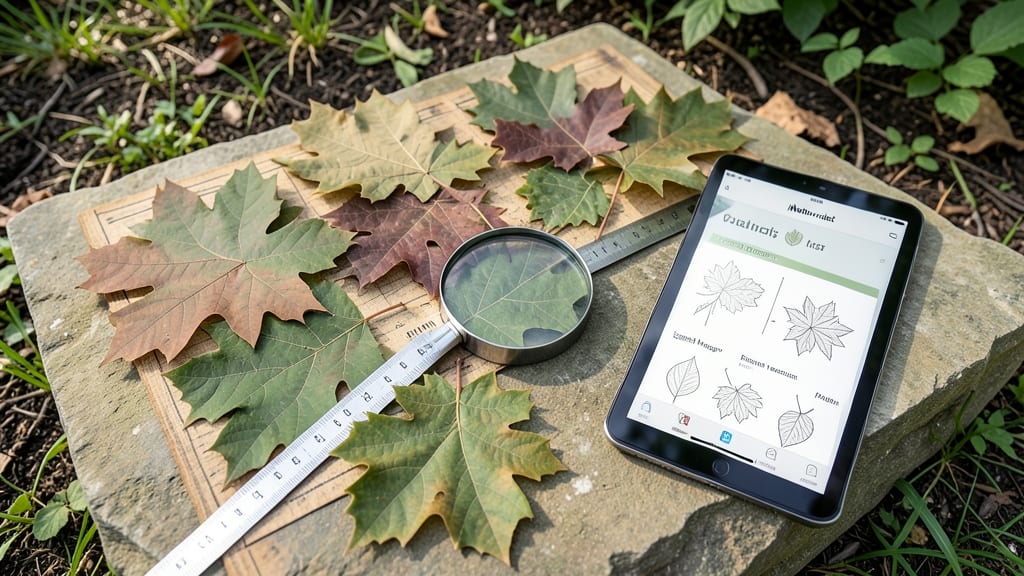
Mastering Oklahoma tree leaf identification unlocks the secret language of your yard. 🌳 I’ve spent years studying the lobed maples, needle-like pines, and serrated oaks that dominate our state’s landscapes—and once you recognize these patterns, every walk becomes a nature lesson.
The key is matching leaf shape, edge texture, and vein structure to common species like the sugar maple’s starburst lobes or the eastern redbud’s heart-shaped early blooms. Seasonal changes matter too: autumn turns vibrant, but yellowing leaves can also signal stress from pests or drought.
With just a magnifying glass and a pocket guide (or phone app), you’ll spot native favorites like American sycamore and invasive threats like Chinese tallow. Healthy leaves feel firm and smell fresh; diseased ones often droop or develop spots.
This isn’t just about naming trees—it’s about understanding the ecosystem they support. Ready to become your neighborhood’s tree whisperer?
📚 In This Guide
- What you need
- Instructions
- Tips and common mistakes
- Wrapping up and next steps
What you need
- ○ Field Guide or Smartphone App: A printed Oklahoma Tree Identification Guide (optional but helpful) OR
- ● A smartphone with apps like iNaturalist, LeafSnap, or PictureThis (free/paid versions available).
- ● Hand Lens (Magnifier): 10x magnification (e.g., National Optical or Loupe brand).
- ● Notebook & Pen: Small, waterproof notebook (e.g., Rite in the Rain) for sketching details.
- ● Measuring Tape or Ruler: 6-inch or 12-inch tape measure for leaf dimensions.
- ○ Gloves (Optional): Lightweight gardening gloves (e.g., Fellowes) for prickly leaves or thorns.
- ● Camera or Smartphone: With a macro mode or high-resolution camera (e.g., iPhone 13+ or Android with 12MP+).
- ● Plastic Baggies or Envelopes: 3x5-inch resealable bags (e.g., Ziploc) to preserve leaf samples.
- ● Leaf Press: DIY (heavy books) or store-bought (e.g., Adafruit kit) to flatten leaves for long-term storage.
- ● Field Journal: Pre-made botanical journals (e.g., Arcturus) for detailed notes.
- ● UV Flashlight: (e.g., Black Diamond) to check for fluorescent leaf patterns (fun for nighttime ID!).
- ● Local Flora Key: Borrow from the Oklahoma State University Botany Dept or Oklahoma Forestry Services.
How to identify common Oklahoma trees by their leaves
Here's the method I rely on to confidently match leaves to trees in Oklahoma's diverse landscapes.
🌿 Step 1: Examine Leaf Shape and Arrangement
Start by observing the leaf's overall shape—whether it's lobed, serrated, smooth-edged, or needle-like. For example, white oak leaves have rounded lobes with pointed tips, while red oak leaves have sharper, bristle-tipped lobes. Notice how leaves attach to the stem: alternate (one leaf per node) or opposite (pairs at each node). Hickory leaves are compound with 5-7 leaflets arranged alternately, while elm leaves are simple with serrated edges and asymmetrical bases.
Run your fingers along the leaf edge—smooth, toothed, or lobed edges tell you volumes. Sweetgum leaves are star-shaped with serrated edges, while pecan leaves are elongated with fine serrations. Pay attention to the leaf's texture: rough, fuzzy, or smooth surfaces can narrow it down further. I always carry a small notebook to sketch leaf shapes when I'm unsure—visual notes become invaluable later.
🌿 Step 2: Check Leaf Venation and Attachment
Look at the veins—are they palmate (spreading from a single point like fingers) or pinnate (running parallel like a feather)? Maple leaves have palmate venation, while walnut leaves show pinnate patterns. Hold the leaf up to light to see the vein structure clearly. The way a leaf attaches to the stem matters too: dogwood leaves have a petiole (leaf stalk) that twists when removed, while ash leaves have a straight petiole.
Examine the leaf base: Does it wrap around the stem (amplexicaul), or does it form a V-shape (sessile)? Black cherry leaves have a smooth, slightly asymmetrical base, while black walnut leaves have a more symmetrical, rounded base. I've found that leaf scars on twigs (the mark left when a leaf falls) can be a game-changer—elm leaves leave a U-shaped scar, while hickory leaves leave a half-moon shape.
🌿 Step 3: Observe Leaf Surface and Margins
Flip the leaf over to check the underside: Is it hairy, glossy, or dotted with glands? Sycamore leaves have a rough, hairy underside, while redbud leaves are smooth and slightly glossy. Run your thumb along the leaf margin—are the edges smooth, saw-toothed, or wavy? American beech leaves have smooth, wavy edges, while bitternut hickory leaves have sharp, serrated edges.
Look for distinctive features like glands (small bumps) on the leaf stalk or aromatic qualities when crushed. Sassafras leaves are trifoliate (three leaflets) and smell like root beer when crushed—a dead giveaway. Pecan leaves have a slightly bitter scent when crushed, while persimmon leaves are smooth and have a faint citrusy aroma. I always crush a small piece between my fingers to test for scent—it's a simple trick that eliminates half the guesswork.
🌿 Step 4: Compare with Known Oklahoma Species
Cross-reference your observations with a field guide or reliable online resource focused on Oklahoma trees. Focus on leaf size, shape, and arrangement first, then narrow down by bark texture, twig color, and fruit/seeds if available. For example, redbud trees have heart-shaped leaves and produce pink flowers in early spring, while eastern redcedar has scale-like, needle-like leaves and blue berries. I keep a laminated cheat sheet of common Oklahoma trees in my gardening bag—it’s saved me countless trips back to the car for my phone.
Pay attention to seasonal changes: Leaves in spring and fall may look different from summer foliage. Sweetgum leaves turn brilliant red in fall, while white oak leaves turn rusty brown. If you're identifying in winter, look for bud shapes and bark patterns—American elm has flat, oval buds, while hackberry has pointed, conical buds. I always make notes on the time of year I observed the leaf, as seasonal variations can drastically alter appearance.
✂️ Step 5: Verify with Additional Tree Features
Once you've narrowed it down, check the bark, branches, and fruit for confirmation. Osage orange has a distinctive corky, diamond-patterned bark, while shagbark hickory has long, curling plates. Pecan trees produce large, oval nuts with a rough husk, while walnut nuts have a smoother, harder shell. I’ve found that flower clusters can be the final clue—dogwood has four white petal-like bracts, while hackberry has small, greenish flowers in drooping clusters.
Don’t forget to check the twigs: Are they smooth, hairy, or ridged? Black cherry twigs have a bitter almond scent when snapped, while persimmon twigs are smooth and slightly zigzagged. If you're still unsure, take a photo and compare it with online databases like the USDA Plants Database or iNaturalist. I’ve used these tools to confirm identifications for trees I’ve been staring at for years—sometimes a second opinion from a community of experts is all you need.
Tips & tricks for mastering Oklahoma tree leaf identification
These practical insights will help you sharpen your skills and avoid common pitfalls when matching leaves to trees.
Visual Documentation: Take high-quality photos of leaves from multiple angles—top, bottom, and close-ups of edges and veins. I use my phone's macro mode to capture fine details like serrations or glandular spots that are invisible to the naked eye. Store these photos in an album organized by season, as leaf characteristics change dramatically between spring, summer, and fall. This visual archive becomes your most reliable reference when you're out in the field.
Seasonal Timing Insight: Early spring is the best time to identify trees by leaves because the foliage is fresh and hasn't been damaged by pests or weather. That said, I've learned to adjust my approach: in summer, focus on leaf arrangement and texture, while in fall, pay special attention to color changes and leaf scars. Winter identification requires shifting focus to bark patterns and bud shapes, which I document separately in my field notebook.
Field Guide Cross-Referencing: Carry a laminated quick-reference guide of Oklahoma's most common trees in your pocket. I've found that having both a physical guide and a digital app (like iNaturalist) creates a fail-safe system. When I'm unsure between similar species like red oak and white oak, I compare the leaf lobe shapes side by side in my guide. The subtle differences in bristle tips and lobe curvature become immediately obvious when visualized together.
Community Verification: When in doubt, consult local botanical communities. I've had several identifications confirmed through the Oklahoma Native Plant Society's online forums where members share photos and regional expertise. This collaborative approach often reveals subtle clues I might have missed, like the specific shade of green or the exact pattern of serrations that distinguish similar species.
Pro Tips for Oklahoma Tree Leaf Identification
- These practical insights will help you sharpen your skills and avoid common pitfalls when matching leaves to trees.
- Visual Documentation: Take high-quality photos of leaves from multiple angles—top, bottom, and close-ups of edges and veins.
- Seasonal Timing Insight: Early spring is the best time to identify trees by leaves because the foliage is fresh and hasn't been damaged by pests or weather.
Frequently asked questions
Got questions about identifying Oklahoma tree leaves? You’re not alone!
Here are answers to some of the most common queries—whether you're a curious homeowner, a gardener, or just trying to spot that mysterious tree in your yard.
What’s the best time of year to identify tree leaves in Oklahoma?
The ideal time is late spring through early fall (May–October), when leaves are fully mature and easy to distinguish. Avoid winter (bare branches) or early spring (new, fuzzy leaves). If you’re dealing with evergreens like pine or spruce, anytime works!
How do I tell the difference between oak and hickory leaves?
Oak leaves are lobed (like fingers on a hand) with smooth or bristly edges, while hickory leaves are long, toothed, and oval-shaped with 5–7 sharp points. Check the leaf base too—oaks often have stipules (small leaf-like structures) when young, while hickories don’t.
What should I do if I think a tree leaf has pests or disease?
First, don’t panic! Snap a clear photo (front and back of the leaf) and compare it to Oklahoma State University’s pest guides. Common culprits include aphids, scale insects, or fungal spots. Prune affected branches, remove debris, and contact your local extension office for treatment options.
Can I use my phone to identify tree leaves accurately?
Apps like LeafSnap, PictureThis, or iNaturalist use AI to match photos to species. For best results:
- Take a close-up of the leaf (include veins, edges, and underside).
- Capture multiple angles (e.g., whole branch + individual leaves).
- Note your location (Oklahoma-specific guides help filter results).
Are there any poisonous trees in Oklahoma with leaves I should avoid?
Yes! Watch for:
- Poison ivy: Three leaflets (remember: “Leaves of three, let it be!”), glossy green, and serrated edges. Rashes can appear from touching or even brushing nearby plants.
- Eastern red cedar (berries): While the leaves aren’t toxic, the berries can cause allergic reactions in pets or people with sensitivities.
- Black walnut: Leaves are compound with 15–23 leaflets, but the tree’s roots and husks release juglone, which harms other plants.
Wrapping up and next steps
Identifying Oklahoma’s native trees by their leaves is a rewarding way to connect with your local ecosystem—whether you’re a gardener, a nature enthusiast, or just curious about the greenery in your yard! 🌿 From the bold, jagged edges of the Eastern Redbud to the delicate fern-like fronds of the Southern Magnolia, each leaf tells a story about the trees that shape Oklahoma’s landscapes.
Now that you’ve got the tools and tips to spot them like a pro, why not take your newfound skills outside?
Next steps: Grab a notebook, snap a few photos, or even plant a native species in your garden to support local wildlife. Every leaf you recognize is a step closer to becoming a true Oklahoma tree whisperer! 🌳✨