
Pruning
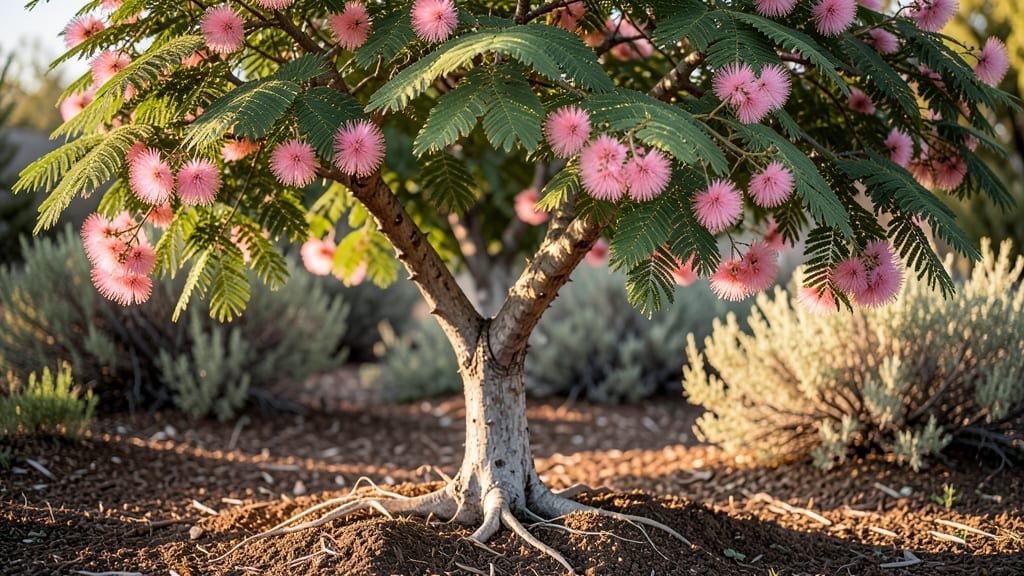
For growing mimosa trees in Utah, choose cold-resistant varieties like Albizia julibrissin ‘Summer Chocolate’ or Albizia julibrissin ‘Pink Dawn’, which handle Utah’s USDA Zones 6-9 well. These need fast-draining soil, full sunlight, and winter protection from strong winds. Always prune in late winter to promote thicker growth and prevent frost damage to fresh shoots.
Utah’s variable climate—hot summers and freezing winters—can stress mimosa trees if you don’t pick the right variety.
The key is selecting types that naturally enter dormancy and resist cold snaps down to 10°F. 🌬️ I’ve seen ‘Summer Chocolate’ thrive in northern Utah gardens because its deep roots insulate against frost, while ‘Pink Dawn’ blooms reliably even in Zone 7.
Both varieties also handle Utah’s alkaline soils better than standard mimosas, which is a common pitfall for gardeners in the state.
When planting, focus on well-drained soil and full sun exposure—these trees won’t tolerate soggy roots or shade. Mulching with 3-4 inches of wood chips in late fall helps regulate soil temperature, while temporary windbreaks (like burlap screens) protect young trees from Utah’s harsh winter gusts.
The late-winter pruning tip isn’t just about shaping—it’s about removing weak branches before new growth starts, which is especially critical in Utah’s unpredictable spring weather.
💡 In This Article
- Cold-Climate Mimosa Tree Survival: Hardiness Zones and Winter Care
- Utah-Friendly Mimosa Varieties: Growth Habits and Planting Tips
Cold-climate mimosa tree survival: hardiness zones and winter care
Mimosa trees survive Utah winters through a combination of natural adaptations and strategic care. Their survival hinges on entering dormancy when temperatures drop below 40°F, a process triggered by shorter daylight hours.
During dormancy, the tree's roots act as an insulating system, storing energy in the form of starches that protect vital tissues from freezing. The leaves drop naturally, reducing water loss and preventing damage from ice accumulation—a critical adaptation for Utah's 10-15°F winter lows.
The key to winter survival lies in selecting varieties bred for cold tolerance, like 'Summer Chocolate' or 'Pink Dawn', which can withstand USDA Zones 6-9. These varieties develop thicker bark and deeper root systems compared to tropical mimosas, which struggle below 20°F.
Utah's microclimates play a huge role—trees planted near south-facing walls or in sheltered valleys experience 5-10°F warmer conditions than exposed areas, making location selection just as important as variety choice.
Protecting mimosa trees requires a multi-layered approach. Start with 3-4 inches of organic mulch (like wood chips) around the base to insulate roots, which can stay 10°F warmer than exposed soil. Add a burlap windbreak on the north side to block Utah's drying winter winds, which can desiccate bark.
For young trees, wrap the trunk with tree wrap to prevent sunscald—a common issue when winter sun warms the bark while cold nights freeze it.
Water management is often overlooked but crucial. Mimosa trees should be deep-watered in fall before dormancy to build root reserves, but avoid winter watering which can freeze in the soil. In Utah's alkaline soils, adding gypsum (calcium sulfate) before winter improves drainage, preventing root rot from spring thaws.
The goal is to mimic natural conditions where mimosas grow in well-drained, slightly acidic soils.
What most Utah gardeners don't realize is that mimosa trees actually prefer Utah's dry winters—they're adapted to Mediterranean climates with wet winters and dry summers. The challenge is preventing windburn and frost cracks. Prune in late winter (February-March) when the tree is still dormant but before buds swell.
This removes weak branches that would otherwise freeze and die, while allowing the tree to redirect energy to stronger growth when spring arrives.
For maximum protection, consider planting near evergreen windbreaks like Ponderosa pines, which create a 10°F warmer microclimate. The needles also provide natural mulch as they drop. This technique has helped 'Pink Dawn' mimosas thrive in Zone 6a Utah gardens where standard mimosas would fail.
The key is combining the right variety with these protective strategies to create a winter sanctuary for your tree.