
Trees
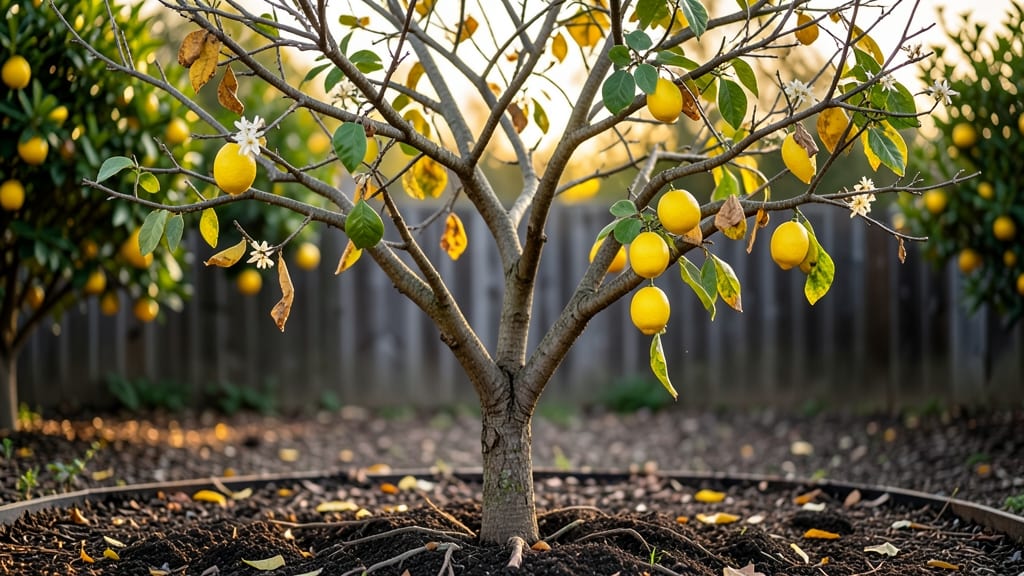
Your lemon tree shedding leaves doesn't have to mean the end of your citrus harvest. 🌿 I've seen trees bounce back from this exact problem with just a few targeted adjustments—even when they looked hopeless at first glance.
The key is understanding whether your tree is thirsty, drowning, or fighting off pests, because each issue needs a different fix.
Most leaf drop happens from overwatering or underwatering—both common mistakes when you're just learning. I check soil moisture by sticking my finger an inch deep; if it's dry, it's time to water, but if it's soggy, hold off.
Pests like spider mites also trigger shedding, and they thrive when trees are stressed from inconsistent watering. A quick spray with neem oil often stops them in their tracks.
Once you identify the problem, the fixes are straightforward: adjust your watering schedule, prune any damaged branches, and feed the tree with citrus-specific fertilizer. Within 4-6 weeks, you'll see fresh green leaves pushing out, and those lemons will start forming again.
The best part? These same steps work for potted trees and in-ground varieties alike.
Prevention is simple after you've revived your tree: water consistently, monitor for pests weekly, and fertilize every 2-3 months during growing season. My trees haven't shed a single leaf since I started this routine—and neither will yours once you get the hang of it.
Root Causes Behind Leaf Drop
Understanding why your lemon tree is shedding leaves starts with identifying the core stressors disrupting its health. Lemon trees (Citrus × limon) are sensitive to environmental shifts, nutrient imbalances, and biological threats.
Below, we break down the most common triggers—each with a clear scientific explanation and actionable insights to help you diagnose the issue.
Lemon trees thrive in USDA Hardiness Zones 9–11, where winters stay above 25°F (-4°C). When exposed to cold snaps, frost, or sudden temperature drops, the tree’s metabolic processes slow or shut down, triggering abscission (the natural shedding of leaves to conserve energy).
- Why it happens: - Cold damage: Temperatures below 30°F (-1°C) can cause cellular damage in leaves, leading to browning and drop.
Frost crystallizes water in cells, rupturing them. - Heat stress: While lemon trees love warmth, prolonged exposure above 95°F (35°C) with low humidity can cause wilting and leaf scorch, forcing the tree to shed foliage. - Transplant shock: Moving a lemon tree (especially in spring or fall) can disrupt its root system, making it vulnerable to stress-related leaf drop.
- Actionable fix:
- Protect from frost: Cover young trees with frost cloth or move potted trees indoors before temperatures dip.
- Acclimate gradually: If moving a lemon tree, harden it off over 2–3 weeks to adjust to outdoor conditions.
- Monitor humidity: In hot climates, mist leaves or use a shade cloth to reduce heat stress.
Lemon trees are drought-tolerant but hate soggy roots. Both underwatering and overwatering can cause leaf drop, but the mechanisms differ.
- Why it happens: - Underwatering: - Leaves curl, yellow, and drop as the tree prioritizes root survival over foliage. Wilting occurs when turgor pressure (cell water pressure) drops below critical levels. - Soil moisture stress triggers ethylene production, a plant hormone that accelerates leaf abscission. - Overwatering: - Root rot (from Phytophthora or Fusarium fungi) suffocates roots, cutting off water and nutrient uptake.
Yellowing leaves with brown, mushy stems are telltale signs. - Poor drainage leads to oxygen deprivation, causing anaerobic conditions that release toxic compounds like ethanol, damaging cells.
- Actionable fix: - Check soil moisture: Stick your finger 2–3 inches deep—if dry, water deeply.
If soggy, hold off and improve drainage. - Adjust watering: - Potted trees: Water when the top 1–2 inches of soil are dry. - In-ground trees: Water 1–2 times per week (more in summer), ensuring 6–8 inches of soil moisture. - Fix drainage: Amend heavy soil with perlite or sand, and ensure pots have drainage holes.
Lemon trees crave full sun (6–8 hours daily) but can sunburn or stress if conditions change abruptly.
- Why it happens: - Sunburn: Direct afternoon sun in hot climates can cause leaf bleaching or scorch, leading to premature drop.
Affected leaves may show white or brown patches. - Light deprivation: Moving a lemon tree from bright indoor light to deep shade (or vice versa) disrupts photosynthesis, causing chlorosis (yellowing) and leaf loss. - Windburn: Strong, dry winds increase transpiration (water loss), stressing the tree and causing leaf desiccation.
- Actionable fix:
- Gradual acclimation: If moving a tree outdoors, start with 2–3 hours of sun/day, increasing exposure over 1–2 weeks.
- Provide afternoon shade: Use sheer curtains or light shade cloth in intense heat.
- Wind protection: Plant in a sheltered spot or use a windbreak (like a fence or trellis).
Lemon trees are heavy feeders and require balanced nutrients (especially nitrogen, iron, and zinc). Deficiencies or poor soil structure can stunt growth and cause leaf drop.
- Why it happens:
- Nitrogen deficiency:
- Old, yellow leaves (starting at the bottom) indicate chlorosis from lack of nitrogen, which is vital for chlorophyll production.
- The tree sheds leaves to redirect energy to root and fruit production.
- Iron or zinc deficiency:
- Yellowing between veins (interveinal chlorosis) is classic for iron deficiency, common in alkaline soils (pH > 7).
- Stunted growth and small leaves signal zinc deficiency, often in sandy or acidic soils.
- Soil compaction or poor aeration:
- Compacted soil restricts root respiration, leading to oxygen starvation and leaf drop.
- Nitrogen deficiency:
- Actionable fix: - Test soil pH: Aim for 6.0–7.0.
Adjust with sulfur (to lower pH) or lime (to raise pH). - Fertilize properly: - Use a balanced citrus fertilizer (6-6-6 or 8-3-9) in early spring and summer. - For iron deficiency, apply chelated iron or iron sulfate. - Improve soil: - Add compost or well-rotted manure for organic matter. - Aerate compacted soil with a garden fork or gypsum for clay soils.
Hidden pests and pathogens can drain nutrients or clog vascular systems, forcing the tree to shed leaves as a survival mechanism.
- Why it happens:
- Root pests:
- Root weevils, nematodes, or grubs feed on roots, disrupting water and nutrient uptake.
- Fungal infections (like root rot) block xylem vessels, causing wilting and leaf drop.
- Foliage pests:
- Aphids, scale, or spider mites suck sap, weakening the tree and causing yellowing or curling leaves.
- Citrus leaf miner larvae tunnel in leaves, leading to premature drop.
- Bacterial or fungal diseases:
- Citrus canker causes raised, crusty lesions that prevent photosynthesis.
- Melanose (a fungal disease) discolors leaves, reducing their lifespan.
- Root pests:
- Actionable fix:
- Inspect leaves & roots:
- Flip over leaves for webbing (spider mites), sticky residue (aphids), or mining trails (leaf miners).
- Dig around roots for grubs or galls (signs of nematodes).
- Treat infestations:
- Neem oil (for soft-bodied pests like aphids).
- Systemic insecticides (e.g., imidacloprid) for scale or borers.
- Copper fungicides for citrus canker or melanose.
- Prevent recurrence:
- Mulch to deter pests and retain moisture.
- Prune infected branches and sterilize tools with rubbing alcohol.
- Inspect leaves & roots:
Even mature lemon trees struggle when roots are damaged during repotting, pruning, or soil disruption.
- Why it happens:
- Root pruning: Cutting roots (even accidentally) reduces water and nutrient absorption, causing stress-induced leaf drop.
- Soil disturbance: Digging near roots or compacted soil from construction can sever root hairs, leading to transient wilting.
- Potted trees: Root-bound trees (circling roots) strangle themselves, limiting growth and causing leaf shedding.
- Actionable fix:
- Repot carefully:
- Gently loosen roots before transplanting and water thoroughly afterward.
- Use
- Repot carefully:
Revive Your Tree With These Fixes
A lemon tree shedding leaves can be alarming, but with the right care, you can help it bounce back to health. The key is identifying the root cause and taking targeted action. Below are practical, step-by-step solutions tailored to common triggers, along with prevention tips to keep your tree thriving.
If your lemon tree is shedding leaves due to overwatering or underwatering, the solution is simple but requires consistency.
💧 Fix Overwatering
- 🔥 Stop Watering Immediately – Let the top 2–3 inches of soil dry out between waterings.
- 👨🍳 Improve Drainage – Ensure the pot has drainage holes.
If not, repot into one with better airflow. - 🥘 Use Well-Draining Soil – Mix in perlite, sand, or coconut coir to improve aeration. - ⏰ Water Deeply & Less Often – Water thoroughly until it drains from the bottom, then wait until the soil is dry before repeating.
💧 Fix Underwatering
- 🔥 Water Slowly & Deeply – Use a watering can with a narrow spout to avoid runoff.
- 🌡️ Check Soil Moisture – Stick your finger 2 inches into the soil; if dry, it’s time to water.
- 🎯 Mulch the Soil – Apply a 1–2 inch layer of organic mulch (like bark or straw) to retain moisture.
💡 Pro Tip: Yellowing leaves with crisp edges usually mean overwatering, while dry, brown leaves signal underwatering.
Lemon trees thrive in full sun (6–8 hours daily) and struggle with extreme heat or cold drafts.
🌞 Correcting Light Issues
- 🔥 Move to a Sunnier Spot – If indoors, place near a south-facing window or use grow lights (12–14 hours/day).
- 🍳 Gradually Acclimate Outdoors – If moving outside, introduce sunlight slowly to avoid shock.
- 🥘 Avoid Harsh Midday Sun – In hot climates, provide partial shade (50% shade cloth) during peak hours.
❄️ Fixing Temperature Stress
- 🌡️ Keep Indoors in Winter – Lemon trees hate cold drafts; keep temps above 50°F (10°C).
- 🎯 Avoid Heating Vents – Place the tree away from AC/heaters, which dry out leaves.
- ✨ Use a Humidifier – If air is dry (common in winter), increase humidity with a pebble tray or humidifier.
💡 Pro Tip: If leaves curl or drop suddenly, check for sunburn—move the tree to indirect light immediately.
Poor soil or nutrient deficiencies can cause leaf drop, especially in young or fruiting trees.
🍎 Fertilizing for Recovery
- 🔥 Use a Balanced Citrus Fertilizer – Look for a 10-10-10 or 8-3-9 NPK ratio (nitrogen, phosphorus, potassium).
- 👨🍳 Feed in Spring & Summer – Apply every 4–6 weeks during growing season; reduce in fall/winter.
- 🥘 Flush the Soil – Once a year, water with plain water to prevent salt buildup from fertilizers.
🌱 Improving Soil Quality
- 🔥 Repot if Needed – If roots are circling or soil is compacted, repot into fresh, well-draining citrus mix.
- 🌡️ Add Organic Matter – Mix in compost or worm castings for slow-release nutrients.
- 🎯 Test Soil pH – Lemon trees prefer slightly acidic soil (6.0–7.0).
Adjust with lime (to raise pH) or sulfur (to lower it).
💡 Pro Tip: Yellow leaves with green veins often mean iron deficiency—use a chelated iron supplement if needed.
Pests like spider mites, aphids, or scale insects can stress a lemon tree, leading to leaf drop.
🐜 Treating Pests Naturally
- 🔥 Inspect Leaves Daily – Check undersides for webs, sticky residue (honeydew), or tiny bugs.
- 🍳 Spray with Neem Oil – Mix 1 tsp neem oil + 1 tsp mild soap per quart of water; spray every 7–10 days.
- 🥘 Introduce Beneficial Insects – Ladybugs and lacewings eat aphids naturally.
🦠 Preventing Fungal Issues
- ⏰ Prune Infected Branches – Remove yellow, spotted, or mushy leaves immediately.
- 🌡️ Avoid Overhead Watering – Water at the base to prevent fungal spores from settling on leaves.
- ✨ Use Copper Fungicide – If leaf spot appears, spray with copper-based fungicide as a preventative.
💡 Pro Tip: Sticky leaves? Wipe with a damp cloth to remove honeydew (a sign of sap-sucking pests).
To keep your lemon tree healthy and leafy, follow these simple maintenance habits: ✅ Water wisely – Deep but infrequent (never soggy). ✅ Prune regularly – Remove dead/diseased branches in early spring. ✅ Monitor pests – Weekly inspections catch issues early. ✅ Fertilize seasonally – Spring & summer only (no winter feeding). ✅ Repot every 2–3 years – Refresh soil to prevent nutrient depletion.
With these targeted fixes, your lemon tree should stop shedding leaves and start regrowing lush, green foliage in weeks. 🍋✨ Patience and consistency are key—your tree will thank you!
Frequently asked questions
Is it normal for lemon trees to shed leaves in winter?
Some seasonal leaf drop is normal, but excessive shedding usually signals stress. Lemon trees naturally lose a few leaves in winter due to reduced light, but if you're seeing more than 20-30% of leaves falling, check for overwatering, cold drafts, or pest issues. Healthy trees should regrow leaves in spring.
How can I tell if my lemon tree is overwatered vs. underwatered?
Look at the leaves and soil: Overwatered trees have yellow, mushy leaves with brown stems and soggy soil that smells musty. Underwatered trees show dry, crispy leaf edges and pulled-up soil when you tug gently. Stick your finger 2 inches deep—if dry, water; if wet, wait.
Can I save my lemon tree if it's completely bare?
Yes! Even completely leafless trees can recover if the roots are healthy. Focus on correcting watering habits, improving drainage, and protecting from extreme temps. Apply a balanced citrus fertilizer and keep the tree in bright, indirect light. New growth often appears within 4-6 weeks with consistent care.
What's the fastest way to stop leaf drop from spider mites?
Start with a neem oil spray (1 tsp neem + 1 tsp mild soap per quart of water) applied every 7 days for 2-3 weeks. Also increase humidity (mist leaves daily) and remove heavily infested leaves. For severe cases, use insecticidal soap or horticultural oil. Check undersides of leaves daily for webbing.
Should I prune branches with shed leaves?
Only prune dead, diseased, or crossing branches—never healthy ones just because they've lost leaves. Prune in late winter or early spring using sterilized tools, cutting at a 45-degree angle just above a leaf node. This helps the tree focus energy on new growth rather than wasted foliage.