
How To
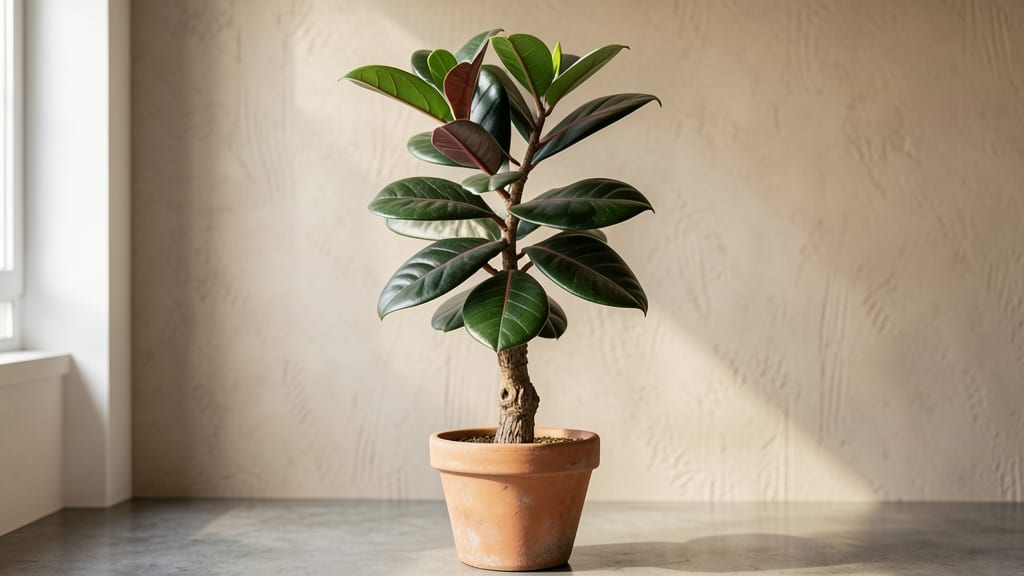
A rubber tree can grow up to 30 feet tall when given the right conditions—whether it’s a towering indoor statement piece or a sprawling outdoor shade tree.
If you're wondering whether your rubber tree will soon tower over your living room ceiling—or if it can thrive as a grand outdoor specimen—you're in the right place.
The height of a rubber tree (Ficus elastica) depends entirely on its environment, care, and variety, with some reaching small tree proportions while others stay compact.
Indoors, most varieties like 'Decora' or 'Black Prince' max out around 8 to 12 feet without pruning, but with proper care, they can grow even taller.
Outdoors, in warmer climates like USDA Zone 6a, they can easily hit 20 to 30 feet, making them a stunning focal point in your garden.
Learn how to control its height with pruning, the fastest-growing varieties, and why some rubber trees stay small while others shoot up like a jungle giant.

Rubber tree height limits: indoor growth potential by variety
Your rubber tree (Ficus elastica) can become a stunning indoor statement piece—but its height depends heavily on its variety and care. Indoors, most rubber trees stay between 3 to 10 feet tall, though some compact varieties never exceed 3 feet.
Unlike their outdoor counterparts, indoor rubber trees grow slower due to limited space and controlled conditions, making them perfect for apartments or cozy homes.
If you're choosing a rubber tree for a small space, opt for dwarf varieties like 'Burgundy' or 'Tineke,' which rarely surpass 4 feet.
Standard varieties like 'Decora' or 'Black Prince' can reach 6 to 10 feet indoors with proper care, but their growth rate slows significantly after 3 to 5 years. The key to managing height lies in light exposure, pruning, and pot size.
Light is the biggest factor in determining how tall your rubber tree grows indoors. Place it near an east or north-facing window for bright indirect light, which encourages slower, bushier growth. Avoid direct sunlight, which can scorch leaves and spur rapid, leggy growth.
If your tree stretches toward light or develops sparse foliage, it’s a sign it needs more light—or a grow light during winter months.
Pot size also plays a crucial role. Rubber trees grow faster in larger containers because they have more room to develop roots. However, if you want to limit height, keep your tree in a smaller pot (just 1–2 inches larger than its root ball).
This restricts root growth, which in turn slows stem elongation. Repot only when roots circle the pot, typically every 2–3 years.
Pruning is your best tool for controlling height. You can pinch back new growth tips when your tree is 6–12 inches tall to encourage bushier growth. For taller trees, use selective pruning to remove 1–2 inches from the top stem.
Always prune just above a leaf node to promote new shoots. With regular pruning, even a 'Robusta' variety can stay under 6 feet tall.
Fertilizer also influences growth. Use a balanced liquid fertilizer (10-10-10) during spring and summer to fuel steady growth, but reduce feeding in fall and winter to slow height increases.
Over-fertilizing can lead to rapid, weak growth that’s prone to falling over. Stick to every 4–6 weeks during active growth periods for best results.
Humidity levels matter too. Rubber trees thrive in 40–50% humidity, but indoor air is often drier, especially in winter. Low humidity can stunt growth or cause leaf drop.
Place a pebble tray under the pot or use a humidifier nearby to maintain optimal conditions. Mist leaves occasionally, but avoid soaking them to prevent fungal issues.
With the right care, your indoor rubber tree can live for decades, reaching its full height potential without becoming unmanageable. Start with the right variety for your space, provide consistent light and water, and prune regularly to keep it at your desired height.
Whether you want a compact tabletop plant or a tall indoor tree, the choice is yours!
🌿
Outdoor rubber tree growth: how tall can it really get?
When your rubber tree (Ficus elastica) transitions from a cozy indoor plant to an outdoor specimen, its growth potential skyrockets. In ideal conditions, outdoor rubber trees can reach heights of 10 to 30 feet, dwarfing their indoor counterparts.
The difference comes down to space, sunlight, and care—factors that turn a compact houseplant into a towering tropical tree.
Outdoor rubber trees thrive in USDA Zones 9-11, where they can grow unchecked by winter frosts. Even in milder climates like Zone 8, they’ll grow aggressively if protected from freezing temperatures.
Without pruning, some varieties like 'Black Prince' or 'Decora' can surpass 20 feet, while dwarf types may max out around 8-12 feet.
Sunlight is the biggest factor in outdoor rubber tree growth. These trees love bright, indirect light but can tolerate partial shade. In full sun, they grow 2-4 feet per year, while shaded trees may only reach 1-2 feet annually.
Well-draining, slightly acidic soil (pH 6.0-7.0) further fuels their growth, ensuring strong roots and lush foliage.
Pruning plays a crucial role in managing outdoor rubber tree height. Without pruning, a tree can quickly outgrow its space, but strategic cuts in late winter or early spring encourage bushier growth.
For example, cutting back 1/3 of the height in early spring can redirect energy to side branches, creating a fuller, more compact shape.
Comparing indoor and outdoor growth, outdoor rubber trees grow 3-5 times faster due to unlimited space and natural light cycles. While indoor trees max out at 6-10 feet with careful pruning, outdoor trees can double or triple that height.
The key is balancing their natural growth tendencies with your space and aesthetic goals.
If you’re planting a rubber tree outdoors, choose a location with 6+ hours of sunlight and protect young trees from harsh winds. Mulching around the base helps retain moisture, while regular watering (deep soaks every 7-10 days) keeps them thriving.
With the right conditions, your outdoor rubber tree could become a stunning focal point in your garden.