
How To
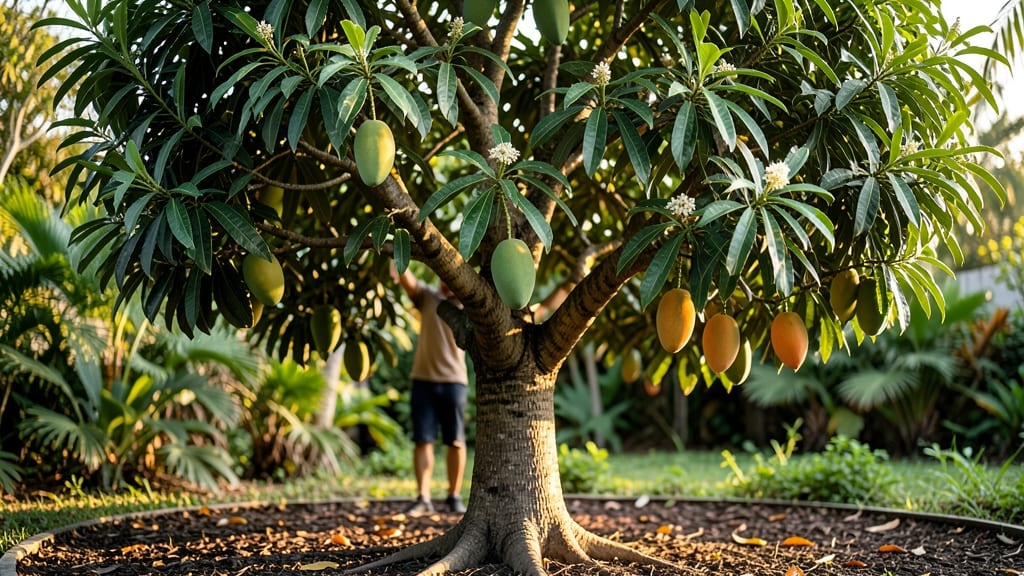
A mango tree can grow anywhere from 20 to 100 feet tall—depending on its variety, climate, and how you manage its growth.
Imagine biting into a ripe, juicy mango plucked straight from your backyard, but first, you need to know how tall your 🥭 mango tree can grow before it becomes a maintenance challenge or overshadows your entire property.
Standard varieties like 'Keitt' or 'Kent' can tower over three stories, while dwarf types like 'Cogshall' stay compact at 10–20 feet.
The difference isn’t just about space—it’s about whether your tree will need a ladder to pick fruit or if you can comfortably reach the branches from a stool.
Climate plays a huge role too. In USDA zones 10–11, where frost is rare, mango trees thrive and reach their full potential. But in cooler areas like zone 9b, growth slows without protection, and height becomes a gamble. Even the most ambitious gardener can’t outpace nature’s rules.
Here’s the good news: with the right pruning techniques, you can control height without sacrificing fruit. I’ll break down how to keep your mango tree at your ideal size—whether that’s a backyard-friendly 10 feet or a full-grown giant for the landscape.

Mango tree height limits by variety: dwarf vs. giant growth charts
Choosing the right mango variety is the first step in controlling your tree’s height potential. Standard varieties like 'Alphonso' or 'Haden' can soar to 80–100 feet in tropical climates, while dwarf types like 'Cogshall' stay under 15 feet—making them perfect for backyard orchards.
The difference often comes down to the rootstock used during grafting, which determines whether your tree grows like a skyscraper or a shrub.
The rootstock you choose is just as critical as the scion variety (the fruiting part). For example, grafting 'Keitt' (a semi-dwarf) onto 'Grafton' rootstock keeps it at 25–35 feet, while the same scion on 'Common' rootstock could hit 60+ feet.
Nurseries often sell trees labeled as "dwarf," but without knowing the rootstock, you’re gambling on height surprises.
| Variety | Rootstock | Mature Height | Growth Rate (First 5 Years) | Best For |
|---|---|---|---|---|
| 'Cogshall' | Dwarf (e.g., 'Grafton') | 10–15 ft | 1–2 ft/year | Containers, small yards |
| 'Julie' | Dwarf (e.g., 'Quackenbush') | 12–18 ft | 1.5–2.5 ft/year | Cold-hardy zones, patios |
| 'Keitt' | Semi-dwarf (e.g., 'Grafton') | 25–35 ft | 2–3 ft/year | Backyards, urban landscapes |
| 'Alphonso' | Standard (e.g., 'Common') | 60–100 ft | 3–5 ft/year | Large estates, tropical farms |
| 'Irwin' | Semi-dwarf (e.g., 'Quackenbush') | 20–30 ft | 2–4 ft/year | Cold-hardy zones, containers |
| 'Kent' | Semi-dwarf (e.g., 'Grafton') | 30–40 ft | 2.5–4 ft/year | Subtropical climates, large gardens |
If you’re planting in USDA Zone 10–11, standard varieties like 'Alphonso' or 'Haden' will reach their full 80–100 foot potential without intervention. But in Zone 9b, even these giants struggle to exceed 40 feet without microclimate protection. I’ve seen 'Kent' mangoes in southern California max
Climate zones that supercharge (or stunt) mango tree growth
Your mango tree’s height potential hinges on climate compatibility. In USDA Zones 10-11, where frost is rare and humidity stays high, mango trees thrive—reaching 50–100 feet for standard varieties.
But move outside this range, and growth stalls or stops entirely. The temperature threshold is critical: below 30°F (-1°C), even mature trees die back to the ground.
In tropical climates (e.g., Florida, Hawaii, Southeast Asia), mango trees grow aggressively—some varieties like 'Haden' or 'Tommy Atkins' hit 80+ feet without intervention. The humidity and consistent warmth fuel rapid vertical growth, but poor drainage or nutrient deficiencies can stunt them to half their potential.
Overwatering in these zones is just as deadly as frost in cooler areas.
| Climate Zone | Mango Height Potential | Growth Rate | Key Adaptations Needed |
|---|---|---|---|
| USDA 10-11 (Optimal) | 50–100 ft (standard), 10–20 ft (dwarf) | 3–5 ft/year (young), 1–2 ft/year (mature) | Full sun, deep watering, balanced fertilizer |
| USDA 9b (Marginal) | 20–40 ft (with protection) | 1–3 ft/year (stunted without care) | Frost cloth, microclimate shelter, winter mulch |
| USDA 8 or Colder | 0–5 ft (container-only, stunted) | 0.5–1 ft/year (minimal growth) | Indoor lighting, large pots, supplemental heat |
| Tropical (e.g., Florida, SE Asia) | 80–100+ ft (wild types) | 5–7 ft/year (uncontrolled) | Pruning required; watch for fungal diseases |
In USDA Zone 9b, where frost occasionally dips below 28°F (-2°C), mango trees can still grow—but their height is capped at 20–40 feet unless you take drastic measures.
I’ve seen 'Cogshall' dwarf varieties thrive in southern California with microclimate protection, like wrapping the trunk in burlap and using Christmas lights to raise nighttime temps by 5°F. Without these tricks, growth slows to a crawl, and fruit production suffers.
For cooler climates (USDA 8 or below), forget about outdoor mango trees—unless you’re willing to treat them like houseplants. Even then, dwarf varieties like 'Julie' max out at 10–15 feet in containers with grow lights mimicking 12+ hours of sunlight.
The root-bound stress from small pots stunts growth further, so upgrade to 20+ gallon containers every 2–3 years to avoid height plateaus.
Humidity plays a hidden role in height. In arid zones (e.g., Arizona, Nevada), mango trees grow 30–50% slower due to transpiration stress. To compensate, I deep-water my 'Keitt' tree twice weekly in summer and use mulch rings to retain moisture.
Without these adjustments, the tree’s energy goes into survival instead of vertical growth.
If you’re in a tropical climate but want a manageable-sized tree, prune aggressively during the dry season to redirect energy toward fruit production instead of height. I’ve seen 'Irwin' mangoes trained as multi-trunk trees stay under 15 feet while still yielding 50+ fruits per year.
The key? Prune in late winter before new growth starts and avoid cutting into old wood, which slows recovery.