
Planting
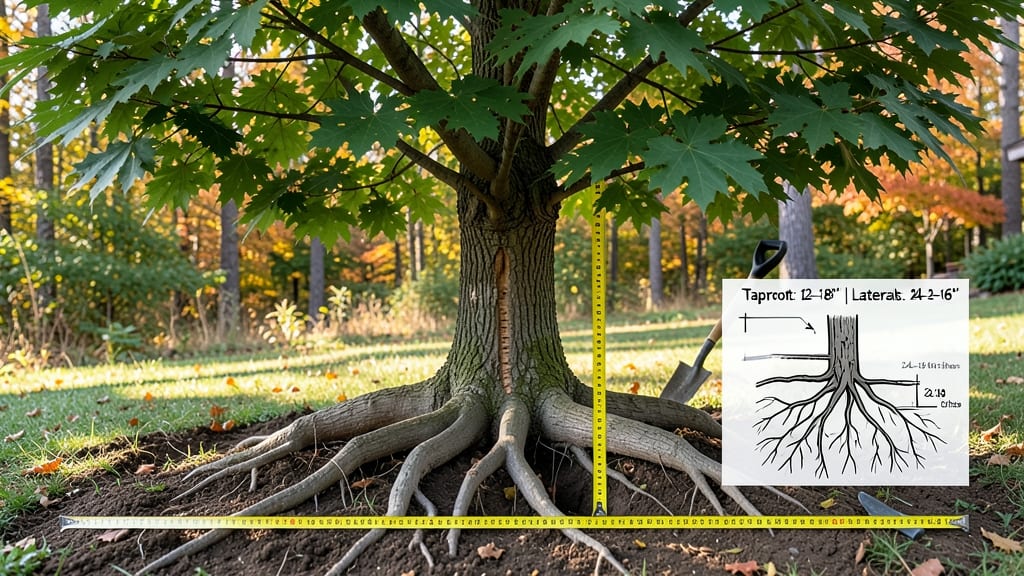
Maple tree roots spread wider and shallower than you might expect, often reaching 3 to 5 feet deep but stretching up to 3 times the tree’s height laterally.
Wondering whether your new maple tree will crack sidewalks or outcompete nearby plants? Understanding maple tree root depth is crucial for safe planting and long-term growth—here’s what every gardener needs to know.
Most maple varieties, like the sugar maple or silver maple, develop a mix of shallow lateral roots and a modest taproot. Soil type plays a big role: clay soils force roots to spread wider, while loamy soil lets them grow deeper.
In this guide, I’ll break down root depth by species, share planting distances to avoid damage, and give you pro tips to keep your maple tree thriving without turning your yard into a root warzone.
Maple tree root depth: how deep do they grow?
If you're planting a maple tree in your yard, understanding its root system is just as important as choosing the right spot. Maple trees develop a unique combination of taproots and lateral roots that influence their stability, water needs, and even potential damage to nearby structures.
Unlike shallow-rooted plants, maples strike a balance—deep enough for stability but wide enough to compete for nutrients.
The depth of maple tree roots varies by species, age, and soil conditions. Young trees focus on establishing a strong taproot, while mature trees develop extensive lateral roots that spread horizontally.
This dual system explains why maples can thrive in urban environments but also why they sometimes cause sidewalk cracks or plumbing issues. Let’s break down the science behind their growth patterns.
| Species | Taproot Depth | Lateral Spread | Soil Impact |
|---|---|---|---|
| Sugar Maple | 3-5 ft (young), 6-10 ft (mature) | 2-3x tree height | Prefers well-drained, loamy soil; struggles in clay |
| Silver Maple | 2-4 ft (young), 5-8 ft (mature) | 3-4x tree height | Adapts to wet soils; faster lateral growth |
| Red Maple | 3-5 ft (young), 7-12 ft (mature) | 2.5-3.5x tree height | Tolerates sandy soils but needs moisture |
| General Rule | Depth = 1/3 of tree height | Spread = 2-4x tree height | Compacted soil = shallower roots |
The taproot of a maple tree is its primary anchor, extending deep into the soil for stability, especially in windy conditions. However, as the tree matures, its lateral roots become the dominant force, spreading horizontally to access water and nutrients.
This shift explains why young maples might seem stable but can become problematic as they age. For example, a 20-foot sugar maple could have lateral roots extending up to 60 feet from the trunk.
Soil type plays a critical role in root depth. In loamy soil, which drains well but retains moisture, maple roots grow deeper and stronger. However, in clay-heavy soil, roots may stay shallower due to poor aeration, increasing the risk of surface damage.
If your yard has compacted soil, consider amending it with compost or aerating before planting to encourage deeper root growth.
Age also affects root depth. Young maples (under 5 years) rely heavily on their taproot, which can reach depths of 3-5 feet. As they mature, lateral roots dominate, spreading wider than they grow deep.
This is why mature maples often have roots breaking through sidewalks or interfering with underground pipes—even if the tree itself is far away.
If you're planting near a foundation or driveway, focus on the lateral spread rather than depth. The general rule is to plant maples at least 30 feet from structures, but this varies by species.
For instance, silver maples, with their aggressive lateral growth, may need even more space. Always check local guidelines for setback requirements in your area.
Another key factor is the tree’s water needs. Deep roots help maples access groundwater, but shallow lateral roots mean they also rely on surface moisture. During droughts, young maples may show stress if their roots can’t reach deep enough water sources.
Mulching around the base can help retain moisture and encourage root expansion.
For gardeners in urban environments, understanding these patterns is essential. Maple trees are popular for their vibrant fall colors and shade, but their roots can clash with hardscapes.
If you’re limited on space, consider dwarf varieties like ‘Autumn Blaze’ or ‘Armstrong’, which have slower lateral growth and are better suited for tight spaces.
Finally, if you’re concerned about root damage, monitor the soil around your maple tree. Signs of shallow roots include cracked pavement or uplifted sidewalks.
In these cases, you might need to install root barriers or prune aggressive lateral roots—though this should only be done by a professional to avoid harming the tree.
How far do maple tree roots spread? Avoiding property damage
Maple trees may look majestic in your yard, but their lateral roots can spread far beyond the tree’s canopy. On average, these roots extend 1.5 to 3 times the tree’s height from the trunk.
For a 30-foot-tall sugar maple, that means roots could spread 45 to 90 feet outward, invading driveways, sidewalks, and foundations if not planned properly.
Silver maples, known for their aggressive spread, often exceed this range, while red maples tend to stay slightly more contained. The key risk? Shallow lateral roots (typically within 12 to 18 inches of the soil surface) can lift concrete, crack pavers, and disrupt irrigation systems.
My neighbor’s 20-year-old silver maple split their patio stones clean in half—no warning, just sudden damage.
Maple roots grow horizontally, not downward. A 10-foot tree can have roots spanning 15+ feet outward. Plant at least 20 feet from structures like houses or sidewalks. If space is limited, consider dwarf varieties (roots spread 50% less).
To avoid conflicts, measure your space before planting. Sketch a 10-foot buffer around the tree’s mature canopy for safety. For example, a 40-foot-tall maple needs at least a 60-foot diameter clear zone. If your yard is tight, opt for Japanese maples, which have slower-spreading roots.
Even with proper spacing, compacted soil forces roots upward, increasing damage risks. Aerate the soil annually and mulch 3 inches deep (but keep mulch 6 inches away from the trunk) to encourage deeper root growth.
My sugar maple thrives because I amended the soil with compost and avoided heavy foot traffic near its base.
If you’re planting near a driveway or foundation, install a root barrier (buried vertically, 2 to 3 feet deep). Use hard plastic or metal barriers—not fabric, which roots penetrate.
For sidewalks, consider flexible pavers that can shift slightly as roots expand. I installed a 1-foot-deep barrier around my maple, and after 5 years, the sidewalk remains intact.
Pro tip: Monitor young trees for root suckers (shoots sprouting from roots). Remove them immediately—they signal aggressive root spread. Regularly check for cracks in hardscapes and adjust watering to avoid over-saturating shallow roots. With these precautions, your maple can grow safely without becoming a landscaping liability. 🌳