
Pruning
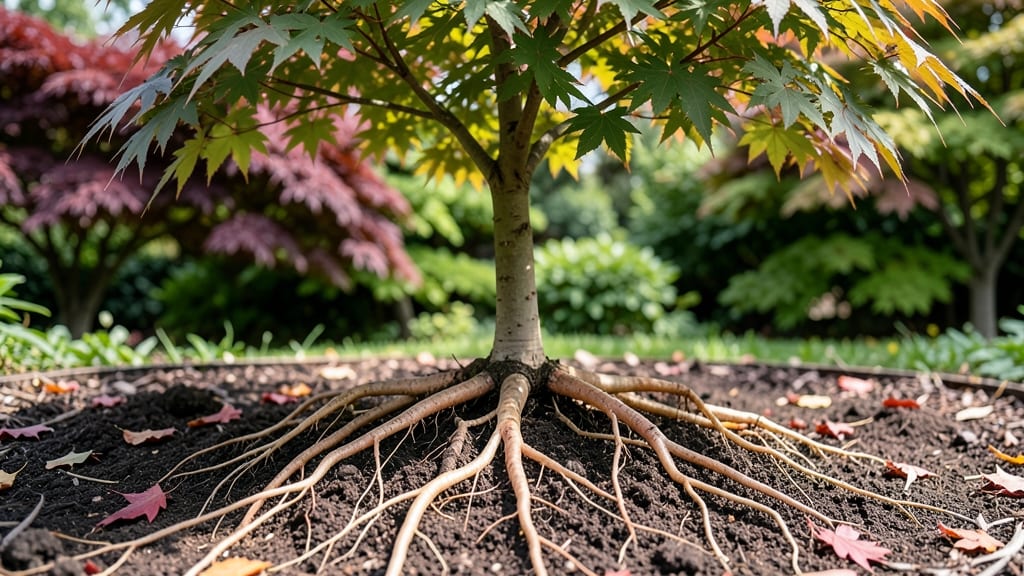
The Japanese maple tree’s root system is a delicate network of shallow, fibrous roots that spread wider than they grow deep—often just 12 inches down but stretching 2-3 times the canopy’s width.
Did you know your Japanese maple’s stunning foliage depends just as much on its hidden root system as it does on sunlight? These roots are the unsung heroes, anchoring the tree while competing for nutrients in the topsoil layer.
Unlike deep-rooted trees, a 🌳 Japanese maple tree thrives when its roots stay cool and moist, which means soil prep and spacing are game-changers for long-term health. Get it wrong, and you risk windthrow or stunted growth.
In this guide, I’ll break down how these roots behave, the 5 critical factors that strengthen them, and why container planting requires a different approach than in-ground care.
How Japanese maple tree roots grow: shallow depth & horizontal spread explained
The Japanese maple (Acer palmatum) develops a fibrous root system rather than a deep taproot, which directly impacts its stability and nutrient uptake. Unlike oak trees, these roots spread horizontally within the top 12 inches of soil, creating a wide but shallow network.
This adaptation helps them thrive in well-draining, acidic soils but makes them vulnerable to windthrow and soil compaction.
Understanding this root structure is key to proper planting—whether in containers or ground beds. The root-to-canopy ratio typically matches the tree's height, meaning a 10-foot tree may have roots spreading 10-15 feet wide.
This horizontal spread explains why Japanese maples need adequate spacing (8-10 feet between specimens) to avoid root competition.
Soil type dramatically influences root depth. In sandy soils, roots may grow even shallower (6-8 inches deep), while loamy or clay soils encourage slightly deeper penetration (10-12 inches). However, waterlogged conditions can suffocate roots, leading to root rot—a common issue in heavy clay.
For container-grown Japanese maples, the root system adapts by growing in a dense circular pattern within the pot. This makes containers ideal for urban gardens or small yards, but the pot must be at least 18-24 inches deep to accommodate the shallow but wide-spreading roots.
Here’s a visual breakdown of the critical root zones and how they interact with your tree’s care:
| Root Zone | Depth Range | Primary Function | Care Tips |
|---|---|---|---|
| 0-4 inches | Surface Roots | Water absorption, early nutrient uptake | Mulch lightly (1-2 inches) |
| 4-12 inches | Main Root Zone | Stability, nutrient storage, lateral spread | Aerate soil annually; avoid compacting |
| 12+ inches | Minor Roots | Limited function; deeper in loose soil | Avoid deep tilling or digging |
| Container Roots | Circular pattern | Adapted to pot constraints | Repot every 2-3 years; use well-draining mix |
The 0-12 inch zone is the most critical for your Japanese maple’s health. This area houses 70-80% of its root mass, responsible for water uptake, nutrient absorption, and structural support. Neglecting this zone—through poor mulching or soil compaction—can stunt growth or even kill the tree over time.
When planting, focus on amending the top 12 inches of soil with organic matter (compost or peat moss) to improve drainage and aeration.
Avoid burying the trunk too deeply, as this can strangle the roots and lead to girdling, a condition where roots grow around the base and restrict growth.
For wind-prone areas, consider staking young Japanese maples until their root systems establish (typically 2-3 years). The shallow roots struggle to anchor the tree in high winds, making staking a lifesaver for survival during storms.
One common misconception is that Japanese maples need deep watering like taproot trees. Instead, they prefer frequent, shallow watering to keep the top 12 inches moist. Overwatering or letting the soil dry out completely can both stress the roots and reduce their ability to absorb nutrients.
Finally, if you’re transplanting a Japanese maple, prune the roots minimally—only enough to fit the new hole. The fibrous root system recovers poorly from severe pruning, and excessive damage can lead to transplant shock or even death in extreme cases.
By prioritizing the top 12 inches of soil and understanding the horizontal spread, you’ll give your Japanese maple the best chance to thrive—both above and below ground. 🌳
5 Critical factors that strengthen (or weaken) Japanese maple roots
Your Japanese maple tree relies on a delicate yet powerful root system that thrives in specific conditions. Unlike deep-rooted oaks, these trees develop shallow, fibrous roots that spread horizontally—making them sensitive to soil compaction and improper care.
Understanding these five critical factors will help you nurture strong roots that support vibrant foliage and stability.
First, let’s address the most common mistake: over-pruning roots during planting. Many gardeners accidentally sever roots when transplanting, which can take years to recover. The key is to handle roots gently and avoid disturbing the critical root zone (the top 12 inches of soil).
This zone houses 80% of your tree’s feeder roots, responsible for nutrient and water absorption.
- 🌱 Soil Aeration: Loosen soil to a depth of 12 inches before planting. Compacted soil suffocates roots, leading to root rot or stunted growth. Use a garden fork to break up clay-heavy soils.
- 💧 Watering Schedule: Water deeply 2-3 times per week for the first year, ensuring moisture reaches the root zone. Avoid shallow watering, which encourages weak, surface roots. Mulch retains moisture and regulates soil temperature.
- 🪴 Mulching Depth: Apply 2-3 inches of mulch around the base (keep mulch 3 inches away from the trunk to prevent rot). Use organic mulch like wood chips, which improves soil structure as it decomposes.
- ✂️ Root Pruning: Only prune roots if relocating the tree. Use sharp, sterilized shears to trim no more than 25% of roots and water immediately after. Avoid root pruning for cosmetic reasons—it stresses the tree unnecessarily.
- ☀️ Soil pH & Drainage: Maintain a pH of 4.5-6.0 (acidic) and ensure well-draining soil. Amend heavy clay with compost or sand. Poor drainage leads to anaerobic conditions, which weaken roots and invite pests.
One of the biggest misconceptions about Japanese maples is that they’re low-maintenance. In reality, their shallow root systems demand consistent attention to soil health. For example, I once watched a 10-year-old maple in my neighbor’s yard suffer from windthrow because its roots had been compacted by foot traffic.
A simple aeration session and deeper mulching saved it within a season.
When it comes to watering schedules, timing matters just as much as frequency. Water in the early morning to reduce evaporation and fungal risks.
During summer, I increase watering to every other day if temperatures exceed 90°F, monitoring the soil’s moisture by sticking my finger 2 inches deep—if it’s dry, it’s time to water.
Finally, resist the urge to over-fertilize. Japanese maples prefer nutrient-poor, acidic soil mimicking their native forest floors. A light application of balanced fertilizer (10-10-10) in early spring is sufficient. Over-fertilizing burns roots and encourages weak, leafy growth at the expense of structural strength.
By focusing on these five factors, you’ll create an environment where your Japanese maple’s roots can thrive—supporting a tree that’s both sturdy and stunning for decades to come. 🌿