
Pruning
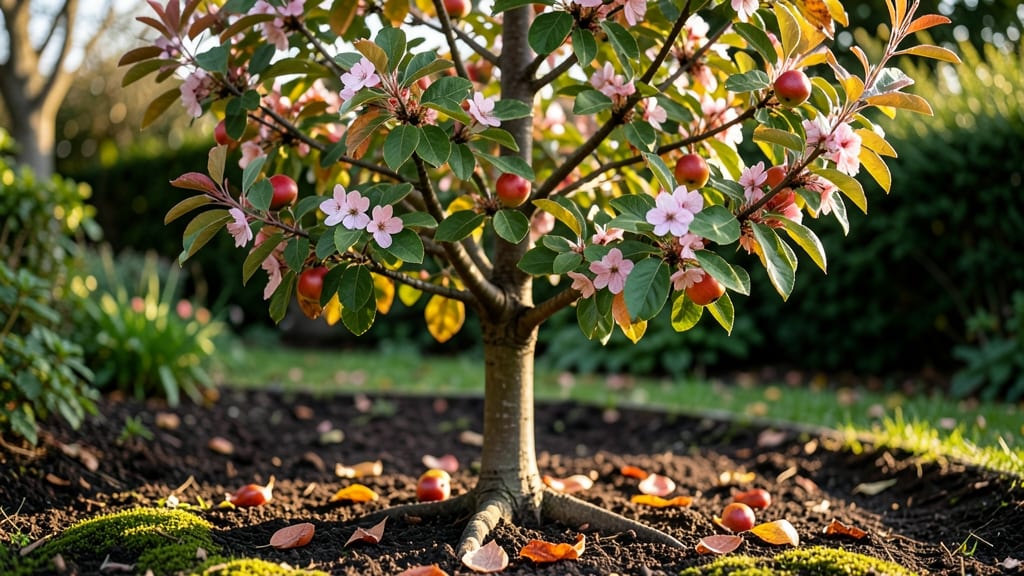
Fall pruning your crabapple tree unlocks next year's blooms while keeping your yard tidy. ✂️ I've learned that dormant-season cuts—when the tree's energy shifts underground—produce stronger branches and fewer spring surprises like broken limbs.
The key is timing: wait until after leaves drop but before hard frost, usually between late November and early February in most climates.
You'll need sharp bypass pruners, rubbing alcohol for sterilizing cuts, and a sturdy ladder if branches are high. First, remove any dead, crossing, or diseased wood—these are the easy wins that instantly improve air circulation.
Then, thin out crowded branches to let sunlight reach the center of the tree, where those iconic spring blossoms form.
What you'll end up with is a tree that bursts with healthier blooms next spring and fewer fruit drop headaches in fall. The pruning also reduces the risk of pests hiding in dense foliage, and those fallen crabapples?
They're perfect for compost or—if you're lucky—homemade jelly (though I still haven't mastered that part).
This method works for both ornamental crabapples and fruit-bearing varieties, though timing shifts slightly depending on your zone. The real magic happens when you combine pruning with a light application of compost around the dripline—your tree will thank you with vigorous growth by next summer.
📚 In This Guide
- What you need
- Instructions
- Tips and common mistakes
- Wrapping up and next steps
What you need
- ● Pruning shears: Sharp, bypass pruners (for cuts up to ½ inch in diameter). Pro tip: 💡 Invest in high-quality shears to avoid crushing branches.
- ● Loppers: For cuts between ½ to 1½ inches in diameter.
- ● Pruning saw: A curved or folding saw for larger branches (1½+ inches). 🔥 Tip: A bow saw works best for clean cuts.
- ● Ladder: A sturdy, extendable ladder (16–24 ft, depending on tree height). ⚠️ Safety: Use a ladder with non-slip feet and a stabilizer.
- ● Work gloves: Heavy-duty, cut-resistant gloves (e.g., Mechanix or Wolverine brands).
- ● Safety glasses: ANSI-rated goggles to protect against debris.
- ○ Pruning sealant: (Optional but recommended) A high-quality tree wound sealant (e.g., Tanglefoot Tree Wound Pruning Seal) for cuts over 1 inch.
- ○ Disposable pruning bags: (Optional) To collect and dispose of fallen branches and debris.
- ● Disinfectant: 70% isopropyl alcohol or a pruning saw cleaner to sterilize tools between cuts (prevents disease spread).
- ○ Marking spray or paint: (Optional) A bright-colored spray (e.g., pink or yellow) to mark branches for removal.
- ● First-aid kit: For minor cuts or scrapes (because safety first!).
- ● Wheelbarrow or tarp: To haul away larger branches or debris.
- ● Timing: Prune during dormant season (late fall or early winter, before new growth starts).
- ● Weather check: Choose a dry, calm day to avoid slippery ladders or wet tools.
- ● Tree health: Inspect the tree for signs of disease (e.g., fungus, cankers, or pest damage) before pruning.
- ● Plan ahead: Sketch a rough map of branches to remove (use the 3-cut method for larger limbs).
Step-by-step guide to pruning crabapple trees in fall
Fall’s crisp air is the perfect time to shape your crabapple tree for next spring’s showstopper blooms.
🌿 Step 1: Assess the Tree’s Structure and Health
Start by walking around the tree to spot dead, diseased, or crossing branches. Look for branches with no leaves, brown bark, or signs of fungal growth like black spots or oozing sap. These are your first targets—they’re either dead weight or harbor pests that’ll spread if left unchecked.
Next, check for branches growing toward the center of the tree or rubbing against each other. These create weak points where bark can tear or disease can take hold. Use your hands to gently move branches—if they bend easily, they’re young and can be redirected. If they snap, they’re too rigid to save and should be pruned.
✂️ Step 2: Gather Tools and Make Clean Cuts
You’ll need sharp pruning shears for smaller branches under ½ inch thick, and a pruning saw for thicker limbs. Disinfect your tools with rubbing alcohol before you start—this prevents spreading disease between cuts. I always prune on a dry day when the tree’s sap isn’t flowing, which minimizes bleeding and stress.
Make your cuts just outside the branch collar—the swollen area where the branch meets the trunk. Cut at a 45-degree angle if you’re removing a branch larger than ¼ inch thick, slanting away from the trunk. This helps water run off instead of pooling and rotting the wound. For smaller branches, a straight cut is fine as long as you’re clean and precise.
🌱 Step 3: Remove Dead, Diseased, and Problematic Branches
Begin with the obvious: any branches that are completely dead or diseased. Cut these back to the branch collar without hesitation—they’re not coming back, and they’re just taking energy from the tree. Next, tackle branches that cross or rub. Remove the weaker of the two, or the one that’s growing inward, to open up the canopy and improve airflow.
Watch for “water sprouts”—those fast-growing, vertical shoots that pop up everywhere. These steal energy from the tree’s structure and flowers. Snip them off at the base, but don’t worry if you miss a few. They’ll be easier to spot next spring when the tree’s in full bloom.
☀️ Step 4: Thin the Canopy for Better Light and Airflow
Step back and look at the tree’s overall shape. Aim to remove no more than 25% of the tree’s foliage in one season—this keeps the tree healthy without shocking it. Focus on thinning branches from the inside of the tree outward, starting about ⅓ of the way down from the trunk. This opens up the center, letting sunlight and air reach the core where new blooms will form.
You’ll know you’re doing it right when you can see light filtering through the branches on a sunny day. Avoid “lion tailing”—that’s when you shear layers off the top, leaving a flat, unnatural look. Instead, make selective cuts to maintain the tree’s natural shape while improving its structure.
⏰ Step 5: Clean Up and Monitor for Spring
After pruning, rake up all the debris and dispose of it in the trash—not the compost. Diseased branches can harbor pathogens that’ll reinfect your tree if left behind. Now’s also the time to apply a dormant oil spray if you’ve had issues with pests like aphids or scale. This smothers overwintering insects before they wake up in spring.
Keep an eye on your tree in the weeks after pruning. If you see excessive bleeding from the cuts (more than a few drops), the cuts might be too large. Next time, make them smaller or wait until late winter when the tree’s sap flow slows down. With proper care, your crabapple will reward you with healthier growth and even more stunning blooms next spring.
Tips & tricks for perfect fall crabapple pruning
Here's what nobody tells you about making fall pruning count for next year's blooms.
Tool Prep Matters: Before you even touch your tree, sharpen your pruning shears and disinfect them with rubbing alcohol. Dull blades tear bark instead of making clean cuts, which stresses the tree. I also like to wrap the handles with duct tape for better grip—especially when dealing with slippery branches. This small step prevents accidental cuts and makes the whole process safer.
Branch Collar Awareness: In Step 2, when making those critical cuts, remember the branch collar is your guide. That swollen area where the branch meets the trunk isn't just decoration—it's the tree's natural healing zone. If you cut too close, you're basically creating a wound that won't seal properly. Think of it like a bandage for your tree!
Sprout Strategy: Those pesky water sprouts? Don't ignore them just because they're small. They're like weeds in your tree's garden, stealing nutrients that could go toward next spring's blossoms. Make it a habit to check for them every year—even if you missed some this time, they'll be easier to spot when the tree's bare in winter.
Seasonal Timing Insight: While fall is ideal, late winter (just before buds swell) is actually the absolute best time for serious pruning. The tree's sap is still low, so it won't bleed as much. But since you're doing this in fall, focus on lighter maintenance—just removing dead wood and shaping. Save the major structural work for late winter when you can see the tree's full framework.
Pro Tips for Crabapple Tree Fall
- Here's what nobody tells you about making fall pruning count for next year's blooms.
- Tool Prep Matters: Before you even touch your tree, sharpen your pruning shears and disinfect them with rubbing alcoh...
- Branch Collar Awareness: In Step 2, when making those critical cuts, remember the branch collar is your guide. That s...
Frequently asked questions
Got questions about crabapple tree fall pruning?
You’re not alone! Here are answers to the most common concerns—so you can tackle your tree with confidence and ease.
When is the exact best time to prune a crabapple tree in fall?
Prune your crabapple tree after leaf drop (late fall) but before hard freezes (typically November in most regions). Avoid pruning too early—disease risks rise when wounds heal slowly. Late fall gives you a head start on shaping while minimizing stress on the tree.
Will pruning in fall hurt my crabapple tree’s spring blooms?
No—done correctly, fall pruning boosts spring blooms! Removing dead or weak branches now reduces competition for nutrients, so the tree can focus energy on vibrant flowers. Just avoid heavy cuts (stick to <15% of the canopy) to prevent shock.
Can I prune a crabapple tree in winter instead?
Winter pruning (dormant season) is ideal for crabapples—it’s safer than spring/summer because wounds heal faster in cold, dry air. However, avoid pruning during extreme cold snaps (below 20°F/-7°C) to prevent sunscald. Late winter (Feb–March) is a backup option if fall passes.
What if my crabapple tree has fire blight? Should I still prune in fall?
Yes, but sterilize tools between cuts (use 70% alcohol or bleach solution) to prevent spreading. Prune below infected branches by 6–12 inches and remove all infected wood. Fall is a great time to tackle fire blight—just avoid pruning during wet weather to reduce spores.
How do I know if I’ve pruned too much?
If you’ve removed more than 25% of the canopy, you’ve over-pruned. Signs include excessive leaf drop, weak regrowth, or stunted blooms next spring. For crabapples, aim for <15% removal per year. Thin out crowded branches instead of topping—this keeps the tree healthy and blooming!
Wrapping up and next steps
Pruning your crabapple tree during the dormant season isn’t just about tidying up—it’s an investment in vibrant spring blooms and long-term tree health. 🌸 By following the right techniques, you’ll encourage stronger growth, reduce disease risks, and even shape your tree into a stunning focal point.
Now that you’re armed with the knowledge, grab those pruners and get ready to transform your yard!
Your next step? Mark your calendar for late winter or early spring—just before buds swell—and start pruning. For extra confidence, review our FAQs or watch a quick tutorial. Happy pruning—your future blossoms will thank you!