
Pruning
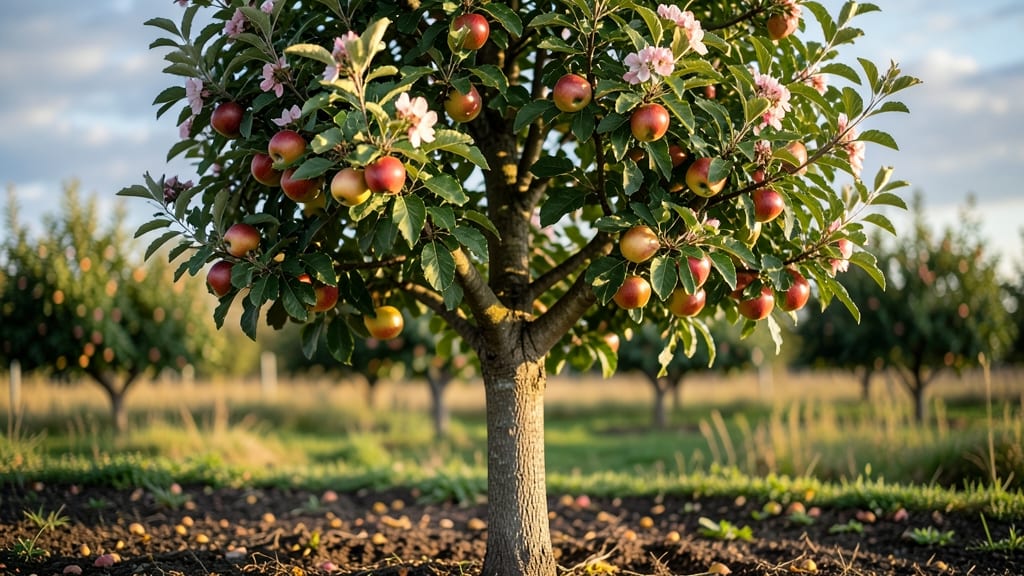
A Honeycrisp apple tree can reach heights of 15 to 25 feet when left unpruned, towering over most backyard spaces—but don’t let that scare you off.
Imagine planning your garden layout only to realize your 🍎 Honeycrisp has outgrown its spot, forcing you to compromise on space or fruit quality. The good news?
With the right pruning strategies, you can keep this variety at a more manageable 12 to 18 feet while still enjoying its legendary sweetness.
Whether you’re working with a semi-dwarf rootstock or a standard tree, understanding how pruning shapes growth is the key to balancing size and productivity. Below, I’ll break down how different pruning styles—like central leader or open-center—can shrink your tree’s height by up to 50% without sacrificing harvests.
You’ll also learn the 3 most common pruning mistakes that turn a well-behaved tree into a space-hogging giant, plus how to fix them if you’ve already planted. Let’s get started!

Honeycrisp apple tree height: mature size by variety and growth habits
The Honeycrisp apple tree is a backyard favorite, but its mature height often surprises new growers. Without pruning, these trees can reach 20+ feet tall, making them too large for small gardens.
However, with the right rootstock and pruning, you can keep them between 12–16 feet—perfect for most home landscapes. Understanding these growth habits helps you plan spacing and maintenance from day one.
One of the biggest factors in a Honeycrisp’s height is its rootstock type. Standard rootstock grows the tallest (20–30 feet), while semi-dwarf rootstock stays between 12–18 feet. Dwarf varieties (though rare for Honeycrisp) can even reach just 8–12 feet.
Choosing the right rootstock is the first step to controlling your tree’s size and ensuring it fits your space.
| Rootstock Type | Mature Height (ft) | Growth Rate (in/year) | Best For |
|---|---|---|---|
| Standard (e.g., MM.111) | 20–30 ft | 12–18 in | Large properties, orchards |
| Semi-Dwarf (e.g., M.9, M.7) | 12–18 ft | 10–15 in | Home gardens, small yards |
| Dwarf (e.g., B.9, Budagovsky 9) | 8–12 ft | 8–12 in | Containers, patios, urban gardens |
| Unpruned (any rootstock) | 20+ ft | 18+ in | Wild growth, no maintenance |
A Honeycrisp apple tree grows at a steady pace, adding 12–18 inches per year in ideal conditions. In the first 3 years, you’ll see rapid growth—expect 2–4 feet in year one and 5–8 feet by year two.
By year three, your tree will likely hit 10–12 feet, making early pruning critical to guide its structure and prevent overgrowth.
If you’re comparing Honeycrisp to other apple varieties, it’s generally taller than Gala or Fuji (which max out at 12–15 feet on semi-dwarf rootstock) but shorter than Granny Smith (which can reach 25+ feet).
This makes Honeycrisp a mid-sized option—ideal for gardeners who want a balance of height and fruit production without the bulk of a standard apple tree.
For small gardens or containers, opt for a dwarf rootstock like Budagovsky 9. These trees stay under 10 feet and thrive in large pots, making them perfect for patios or balconies.
Just ensure your container is at least 18–24 inches wide and has drainage holes to prevent root rot. Even with dwarf rootstock, regular pruning will keep your tree compact and productive.
Pruning isn’t just about height control—it also improves fruit quality and airflow. Without pruning, branches can become overcrowded, leading to smaller apples and increased disease risk. Aim to prune in late winter or early spring before new growth begins.
Remove dead, crossing, or weak branches first, then thin out excess growth to maintain an open canopy.
One common misconception is that Honeycrisp trees stop growing once they reach maturity. In reality, they continue to grow slowly each year, adding 6–12 inches annually even after bearing fruit.
This means your tree will never truly "stop" growing—it just grows slower. Regular pruning is key to managing this gradual increase and keeping your tree at a manageable height.
If you’re planting near a fence or structure, leave at least 10–12 feet of clearance for a semi-dwarf Honeycrisp. For standard rootstock, increase this to 15–20 feet to avoid shading your home or blocking sunlight.
Proper spacing also improves pollination and reduces the risk of fungal diseases by ensuring good airflow around the tree.
For urban gardeners, consider espaliering your Honeycrisp tree against a fence or wall. This technique trains the tree to grow flat against a structure, reducing its footprint by up to 50%.
Espaliered trees can still produce high-quality fruit while fitting into tight spaces. Just ensure the wall or fence gets full sun (6–8 hours daily) for best results.
Remember, the healthier your tree, the better it manages its height. Provide well-draining soil, regular watering (especially during drought), and a balanced fertilizer in early
How pruning styles control Honeycrisp apple tree height and shape
Your Honeycrisp apple tree can reach 15–25 feet tall if left unpruned, but strategic pruning reduces height by 30–50% while improving fruit quality. The key lies in choosing the right pruning style—each method reshapes growth patterns differently.
Whether you prefer a central leader for vertical growth or an open-center shape for easier harvesting, your pruning approach directly controls the tree’s mature height and structure.
Understanding the three primary pruning styles—central leader, open-center, and espalier—lets you tailor your Honeycrisp tree to your space. For example, a central leader keeps the tree tall but narrow, ideal for small backyards, while espalier flattens the tree against a fence or wall, saving ground space.
Each style requires specific tools, seasonal timing, and cutting techniques to maintain health and productivity.
Comparison of Pruning Styles for Honeycrisp Apple Trees
The central leader style maintains a single main trunk with branches emerging upward, reducing the tree’s width but keeping it tall. To achieve this, focus on removing water sprouts and suckers while encouraging vertical growth.
Prune in late winter (before buds swell) to shape the tree and remove dead or crossing branches that compete for energy.
For an open-center shape, aim to create a vase-like structure with a wide base and narrower top. This style reduces height by 40–50% while improving airflow and sunlight penetration, which boosts fruit quality.
Prune in late winter to remove weak or inward-growing branches, then do light maintenance in summer to control new growth.
If space is limited, espalier is your best option—training the tree flat against a wall or fence can reduce its height by 50–60%. Use twine and stakes to guide branches horizontally, and prune aggressively in late winter to maintain the flat shape.
Summer pruning keeps the structure tidy and encourages fruit production along the trained branches.
Regardless of the style, always use sterilized tools to prevent disease, and avoid removing more than 25% of the canopy in one season. With the right approach, your Honeycrisp apple tree will stay manageable while producing juicy, high-quality fruit year after year. 🍎