
Trees
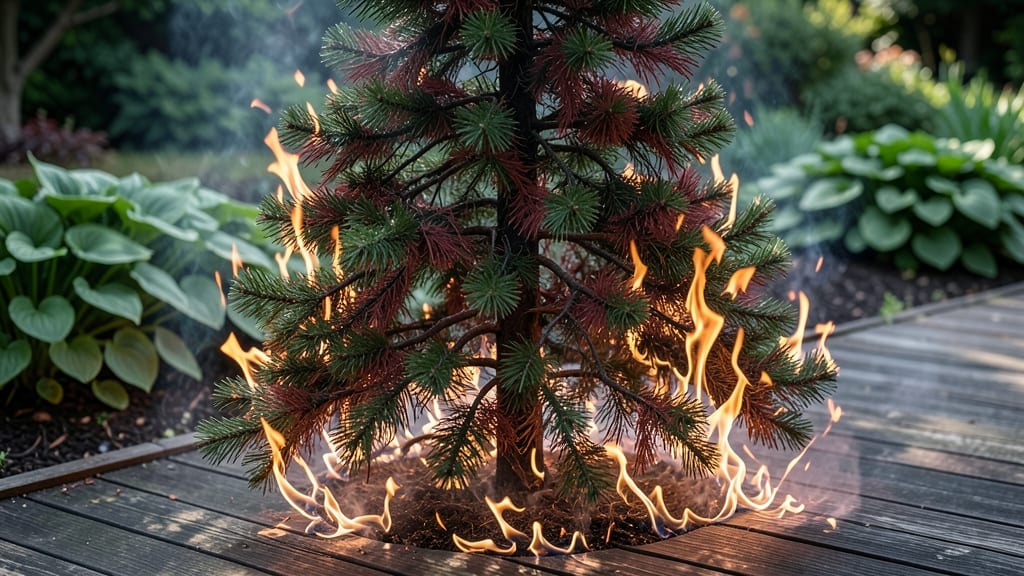
Watching a Christmas tree fire video reveals how quickly dry needles, overloaded circuits, or nearby heat sources like candles can ignite flames. Real trees are far more dangerous than artificial ones unless properly maintained with consistent watering. Prevention requires careful placement and avoiding open flame hazards.
Real trees become tinderboxes when their needles dry out, creating a perfect fuel source for flames. 🔥 Electrical systems are another common culprit—overloaded circuits or faulty wiring can spark fires even with artificial trees.
The National Fire Protection Association reports that one in every 31 Christmas tree fires results in a death, making prevention critical. Artificial trees are safer only when they meet strict fire resistance standards and are placed away from heat sources.
For real trees, the key is hydration—watering daily and using a sturdy stand to maintain moisture levels. Artificial trees should be placed at least 3 feet from heat sources like fireplaces or space heaters, and their electrical systems should be inspected annually.
Always use LED lights and avoid stringing more than three strands together to prevent overloads.
💡 In This Article
- Why Real vs Artificial Trees Spark Christmas Fire Hazards
- Step-by-Step Christmas Tree Fire Prevention Checklist
Why real vs artificial trees spark Christmas fire hazards
The difference between real and artificial trees comes down to their chemical composition and moisture content. Real trees contain volatile oils and resins in their needles that become highly flammable when dry. These compounds, called terpenes, evaporate at 150-200°F—well below the ignition point of most materials.
When needles dry out, they create a surface area of 200 square feet per cubic foot of tree volume, acting like kindling. Artificial trees, however, are made from synthetic materials like PVC or polyethylene, which don't contain organic fuels and are designed to resist ignition.
Electrical systems are another critical factor. Real trees with string lights have a 5x higher fire risk than artificial ones, according to NFPA data. Overloaded circuits or damaged cords can generate 300°F+ heat at the connection points, creating sparks that ignite dry needles.
Artificial trees must meet UL or CSA fire resistance standards, meaning they won't support combustion for at least 20 minutes when exposed to flames. The difference is striking—real trees can ignite in 30 seconds with a nearby heat source, while artificial trees may only smolder.
Heat sources accelerate combustion through a process called pyrolysis, where organic materials break down into flammable gases. A single 40-watt candle placed 2 feet from a dry tree can raise needle temperatures to 250°F within minutes.
Space heaters add even more risk—convection currents draw oxygen to the tree, creating a chimney effect that intensifies the fire. Artificial trees avoid this entirely since their materials don't support sustained burning.
The visual difference in fire behavior is dramatic: real trees burn with rapid, intense flames, while artificial trees may only melt or drip.
Resin plays a hidden but crucial role in real tree fires. Pine trees, for example, contain 5-10% resin by weight, which acts as an accelerant. When heated, resin vaporizes into flammable gases that ignite before the needles themselves.
This explains why Christmas tree fires spread so quickly—often within 5 minutes of initial contact with a spark. Artificial trees lack this chemical composition, making them inherently safer when properly maintained. The key takeaway?
Moisture in real trees disrupts this combustion chain, while artificial trees eliminate it entirely through material science.
Consider these critical comparisons when choosing:
- Combustion Speed: Real trees ignite in 30 seconds vs. artificial trees' 20+ minutes of smoldering
- Heat Generation: Dry needles reach 1,200°F in flames vs. artificial materials' 500°F melt point
- Oxygen Demand: Real trees create upward drafts that feed fires vs. artificial trees' passive resistance
The science behind these differences explains why prevention strategies must target both material properties and environmental factors. Artificial trees win in safety only when their fire-resistant properties are combined with proper electrical installation and placement. Real trees require constant moisture to disrupt their natural flammability. 🔥