
Propagation
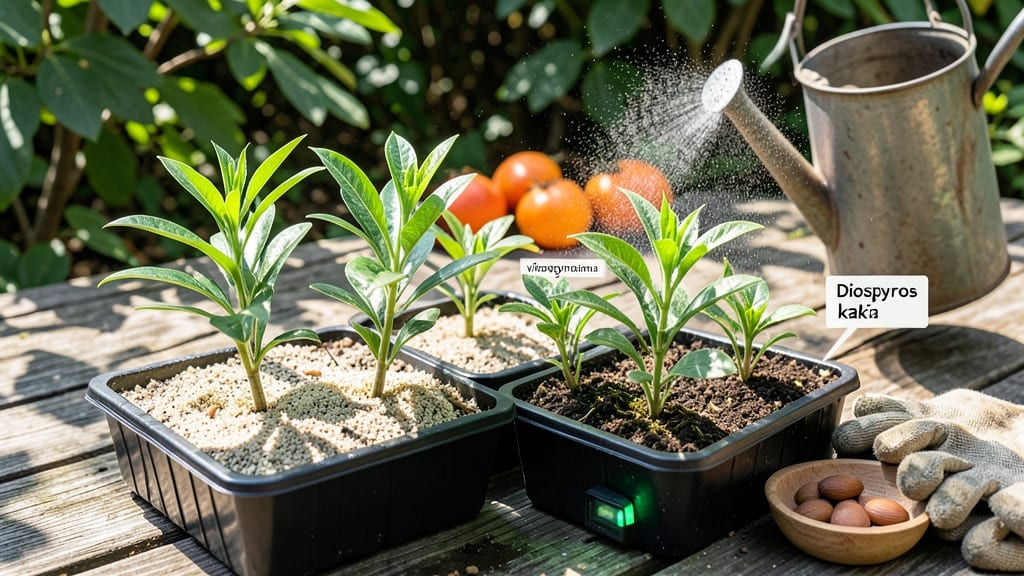
You can grow a persimmon tree from seed, but the process is unpredictable and requires patience—seedlings may take 10+ years to produce fruit, and quality often falls short of grafted trees. Proper seed stratification and soil conditions significantly boost germination rates, though results vary between Asian and American persimmon varieties.
While it's absolutely doable to start a persimmon tree from seed, the journey is a long-term commitment. 🌱 The key to success lies in breaking seed dormancy through stratification—a cold, moist treatment that mimics winter conditions—before planting.
Asian persimmons (like Fuyu) typically require 3–6 months of stratification, while American persimmons (Diospyros virginiana) are slightly more forgiving. Once sprouted, seedlings need well-draining soil with a pH of 6.0–7.0 and at least 6 hours of sunlight daily to thrive.
What many gardeners overlook is the fruit quality trade-off. Seed-grown trees often produce smaller, less flavorful fruit compared to nursery-grafted varieties, which are bred for consistency. That said, the process can be rewarding for those willing to experiment—just be prepared for a decade-long wait before your first harvest! 💫
💡 In This Article
- Persimmon Seed Germination Process Explained
- Tips for Maximizing Persimmon Seedling Success
Persimmon seed germination process explained
Persimmon seeds enter a natural dormancy state that requires stratification—a cold, moist treatment—to break. For Asian persimmons (like Fuyu), this means placing seeds in a damp paper towel inside a sealed plastic bag at 34-40°F for 3-6 months.
American persimmons (Diospyros virginiana) are slightly faster, often germinating within 2-4 months under similar conditions. The cold period mimics winter, signaling the seed it's safe to sprout when warmer temperatures arrive. Without stratification, germination rates plummet to below 20%.
The science behind this involves two key factors: water absorption and hormone changes. During stratification, the seed absorbs moisture while its internal enzymes break down stored starches into sugars, fueling early root growth.
American persimmons typically have thinner seed coats than Asian varieties, which is why they respond faster to stratification. Once stratified, plant seeds ½ inch deep in well-draining soil with 60-70% humidity—too much moisture causes rot, while too little stunts growth. 🌱
Temperature plays a critical role after stratification. Ideal germination temperatures range from 70-80°F, with consistent warmth triggering the seed's metabolic shift from dormancy to active growth. Asian persimmons often require slightly warmer conditions (75-80°F) compared to American varieties (70-75°F).
This explains why spring planting (after last frost) works best in most climates—natural soil warming aligns perfectly with the seed's needs. What's surprising is how sensitive young seedlings are to temperature fluctuations; even a 10°F drop can halt growth.
Light exposure also matters during germination. While seeds don't need light to sprout, seedlings require bright, indirect light within 7-14 days of emergence to prevent leggy growth. This is where many gardeners fail—keeping seeds in darkness until sprouting but then exposing them to harsh sunlight too soon.
A south-facing window or grow light setup works best. The first true leaves appear 4-6 weeks after germination, signaling the seedling's transition from heterotrophic (relying on seed reserves) to autotrophic (photosynthesis).
Here's where species differences become noticeable: Asian persimmons often produce 2-3 leaves before their first true growth spurt, while American persimmons may show 4-5 leaves before similar growth.
This variation affects transplant timing—Asian seedlings can handle moving at 6-8 weeks, while American varieties may need 8-10 weeks to establish stronger root systems. The root-to-shoot ratio is another key metric: healthy seedlings should have roots 1.5x longer than their above-ground stems when ready for outdoor planting. 🌿
What most gardeners don't realize is that seed viability decreases dramatically after 1 year of storage. Fresh seeds from ripe fruit have 70-80% germination potential, while year-old seeds drop to 30-40%. This explains why commercial nurseries rarely sell persimmon seeds—they're typically sold as grafted trees for guaranteed fruit quality.
For home growers, collecting seeds from fully ripe (often orange or soft) fruit in late fall yields the best results. The seed's natural dormancy period actually protects it from premature sprouting during winter's cold.