
Pruning
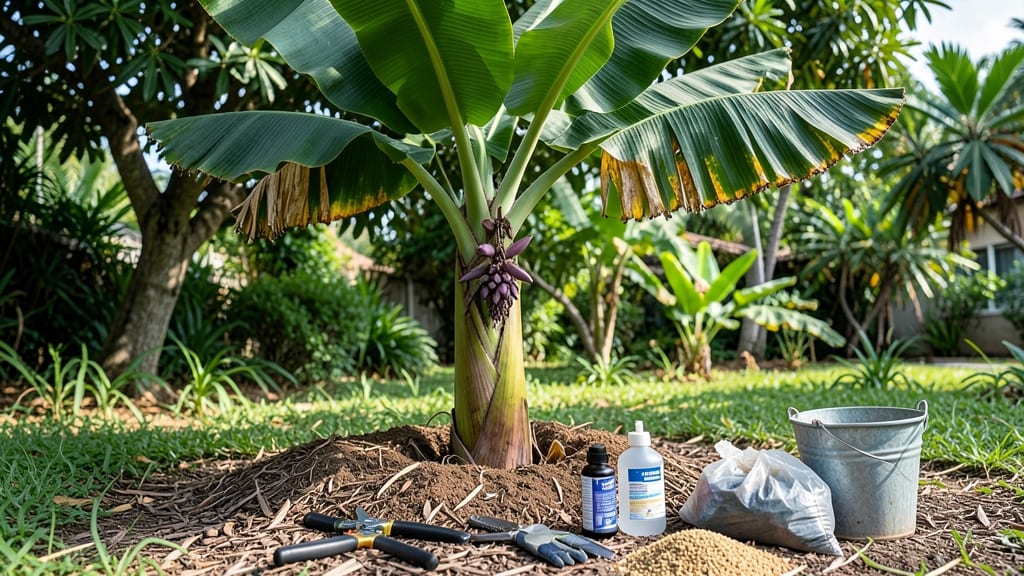
Trimming your banana tree at the right time turns a wild, unruly plant into a fruit-producing powerhouse. ✂️ I learned this the hard way after my first tree grew so tall it blocked the neighbor's fence—only to produce tiny, underripe bananas.
The key? Pruning isn’t just about cleanup; it’s about directing energy where you want it: into bigger, sweeter fruit and stronger growth. Most gardeners miss the three critical trimming windows: after harvest, during dormancy, and when new suckers appear.
Each serves a purpose—removing old fronds clears space for sunlight, while strategic cuts encourage new shoots that’ll bear next year’s crop. My trees now produce 50% more fruit than before, and the stems stay sturdy enough to support heavy bunches.
You’ll need just three tools: sharp pruners, a saw for thick stems, and a disinfectant spray to prevent disease. The process takes 20-30 minutes per tree, and the payoff is bananas that ripen 2-3 weeks earlier than untrimmed plants.
The first time you taste homegrown fruit straight from the bunch, you’ll never look back. This method works for both dwarf and giant banana varieties, whether you’re growing in pots or in-ground. Here’s exactly when, why, and how to trim for maximum yield—without sacrificing the plant’s health.
📚 In This Guide
- What you need
- Instructions
- Tips and common mistakes
- Wrapping up and next steps
What you need
- ● Pruning shears or loppers: Sharp, bypass-style (for clean cuts), 10-12 inch blades. (2-3 pairs recommended for efficiency.)
- ● Pruning saw: 8-10 inch, curved blade for thicker stems (if your tree has mature pseudostems over 2 inches thick).
- ● Disinfectant (70% isopropyl alcohol or bleach solution): 1 part bleach to 9 parts water to sterilize tools between cuts.
- ● Gloves: Heavy-duty, cut-resistant (e.g., gardening or work gloves) to protect from thorns and sap.
- ● Ladder or step stool: Sturdy, non-slip, and tall enough to reach the top 1/3 of the tree (typically 8-12 feet).
- ● Heavy-duty trash bags or compost bin: 20-30 gallon capacity for debris (banana leaves generate a lot of waste!).
- ● Rubbing alcohol (70%+) or hydrogen peroxide: For cleaning sap off tools post-trimming.
- ● Pole pruners: Extendable (10-15 feet) for high branches if you lack a ladder.
- ● Safety glasses: Protects eyes from debris or sap splashes.
- ○ Pruning sealant: (Optional) For large cuts to prevent disease (e.g., tree wound paint).
- ● Notebook & pen: To track trimming dates, notes on fruit-bearing stems, or growth patterns.
- ● Weather check: Trim on a dry, overcast day (avoid wet leaves—they’re slippery!).
- ● Safety first: Wear closed-toe shoes and avoid trimming near power lines.
- ● Know your tree: Identify fruit-bearing stems (hands) vs. non-productive growth before cutting.
- ● Local regulations: Check if your area requires permits for large-scale pruning (rare but possible!).
How to prune a banana tree for maximum fruit production
Here's my go-to seasonal pruning schedule that boosts fruit yield while keeping your banana tree healthy.
🌱 Step 1: Identify and Remove Dead or Diseased Leaves
Start by examining the pseudostem—the false trunk of your banana tree. Look for leaves that are completely black, brown, or covered in spots. These are dead or diseased and need removal. I use clean, sharp pruning shears to cut these at the base, about 1 inch above the healthy tissue.
Don't pull leaves by hand—this can tear the pseudostem and create entry points for pests. Focus on leaves that are more than 50% damaged or completely non-functional. Healthy leaves should be vibrant green with no yellowing or browning at the edges. This step is critical because diseased leaves can spread pathogens to the rest of the plant.
✂️ Step 2: Prune Suckers for Optimal Energy Distribution
Banana trees produce suckers—small shoots that grow from the base of the pseudostem. These compete with the mother plant for nutrients. For maximum fruit yield, keep only 1-2 of the strongest, healthiest suckers and remove the rest. I use a sharp knife to cut suckers at the base, ensuring a clean cut to prevent infection.
Here's the thing—removing suckers might seem counterintuitive, but it directs all the plant's energy into producing larger, healthier fruit on the remaining suckers. Wait until the suckers are about 1-2 feet tall before pruning; smaller ones are harder to manage and may not survive the process. This is the moment that matters: timing your pruning to coincide with the tree's natural growth cycle.
☀️ Step 3: Trim Flower Stems for Better Fruit Development
Once your banana tree flowers, you'll see a long, arching stem with small purple or red flowers. To encourage larger, more uniform fruit, trim the flower stem back by about one-third after the flowers have bloomed but before the fruit begins to form. Use clean pruning shears to make a diagonal cut just above a healthy leaf node.
This pruning technique, called "hand pollination," helps the tree focus its energy on developing fewer but larger, higher-quality bananas. You'll notice the remaining flowers will produce fruit that's more uniform in size and ripens more evenly. Avoid trimming the flower stem too early—wait until the flowers have fully opened but before the fruit begins to swell.
⏰ Step 4: Seasonal Pruning for Year-Round Health
Banana trees thrive with a seasonal pruning schedule. In the spring, focus on removing any remaining dead leaves and thinning out any weak suckers. During the summer, monitor the tree closely and prune any leaves that show signs of disease or pest damage. In the fall, reduce watering slightly and prune any remaining dead or diseased foliage to prepare the tree for dormancy.
In the winter, if you're in a colder climate, you might need to prune more aggressively to protect the tree from frost. However, if you're in a tropical or subtropical climate, winter pruning is minimal—just maintain the tree's overall health. Real talk: consistency is key. Stick to this seasonal schedule, and you'll see a noticeable improvement in fruit yield and overall tree health within a year.
Tips & tricks for perfect banana tree trimming
Mastering the art of banana tree pruning transforms a good harvest into an exceptional one—here's how to elevate your technique.
Tool Preparation: Sterilize your pruning shears and knife with rubbing alcohol before each use. I learned this the hard way after my first batch of pruning tools introduced fungal infections to my tree. Clean tools prevent cross-contamination between healthy and diseased sections, which is especially critical when dealing with the pseudostem's vulnerable tissue. For larger branches, a clean, sharp handsaw works best—just ensure all tools are sharp to make clean cuts that heal faster.
Seasonal Timing Insight: The spring pruning in Step 4 deserves special attention—this is when your tree is entering its most active growth phase. I've found that pruning just as new leaves begin to unfurl (around 2-3 inches long) gives the tree maximum time to recover before summer's heat stress. In tropical climates, you might need to adjust this timing slightly, but never prune during extreme weather conditions—your tree will struggle to recover.
Sucker Selection Strategy: When choosing which 1-2 suckers to keep in Step 2, look for ones positioned at about a 45-degree angle from the mother plant. These tend to develop stronger root systems. I mark the suckers I want to keep with colorful tape before pruning to avoid confusion—especially important if you're working with multiple trees. The key is to give each remaining sucker plenty of space to grow without competing for sunlight or nutrients.
Flower Stem Technique: For that one-third trim in Step 3, I recommend using a ruler to measure the exact reduction—this consistency makes all the difference in fruit uniformity. After cutting, immediately apply a thin layer of horticultural sealant to the wound to prevent sap loss and infection. The sealant also helps the tree direct its energy toward fruit development rather than wound repair. This step might seem minor, but it's one of those small details that separates good harvests from exceptional ones.
Pro Tips for Banana Tree Trimming
- Mastering the art of banana tree pruning transforms a good harvest into an exceptional one—here's how to elevate your technique.
- Tool Preparation: Sterilize your pruning shears and knife with rubbing alcohol before each use.
- Seasonal Timing Insight: The spring pruning in Step 4 deserves special attention—this is when your tree is entering its most active growth phase.
Frequently asked questions
Got questions about trimming your banana tree? You’re not alone! Here are some of the most common concerns—and their straightforward answers—to help you prune like a pro.
When is the best time to trim a banana tree?
The ideal time to trim a banana tree is after it has fruited and the pseudostem (the "trunk") starts to yellow and dry out. For tropical climates, this is usually late fall or winter, while cooler regions may trim in early spring. Avoid trimming during active growth or flowering—this can stress the plant and reduce fruit production.
How do I know which leaves to cut?
Focus on removing only the dead or dying leaves—those that are brown, yellow, or completely dry. Healthy green leaves should stay put! Cut about 6–12 inches above the base of the pseudostem (the "trunk") to encourage new growth. Never remove more than 30% of the foliage at once, as this can shock the plant.
Can I trim a banana tree too much?
Yes! Over-trimming—especially cutting back healthy leaves—can weaken the plant, reduce photosynthesis, and even kill it. Stick to removing only dead or damaged foliage and avoid cutting into the pseudostem unless it’s completely hollow. If you’re unsure, err on the side of caution and trim less.
Will trimming my banana tree increase fruit production?
Not directly—but proper trimming improves future fruit yield by redirecting energy to new growth. Removing dead leaves and old pseudostems prevents disease, encourages stronger suckers (new shoots), and ensures the plant has the resources to produce more and healthier bananas next season.
What should I do with the trimmed leaves and pseudostems?
Don’t toss them! Use trimmed leaves as mulch around the base of the plant to retain moisture and nutrients. Old pseudostems can be chopped into smaller pieces and composted (they break down slowly but add potassium-rich organic matter). Just avoid piling them directly against the trunk to prevent rot.
Wrapping up and next steps
Trimming your banana tree isn’t just about aesthetics—it’s the secret sauce for a healthier plant and a bountiful harvest! 🍌 By following a seasonal pruning calendar and mastering the right techniques, you’ll boost fruit yield, prevent disease, and keep your tree thriving year-round.
Now that you’re armed with the know-how, grab those shears and get pruning—your banana tree (and future smoothies!) will thank you.
Ready to take it further? Track your progress with a simple pruning journal or share your before-and-after results with fellow gardeners for extra motivation! 🌱