
Pruning
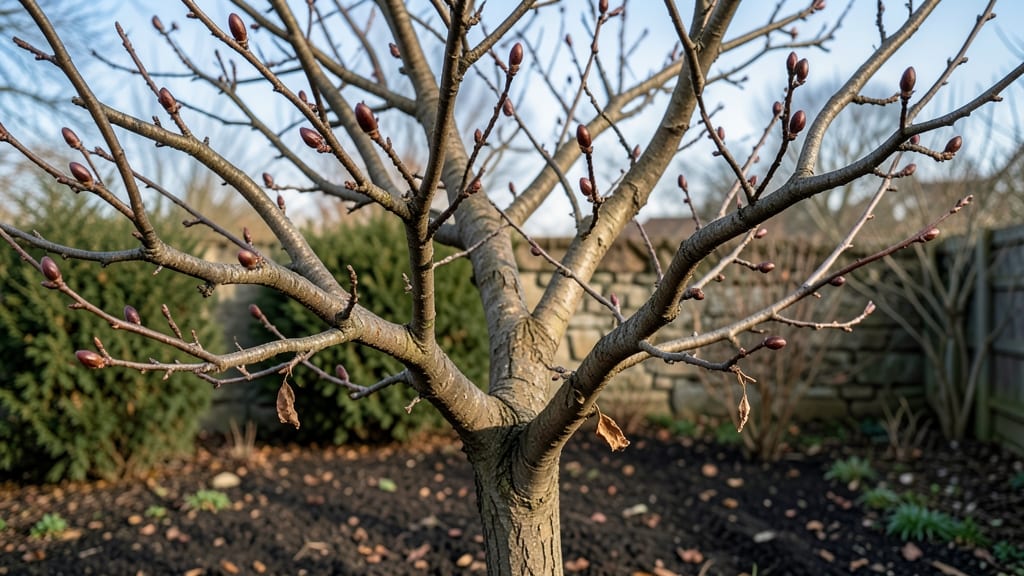
Winter pruning transforms your apricot tree into a growth powerhouse next spring. ✂️ I’ve watched my own apricot tree go from struggling branches to a lush, fruit-bearing beauty—just by timing pruning right and protecting it from winter’s harshest blows.
The key? Pruning while the tree’s dormant, wrapping the trunk, and avoiding common mistakes that invite pests or disease.
Start by gathering sharp pruning shears, a clean cloth for cuts, and a sturdy tree wrap. The right timing matters too—wait until late winter when the ground is still frozen but buds haven’t swollen yet.
This ensures you’re not inviting pests or encouraging early growth that frost can damage. Cold climates? Prune even later, closer to early spring when frost risks drop.
After pruning, you’ll notice thicker branches and fewer weak limbs—exactly what you want for a productive spring. The tree’s energy focuses on strong new growth instead of fixing damaged wood. Plus, proper mulching and watering adjustments (just enough to keep roots moist) set it up for a healthier start.
No more guessing whether your tree will survive the winter or bloom again.
This method works for apricot trees in containers too, just scale down the tools and watch for signs of stress like cracked bark or wilting leaves.
Whether you’re in a mild winter zone or a harsh one, these steps keep your tree thriving. Let’s get those branches shaped for next season’s harvest!
📚 In This Guide
- What you need
- Instructions
- Tips and common mistakes
- Wrapping up and next steps
What you need
Before you dive into winter pruning your apricot tree, gather these essential materials and tools to ensure a smooth and effective process. Whether you're a seasoned gardener or a beginner, having the right gear will make all the difference! 🌳✂️
Required Tools & Materials
- Pruning shears – Bypass pruners (for small branches, 3-6 inches in diameter). Choose sharp, high-quality shears with comfortable grips (e.g., Felco F-2 or Gonicc T8).
- Loppers – For medium branches (½ to 2 inches thick). Look for ratcheting or bypass loppers (e.g., Fiskars X27).
- Pruning saw – For thick branches (2+ inches). A curved-tooth pruning saw (e.g., Bahco Ergo) minimizes tear-out.
- Disinfectant – Rubbing alcohol (70% isopropyl) or a garden disinfectant spray (e.g., Concrobium) to sterilize tools between cuts and prevent disease spread.
- Garden gloves – Heavy-duty, cut-resistant gloves (e.g., Felco F-500) to protect hands from thorns and sharp branches.
- Rag or paper towels – For wiping tools and cleaning sap.
- Marking twine or paint – Colored twine, masking tape, or pruning paint (e.g., Tangle Teezer Twine) to tag branches for removal or future reference.
- Bucket or tarp – To collect pruned branches and debris.
- Ladder or step stool – If your tree is taller than 6 feet (ensure it’s stable and non-slip).
Optional (But Helpful!) Extras
- Hand pruners with a bypass blade – For precise cuts on smaller branches.
- Pole saw – For high branches without a ladder (e.g., Fiskars X24).
- Pruning sealant – Optional for large cuts (e.g., Tanglefoot Tree Wound Pruning Seal) to reduce disease entry (though many experts debate its necessity).
- Safety glasses – To protect eyes from debris.
- Notebook or app – To sketch your tree’s structure or track pruning notes (e.g., iNaturalist or a simple garden journal).
Pro tip: 💡 Sharpen your tools beforehand! Dull blades tear wood, increasing stress on the tree. A file or sharpening stone works wonders. Also, check the weather—prune on a dry, calm day to avoid spreading disease with wet tools.
How to prune an apricot tree in winter for healthier growth
Winter’s the perfect time to shape your apricot tree—less stress on the tree, clearer vision of its structure, and stronger spring blooms ahead.
✂️ Step 1: Gather Tools and Safety Gear
Start with sharp, clean pruning shears—dull blades tear wood and invite disease. A pruning saw handles thicker branches over ½ inch in diameter. Wear gloves to protect your hands from thorns and safety goggles if the tree’s near power lines or dense branches. I always sanitize my tools with rubbing alcohol before starting—this prevents spreading fungal spores between cuts.
Check the weather too. Prune on a dry, calm day when temperatures are above 40°F. Wet wood splinters easily, and cold temperatures slow healing. If frost is forecast within 24 hours, wait—fresh cuts won’t seal properly in freezing temps.
🌿 Step 2: Remove Dead, Diseased, or Damaged Wood
Scan the tree from top to bottom. Dead branches snap like twigs when bent; they’ll be grayish-brown inside. Diseased wood often oozes sap or has blackened spots. Cut these out first—they’re the tree’s weak points and can spread problems. Make your cuts just outside the branch collar (the swollen area where the branch meets the trunk) at a 45-degree angle. This ensures the wound heals faster.
Watch for crossing or rubbing branches too—they’ll damage each other as they grow. Remove the smaller of the two, cutting back to a healthy bud or lateral branch. I like to step back every few cuts to see the tree’s new shape. You’re not just cleaning up; you’re setting the stage for next year’s fruit.
☀️ Step 3: Thin Out the Canopy for Better Airflow
Apricot trees need open space to prevent fungal diseases like brown rot. Aim to remove 20-30% of the canopy total, focusing on branches that crowd the center. Look for thin, weak growth—these won’t bear much fruit and compete with stronger limbs. Cut these back to a healthy outward-facing bud or lateral branch. You’ll see sunlight reach deeper into the tree after this step.
Pay attention to water sprouts—those fast-growing, vertical shoots. They drain energy from the tree and rarely produce fruit. Snip them off at the base. If a branch is growing straight up from the trunk, it’s likely a water sprout. Remove it entirely unless it’s one of the tree’s main scaffold branches.
⏰ Step 4: Shape the Tree for Optimal Fruit Production
Apricot trees thrive with an open-center shape, where light and air circulate freely. Start by identifying the main scaffold branches—these are the largest limbs forming the tree’s framework. They should spread out like ribs, angled 45-60 degrees from the trunk. If any scaffold branch grows too upright, cut it back to encourage outward growth.
Prune last year’s fruit wood (the branches that bore fruit this season) by one-third. This encourages new, vigorous growth where next year’s blossoms will form. Avoid cutting into old wood—it won’t regenerate. Instead, focus on pencil-thick branches (about ¼ inch in diameter) or younger growth.
🪴 Step 5: Clean Up and Protect the Tree
Rake up all clippings and dispose of diseased wood immediately in the trash (not compost). Healthy prunings can be chopped for mulch, but diseased branches spread pathogens. Seal larger cuts (over 1 inch in diameter) with pruning sealant to reduce moisture loss and pest entry. For smaller cuts, let them heal naturally—the sealant isn’t always necessary and can trap moisture.
Apply a 2-3 inch layer of mulch around the base of the tree, keeping it 6 inches away from the trunk. This insulates roots from winter temperature swings. Water deeply before the first hard freeze if your area gets little rain—10-15 gallons for a mature tree keeps roots hydrated through dormancy.
Tips & tricks for pruning your apricot tree in winter
Winter pruning transforms your apricot tree—here’s how to make every cut count for next year’s harvest.
Tool Prep: Sharpen your pruning shears before starting—dull blades crush wood instead of cutting cleanly, which stresses the tree. Test your tools by making a clean cut through a small branch; if it tears, sharpen again. I also keep a small baggie with rubbing alcohol handy to sanitize between cuts on diseased branches. This prevents spreading fungal spores like brown rot, which thrives in winter’s damp conditions.
Weather Watch: The 40°F minimum temperature isn’t just a guideline—it’s critical. Cold wood is brittle and splits easily, while frost within 24 hours can seal cuts improperly, leaving wounds vulnerable to infection. I check the 5-day forecast before pruning and schedule sessions for dry, calm days above 45°F when possible. Mornings are ideal—the tree’s sap is low, making cuts cleaner.
Branch Collar Technique: When removing branches in Step 2, focus on cutting just outside the branch collar at a 45-degree angle. This swollen area contains healing cells that help the tree seal the wound faster. If you cut too close to the trunk or flush with it, you remove this natural barrier, creating larger wounds that take longer to heal. I like to visualize a small triangle of bark just outside the collar as my target zone.
Canopy Vision: Step back every 10-15 minutes during canopy thinning (Step 3) to check your progress. The goal is 20-30% removal, but visualizing the tree’s shape from a distance helps you spot missed branches or over-pruned areas. I use the "open vase" shape as my guide—imagine sunlight streaming through the center. If you can’t see light reaching the inner branches, keep thinning until you can.
Pro Tips for Apricot Tree In Winter
- Winter pruning transforms your apricot tree—here’s how to make every cut count for next year’s harvest.
- Tool Prep: Sharpen your pruning shears before starting—dull blades crush wood instead of cutting cleanly, which stres...
- Weather Watch: The 40°F minimum temperature isn’t just a guideline—it’s critical. Cold wood is brittle and splits eas...
Frequently asked questions
Got questions about keeping your apricot tree thriving through winter? Here are some common ones—and their answers—to help you prune like a pro!
When is the best time to prune an apricot tree in winter?
Prune your apricot tree during its dormant season, ideally between late winter (just after the coldest months) and early spring—before buds swell. Aim for February or March in most climates. This timing reduces stress on the tree and encourages strong spring growth. Avoid pruning in extreme cold or right before a hard freeze!
Can I prune an apricot tree in freezing temperatures?
While apricot trees can tolerate light pruning in cold weather, avoid heavy pruning below 40°F (4°C). Cold temperatures make the tree vulnerable to disease and shock. If you must prune in freezing temps, do so on a mild day (above 40°F) and use sharp, sterilized tools to minimize damage. Always check your local frost dates for guidance!
What if my apricot tree has dead or diseased branches? Should I remove them now?
Yes! Remove dead, diseased, or damaged branches immediately, regardless of the season. In winter, these branches are easier to spot without foliage. Sterilize your pruning tools with a 10% bleach solution before and after cutting to prevent spreading pathogens. Focus on thinning out crowded branches to improve airflow and sunlight penetration.
How much can I prune an apricot tree in one winter session?
For mature apricot trees, limit pruning to no more than 20-30% of the canopy per year. Over-pruning can stress the tree and reduce fruit production. Young trees (under 5 years) can handle slightly more aggressive pruning (up to 30-40%) to establish structure. Always avoid "topping" (cutting back to a flat top)—this weakens the tree and invites disease.
Will pruning in winter affect my apricot harvest next year?
Pruning in winter actually boosts next year’s harvest by improving air circulation, sunlight exposure, and branch strength. However, avoid heavy pruning in late winter if your region has unpredictable spring frosts—new growth is sensitive to cold. Focus on structural pruning and removing suckers to maximize fruit yield while protecting the tree from late-season damage.
What if I miss winter pruning? Can I still prune in spring?
Yes, but with caution! If you miss winter pruning, wait until late spring (after last frost) to prune. Avoid heavy cuts—focus on light shaping and removing water sprouts. Spring pruning can encourage late-season growth, which may be vulnerable to frost. If possible, prioritize winter pruning for the best results!
Wrapping up and next steps
Winter is the perfect time to give your apricot tree the care it needs to thrive in spring! By pruning during dormancy, you’re setting the stage for healthier branches, better fruit production, and a stronger tree—all while avoiding pests and disease risks. 🌱
Ready to take action? Grab your tools, follow the steps you’ve learned, and transform your apricot tree into a flourishing focal point for years to come. Start small if you’re new—confidence grows with each cut! 🌟
Next step: Mark your calendar for late winter (just before buds swell) and get pruning. Your future harvest will thank you! 🍑✨