
Pruning
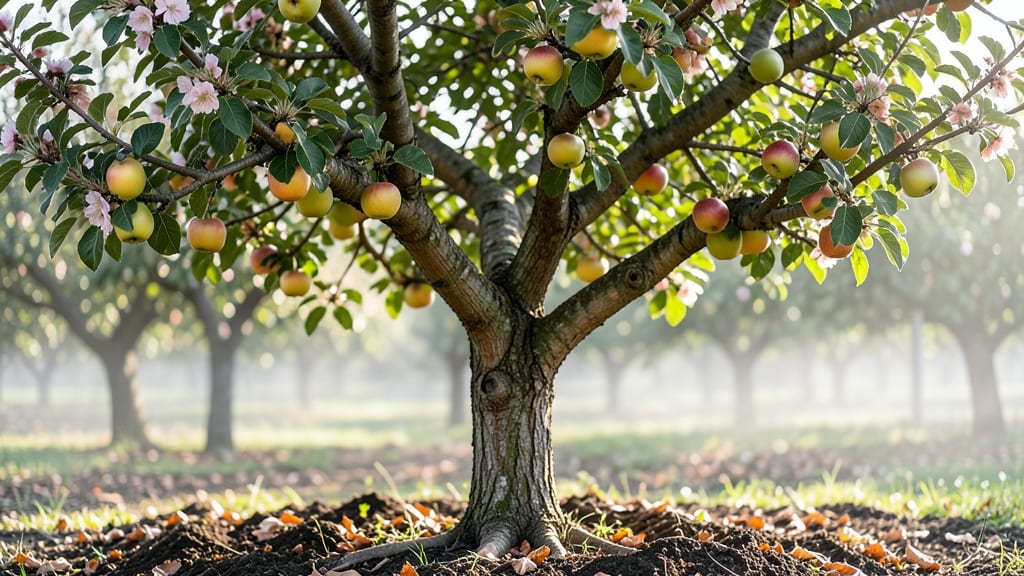
The apple tree growth cycle is where patience meets reward—each season transforms your tree from bare branches to a fruit-laden masterpiece. 🌳 I’ve watched my young apple tree go from a spindly sapling to a sturdy producer, and the key lies in understanding its natural rhythm.
Spring brings fresh growth, summer delivers fruit, fall prepares for harvest, and winter lets the tree rest—each phase demands different care to maximize yield.
Spring is all about pruning for shape and light. Cut back dead wood and thin crowded branches to let sunlight reach the center, which encourages strong growth. By mid-summer, you’ll see tiny blossoms forming—these will turn into your harvest, so avoid heavy pruning now.
The tree’s energy shifts from leaves to fruit, so water consistently to keep roots happy.
Fall is harvest time, but don’t stop there. After picking fruit, remove any remaining apples to prevent pests and disease. Light pruning can still happen, but focus on cleaning up debris. Winter dormancy is your tree’s chance to recharge—mulch around the base to protect roots from freezing soil.
Climate plays a big role: cold winters help break dormancy, while warm spells can trick trees into blooming too early. Adjust care based on your zone—some trees need extra protection in harsh winters. With the right timing, your apple tree will reward you with years of bountiful harvests.
📚 In This Guide
- What you need
- Instructions
- Tips and common mistakes
- Wrapping up and next steps
What you need
- ● Apple tree sapling or bare-root tree: Choose disease-resistant varieties (e.g., Honeycrisp, Fuji, or Granny Smith) from a reputable nursery. 🍏
- ● Pruning tools: Bypass pruners (for small branches, ¼"–¾" diameter)
- ● Loppers (for medium branches, ¾"–2" diameter)
- ● Pruning saw (for thick branches, 2"+ diameter)
- ● Grafting tools (if grafting): Grafting knife, grafting tape, and rootstock (if propagating).
- ● Soil amendments: Compost (5–10 gallons per tree)
- ● Organic mulch (wood chips or straw, 2–3 inches deep)
- ● Fertilizer: Balanced organic fertilizer (e.g., 10-10-10) or slow-release granules.
- ● Watering supplies: Garden hose with adjustable nozzle or drip irrigation system.
- ● Support stakes (for young trees): 2–3 4–6 ft wooden or metal stakes + tree ties.
- ● Tree wound dressing (for large cuts, though not always necessary)
- ● Pesticides/fungicides (e.g., neem oil, copper spray for disease prevention)
- ● Soil pH tester (ideal range: 6.0–7.0)
- ● Tree sprayer (for applying treatments evenly)
- ● Gloves (heavy-duty for protection)
- ● Safety glasses (when using power tools)
How to time apple tree pruning for peak fruit production
Pruning at the right time transforms a struggling apple tree into a fruit-bearing powerhouse. Here's my go-to seasonal schedule.
⏰ Step 1: Late Winter Dormant Pruning (Best Time for Heavy Work)
Wait until late winter when the tree is fully dormant but before buds swell—typically February to early March in most climates. This is the only time you can remove up to 25% of the tree's canopy without stressing it. I look for bare branches with no leaves or buds as my first targets.
Start by removing dead, diseased, or crossing branches first—they compete with healthy growth. Use clean, sharp pruners to make cuts just outside the branch collar (the swollen area where the branch meets the trunk). Avoid leaving stubs; they invite rot and pests.
Next, thin out overcrowded branches to improve airflow. You'll see stronger scaffold branches emerge after this pruning, which are critical for fruit production. If your tree has suckers (shoots growing from the base or trunk), cut them off at the base—they drain energy from fruit development.
☀️ Step 2: Early Spring Light Pruning (After Bud Break)
Once buds begin to swell but before flowers open (usually March to April), do a light maintenance pruning. This is when you shape the tree and remove any water sprouts (fast-growing vertical shoots) that popped up after winter. These sprouts steal energy from fruit production.
Focus on thinning out clusters of buds to prevent overcrowded fruit later. Aim for 6-8 inches of space between fruit spurs (the short branches where apples form). You'll notice healthier buds after this step—fewer crowded clusters mean bigger, better-quality apples.
If you see broken or storm-damaged branches, remove them immediately, even if it's not the ideal time. Clean cuts now prevent disease from entering the tree later. I always sterilize my pruners with rubbing alcohol between cuts to avoid spreading pathogens.
✂️ Step 3: Summer Light Pruning (June to August)
Summer pruning is all about corrective work—removing suckers, water sprouts, and any branches rubbing together. Do this after harvest but before September, when the tree starts preparing for dormancy. You'll see new growth popping up in summer, and that's what you target.
Use hand pruners for small branches and loppers for thicker ones (up to 1.5 inches in diameter). Avoid heavy pruning now—just light shaping to maintain an open center. The goal is to let sunlight and air reach the inner branches, which reduces disease risk and improves fruit quality.
If you notice fruit spurs growing too long, trim them back to 6-8 inches to encourage bushier growth next year. You'll see more compact spurs after this, which means more fruit clusters in the coming season. Never remove more than 10% of the tree's foliage in summer.
🍎 Step 4: Post-Harvest Cleanup (Fall)
After apples are harvested (typically September to October), do a final cleanup prune. Remove any dead, diseased, or weak branches that appeared during the growing season. This is also the time to sterilize the tree by removing mummified fruit (rotten apples still clinging to branches) and diseased leaves.
Rake up and dispose of all debris—don’t compost it, as it can harbor fungal spores. I like to spray the tree with a 10% copper fungicide solution at this time to prevent winter diseases. Avoid heavy pruning now; the tree needs to harden off before winter.
If your tree has sucker growth at the base, cut them off now before they drain energy from the roots. You'll see fewer unwanted shoots next spring, making winter pruning easier. This is also the time to apply a thick layer of mulch (3-4 inches) around the base to protect roots from freezing.
Tips & tricks for seasonal apple tree pruning
Timing is everything when it comes to pruning your apple trees—and these tips will help you avoid common mistakes that can stress your tree or reduce fruit production.
Seasonal Timing Matters: The late winter dormant pruning (February to early March) is your only chance to remove up to 25% of the canopy safely. This is when the tree's energy is at its lowest, so it can handle more aggressive pruning. If you miss this window, wait until summer for light corrective pruning—never prune in fall, as new growth won't harden off properly before winter.
Branch Selection Technique: In Step 1, when removing dead or crossing branches, always cut just outside the branch collar—the swollen area where the branch meets the trunk. This ensures the tree can seal the wound properly. I've seen too many pruning mistakes where stubs were left, leading to rot and pest entry. Also, thin out overcrowded branches to improve airflow, which is critical for preventing fungal diseases like apple scab.
Equipment Sanitation: Sterilizing your pruners between cuts (especially in Step 2) prevents spreading diseases from one branch to another. I keep rubbing alcohol in a small spray bottle by my pruning tools. This simple step can mean the difference between a healthy tree and one struggling with bacterial infections. Don't skip it—pathogens spread faster than you think!
Summer Pruning Strategy: During the summer light pruning (June to August), focus on removing only what's necessary—never more than 10% of the foliage. The key is to maintain an open center that lets sunlight reach all branches. I've noticed that trees pruned this way develop more compact fruit spurs (the branches where apples form), which leads to better fruit quality and quantity the following year.
Pro Tips for Apple Tree Growth Cycle
- Timing is everything when it comes to pruning your apple trees—and these tips will help you avoid common mistakes that can stress your tree or reduce fruit production.
- Seasonal Timing Matters: The late winter dormant pruning (February to early March) is your only chance to remove up to 25% of the canopy safely.
- Branch Selection Technique: In Step 1, when removing dead or crossing branches, always cut just outside the branch collar—the swollen area where the branch meets the trunk.
Frequently asked questions
Got questions about your apple tree’s growth cycle? You’re not alone! Here are some of the most common queries—and their answers—to help you keep your tree thriving and productive.
When is the best time to prune an apple tree for fruit yield?
The ideal time to prune is in late winter or early spring (February–March), just before buds swell but before new growth starts. This encourages strong, healthy branches and maximizes fruit production. Avoid pruning in fall, as it can leave wounds vulnerable to disease.
Can I prune an apple tree in summer?
Summer pruning (June–August) is possible, but it’s best for light shaping or removing water sprouts. Heavy pruning in summer can stress the tree and reduce fruit quality. If you must prune, do it early summer and avoid removing more than 25% of the foliage.
How do I know if my apple tree isn’t growing properly?
Watch for these red flags: stunted growth, sparse leaves, or no fruit may signal over-pruning, disease (like fire blight), or poor soil. Check for dead branches (snapping easily) or yellowing leaves (nutrient deficiency). Adjust care—fertilize, prune less aggressively, or test soil pH.
What if I missed the winter pruning window?
Don’t panic! Prune in early spring (April) if you missed late winter, but avoid heavy cuts. Focus on removing dead/diseased wood and thinning crowded branches. Just skip major structural pruning—save that for next winter to avoid stressing the tree.
How often should I prune an apple tree?
Young trees (1–3 years) need annual pruning to establish structure. Mature trees (4+ years) can be pruned every 2–3 years, but always remove dead wood and thin branches to improve airflow. Light maintenance pruning (removing water sprouts) can happen year-round.
Wrapping up and next steps
Understanding your apple tree’s growth cycle and the best pruning timing is the key to a bountiful harvest! 🌱 From winter’s dormant phase to summer’s fruiting peak, each season offers a chance to shape your tree’s future.
With the right tools, knowledge, and a little patience, you’ll nurture a thriving orchard that rewards you year after year.
Ready to take the next step? Start small—pick a single branch to practice pruning this season, and observe how your tree responds. Over time, you’ll gain confidence and fine-tune your approach for maximum fruit yield and long-term health. Happy pruning! 🍏✨