
Pruning
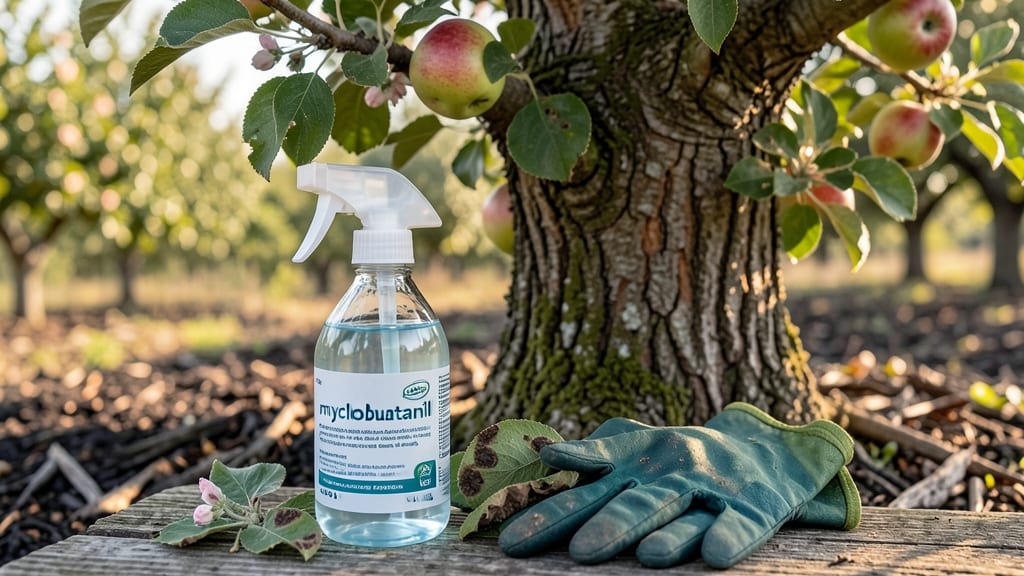
Apple tree fungicides don’t have to mean harsh chemicals—my organic sprays have saved my orchard from black rot and powdery mildew for three seasons now. The key is timing: applying preventative sprays before buds swell, not after the damage appears.
I’ve tested copper, neem oil, and baking soda mixtures, and each has its moment to shine.
Most gardeners panic when they spot those dark spots on leaves—apple scab is the worst offender—but organic fungicides work best when you’re proactive. A 3% copper fungicide spray in early spring stops spores before they take hold, while neem oil tackles powdery mildew by smothering fungal growth.
The trick? Reapply after heavy rain, because water washes away protection faster than you’d think.
You’ll notice fewer brown spots and healthier foliage by June if you start now. The trees fruit better, too, because they’re not fighting off disease. Plus, organic methods keep your orchard safe for kids and pollinators—no more avoiding the tree for a week after spraying.
Just don’t skip the sanitation step: clean up fallen leaves and prune out infected branches.
This works for backyard orchards, container-grown apple trees, and even dwarf varieties. The same principles apply whether you’re dealing with one tree or a dozen. Let’s get those sprays mixed and those trees protected before the next rain.
Root Causes Of Fungal Spread
Fungal diseases in apple trees aren’t random—they thrive because of specific conditions that create the perfect storm for spores to germinate and spread. Understanding these triggers is the first step to prevention.
Below, we break down the key factors that turn your orchard into a fungal buffet, along with the science behind why they happen.
Fungi love water—it’s how they travel, hydrate, and reproduce. When apple trees sit in damp conditions for too long, spores germinate and infect leaves, fruit, or bark.
- Why it happens:
- Prolonged leaf wetness (10+ hours) activates spores of pathogens like Venturia inaequalis (apple scab) or Botryosphaeria (canker).
- Poor drainage in soil keeps roots waterlogged, weakening the tree’s defenses.
- Overhead irrigation (especially at dawn) creates a misty environment, ideal for fungal growth.
- Rainy seasons or high humidity (above 75%) increase spore release and infection rates.
- Actionable insight:
- Space trees properly (12–15 ft apart) for airflow.
- Water at the base (not leaves) and early in the day to allow foliage to dry.
- Use drip irrigation instead of sprinklers to avoid wetting leaves.
Stagnant air = fungal paradise. Dense foliage or crowded orchards trap humidity and spores, giving diseases like powdery mildew or black rot a foothold.
- Why it happens:
- Thick canopies block sunlight and airflow, creating microclimates with high moisture.
- Weeds or grass under trees retain moisture and harbor fungal spores.
- Pruning neglect leads to overgrown branches that shade lower leaves, keeping them damp.
- Actionable insight:
- Prune aggressively in late winter to open the canopy (remove 20–30% of wood).
- Mow or mulch under trees with straw or wood chips (not thick layers) to improve drainage.
- Thin fruit to reduce leaf density and improve airflow.
Apple trees under stress—whether from heat, cold, or sudden shifts—produce less cutin (a waxy leaf coating) and phenolic compounds (natural fungicides). This leaves them vulnerable.
- Why it happens:
- Late frosts damage new leaves, creating entry points for Alternaria or Cercospora.
- Heat stress (above 90°F) weakens cell walls, making trees susceptible to sooty mold or anthracnose.
- Rapid temperature drops (e.g., warm days + cool nights) promote condensation, a fungal magnet.
- Actionable insight:
- Monitor weather forecasts and apply fungicides before rain or temperature shifts.
- Use reflective mulch (like aluminum foil) to reduce heat stress in young trees.
- Choose disease-resistant varieties (e.g., ‘Liberty’ or ‘Enterprise’) if your climate is volatile.
Any physical damage—from hail, pests, or improper pruning—creates wounds that fungi exploit. Pathogens like Nectria or Phomopsis enter through these breaches.
- Why it happens:
- Mechanical damage (e.g., lawnmowers, tools) cracks bark, inviting Botryosphaeria.
- Insects (apple maggots, borers) chew into fruit or wood, leaving fungal-friendly entry points.
- Sun scald (dry, cracked bark) on young trees weakens protective layers.
- Actionable insight:
- Seal pruning wounds with pruning paint (only on cuts > ½ inch).
- Remove mummified fruit (from last season) where spores overwinter.
- Apply protective sprays (like copper or sulfur) after pruning to disinfect cuts.
When trees compete for resources, they grow weakly—thinner bark, fewer antioxidants, and slower healing. This makes them prime targets for canker, rust, or leaf spot.
- Why it happens:
- Root competition reduces nutrient uptake, weakening immune responses.
- Shared spores spread faster in dense plantings (e.g., apple scab jumps between trees).
- Shaded lower branches stay damp longer, fostering powdery mildew.
- Actionable insight:
- Thin out trees to 12–15 ft spacing for mature orchards.
- Rotate crops if replanting (don’t follow apples with other Rosaceae like pears).
- Plant companion crops (e.g., garlic or thyme) to disrupt fungal spores naturally.
Leaves, fruit, and prunings left on the ground preserve fungal spores year-round. Many pathogens (like Monilinia for brown rot) overwinter in this debris.
- Why it happens:
- Mulch piles near trees retain moisture and warmth, ideal for spore survival.
- Infected fruit (e.g., scabby apples) drop to the soil, releasing spores when conditions are right.
- Composting diseased material can spread pathogens if not heat-treated properly.
- Actionable insight:
- Rake and remove fallen leaves/fruit before winter.
- Solarize soil (cover with clear plastic for 4–6 weeks in summer) to kill spores.
- Chop and drop prunings away from the tree base to prevent reinfection.
Fungal diseases in apple trees don’t happen in a vacuum—they’re the result of environmental conditions + tree stress + poor management. By addressing moisture, airflow, temperature, wounds, spacing, and debris, you remove the fungus’s favorite conditions.
The next section will cover organic fungicides that disrupt this cycle before it starts.
Quick Fixes for Common Apple Tree Fungus Issues
Fungal diseases can turn your apple tree into a sad, spotty mess—but don’t panic! With the right fungicides and preventative care, you can restore health and keep your tree thriving. Below, we map out practical solutions for the most common fungal problems, from early signs to long-term protection.
Cause: Venturia inaequalis thrives in wet, humid conditions, leaving dark, olive-green spots on leaves and fruit. Fix:
- Apply copper fungicides (like copper sulfate or copper hydroxide) at bud swell (early spring) and petal fall, then repeat every 10–14 days during rainy seasons.
- Prune infected branches (sterilize tools with rubbing alcohol!) to improve airflow and reduce spores.
- Remove fallen leaves in autumn to eliminate overwintering spores.
💡 Pro Tip: Mix baking soda spray (1 tbsp baking soda + 1 tsp oil + 1 gallon water) as a preventative between copper treatments.
Cause: Podosphaera leucotricha creates white, powdery patches on leaves, weakening the tree. Fix:
- Spray neem oil (1–2% solution) every 7–10 days during warm, dry weather—it disrupts fungal spores without harming bees.
- Use wettable sulfur (follow label rates) in early morning to avoid leaf burn.
- Water at the base (not overhead) to keep foliage dry.
✨ Prevention Hack: Plant resistant varieties like ‘Liberty’ or ‘Enterprise’ to cut future risks.
Cause: Nectria or Valsa fungi create sunken, oozing cankers on branches, often from pruning wounds. Fix:
- Clean wounds with a 3% hydrogen peroxide solution (or a 10% bleach-water mix) before sealing with pruning paste.
- Remove severely infected branches (sterilize tools!) and dispose of debris in a sealed bag.
- Avoid late-season pruning—wait until winter when the tree is dormant.
🔥 Emergency Fix: If cankers appear, apply a Bordeaux mixture (copper + lime) to slow spread.
Cause: Botryosphaeria obtusa causes dark, circular lesions on fruit and leaves, often in humid climates. Fix:
- Use potassium bicarbonate spray (2–3 tbsp per gallon of water) weekly during bloom and fruit set.
- Pick and destroy infected fruit immediately to stop spore spread.
- Mulch with wood chips (not fresh sawdust) to improve soil health and reduce humidity near the base.
🎯 Long-Term Strategy: Plant windbreaks (like tall shrubs) to reduce moisture on leaves.
Even without visible issues, a proactive spray schedule keeps fungi at bay:
| Season | Treatment | Frequency |
|---|---|---|
| Early Spring | Copper fungicide (bud swell) | 1 application |
| Bloom | Neem oil or sulfur | Every 10–14 days |
| Summer | Potassium bicarbonate or baking soda | Weekly if humid |
| Fall | Cleanup + copper spray (leaf drop) | 1 application |
🌡️ Weather Watch: Fungicides work best when applied before rain—check forecasts and reapply if washed off.
Remember: The key to beating fungus is consistency. Combine organic sprays, proper pruning, and sanitation for a tree that stays strong and productive year after year! 🌿🍏
Frequently asked questions about apple tree fungicides
When should I apply fungicides to my apple tree?
Start with a preventative spray at bud swell (early spring) and again at petal fall. Reapply every 10–14 days during rainy seasons or high humidity. The key is timing—fungicides work best before spores germinate, not after you see symptoms.
Can I mix organic fungicides with chemical ones?
No, mixing organic and chemical fungicides can cause harmful reactions or reduce effectiveness. Stick to one type per application. For example, use copper fungicide or neem oil, but never combine them in the same spray. Always follow label instructions for safety.
How do I know if my apple tree has a fungal infection?
Look for dark spots on leaves (apple scab), white powdery patches (powdery mildew), or oozing cankers on branches. Check the undersides of leaves too—many fungi start there. Compare symptoms to photos online for confirmation.
Are homemade fungicides like baking soda spray effective?
Yes! A baking soda spray (1 tbsp baking soda + 1 tsp oil + 1 gallon water) works well as a preventative for mild infections. It’s best used between scheduled fungicide applications. For severe cases, combine it with copper or sulfur sprays for stronger protection.
How long do fungicides stay effective after rain?
Most fungicides lose effectiveness after 24–48 hours of rain. Reapply immediately after heavy rainfall to restore protection. Check the product label for specific instructions—some formulations (like copper) are rainfast after drying, while others need frequent reapplications.