
Watering
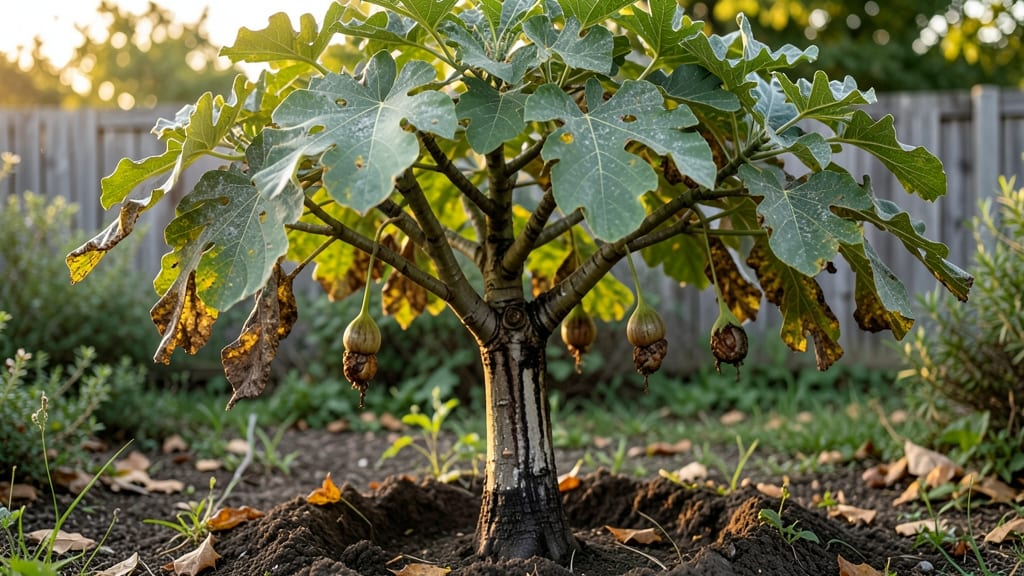
An overwatered fig tree looks like it's drowning in its own pot—yellowing leaves, drooping branches, and a soil smell that's more swamp than earth. 🌱 I've seen this too often: what starts as a lush, productive tree turns into a sad, mushy mess when roots can't breathe.
The first sign? Leaves that go from vibrant green to sad, limp yellow, often with brown edges that curl like burnt paper.
Digging into the soil usually reveals the problem: it stays soggy for days, with a musty odor that tells you root rot has set in. The roots themselves turn black and mushy instead of their normal white or tan color.
This isn't just a cosmetic issue—it's a life-or-death struggle for your tree. The good news? Fig trees are resilient once you catch the problem early and give them a chance to dry out.
You'll know you've turned things around when new leaves emerge with their signature deep green color and the soil stays crumbly between waterings. The key is adjusting your watering schedule to match your climate—fig trees need deep watering but hate soggy roots.
Within a few weeks, your tree should bounce back with stronger growth and fewer yellow leaves.
For long-term health, I swear by checking soil moisture with my finger before watering. If the top 2 inches feel damp, wait another day. And always choose a pot with drainage holes—fig trees despise wet feet.
This simple habit has saved more of my trees than any fancy fertilizer ever could.
Root Causes of Overwatering
Overwatering a fig tree isn’t just about pouring too much water—it’s a cascade of environmental and care-related factors that disrupt the plant’s delicate balance. Understanding these causes helps you take corrective action before damage becomes irreversible.
Let’s dig into the science behind why your fig tree might be drowning in its own pot.
Fig trees thrive in well-draining soil, but when drainage fails, excess water pools around the roots, cutting off oxygen and inviting rot. Here’s why this happens:
- Compacted or clay-heavy soil: Clay retains moisture like a sponge, suffocating roots. If your fig tree is planted in native soil with high clay content, water doesn’t drain away—it lingers.
- Containers without drainage holes: Pots without holes act like bathtubs, trapping water at the bottom. Even "self-watering" pots can become death traps if not monitored.
- Improper amendments: Mixing too much organic matter (like peat moss) without perlite or sand can create a waterlogged environment. Pro tip: Aim for a 60/40 mix of mineral soil to organic matter for fig trees.
🔍 Actionable fix: Test your soil’s drainage by filling a pot with water and timing how long it takes to drain. If it takes more than 30 minutes, amend with coarse sand or pumice. For potted figs, always use containers with drainage holes and elevate them on saucers.
Fig trees hate soggy feet, but many gardeners fall into the trap of "when in doubt, water more." Overwatering often stems from:
- Ignoring seasonal needs: In winter, fig trees enter dormancy and require far less water (sometimes none at all). Yet, people water on the same schedule year-round.
- Watering without checking soil moisture: Sticking your finger 1-2 inches into the soil is the gold standard. If it’s damp, wait. If it’s dry, water deeply.
- Automatic irrigation gone rogue: Drip systems or timers set on a fixed cycle can drown fig trees during rainy periods or cool weather.
💡 Pro tip: Use a moisture meter or the "squeeze test"—grab a handful of soil. If it holds its shape, it’s too wet. If it crumbles, it’s time to water.
Even with perfect watering habits, your fig tree’s surroundings can turn its pot into a swamp. Key culprits include:
- High humidity: Humid climates (or indoor spaces with poor airflow) slow evaporation, keeping soil damp longer. Fig trees need good air circulation to prevent fungal issues.
- Shade without sunlight balance: While figs tolerate partial shade, too much shade reduces transpiration (water loss through leaves), making the plant retain moisture.
- Rainfall + poor shelter: Outdoor figs left exposed to heavy rain without protection (like a tarp or overhang) can get waterlogged quickly.
🌡️ Actionable fix:
- Place potted figs in bright, indirect light (6+ hours of sun daily).
- Move containers to covered porches or under eaves during rain.
- Use a fan on low speed indoors to improve airflow.
A pot that’s too large for the fig tree’s root system creates a "wet sponge" effect. Here’s why:
- Excess soil holds water: A 5-gallon pot for a small fig tree means most of the soil stays wet for days, even if you water lightly.
- Roots can’t access all the soil: When roots are crowded, they struggle to absorb water efficiently, leading to waterlogging in unused soil pockets.
- Slow drying time: Larger pots take weeks to dry out, even in dry climates.
✨ Pro tip: Repot fig trees every 2-3 years into containers only 1-2 inches larger in diameter. Use terracotta pots (which dry faster than plastic) and avoid "up-potting" unless necessary.
Overwatering creates the perfect breeding ground for Phytophthora, Pythium, and other root-rotting fungi. Signs include:
- Mushy, black roots: Healthy roots are firm and white; infected ones turn slimy and dark.
- Yellowing leaves with brown edges: Fungal toxins disrupt nutrient uptake.
- Stunted growth or wilting: The tree can’t absorb water or nutrients, even if the soil is wet.
🔥 Critical fix: If you suspect fungus:
- Stop watering immediately and let the soil dry completely (3-5 days).
- Trim all mushy roots with sterilized shears.
- Repot in fresh, sterile soil with fungicide (like copper-based treatments).
Reviving Your Fig Tree: Step-by-Step Fixes
Overwatering can feel like a death sentence for your fig tree, but with the right care, you can nurse it back to health—sometimes even saving it from the brink! The key is acting fast, adjusting your watering habits, and giving your tree the support it needs to recover.
Below, we’ll break down cause-specific fixes to get your fig tree thriving again, plus prevention tips to keep it happy long-term.
---
If your fig tree’s leaves are turning yellow or wilting, the roots may be suffocating from excess moisture. Here’s how to help:
#### 🔥 Stop Watering Immediately - Pause all watering for at least 5–7 days to let the soil dry out. This prevents further root rot. - If the soil is soggy or smells foul, hold off even longer—roots need air to breathe!
#### 🍳 Improve Drainage - Repot if needed: If your tree is in a container, check for drainage holes.
If missing, add 2–3 holes to the bottom. - Amend the soil: Mix in perlite, coarse sand, or orchid bark (20–30%) to improve aeration and drainage. - Raise the pot: Place it on feet or a saucer to prevent water pooling at the bottom.
#### 👨🍳 Prune Damaged Leaves - Trim yellow or mushy leaves with clean, sharp pruners to redirect the tree’s energy to healthy growth. - Avoid cutting back more than 1/3 of the foliage at once—this can stress the tree further.
#### ⏰ Gradual Reintroduction of Water - After a week, water lightly (only when the top 1–2 inches of soil are dry). - Use the "finger test": Stick your finger in the soil—if it’s damp past your first knuckle, wait longer.
--- If you’ve spotted black, mushy roots or a foul odor, root rot is likely setting in. Act fast!
#### 🔪 Trim the Rotten Roots - Gently remove the tree from its pot and rinse the roots with water to assess damage. - Cut away all black, soft, or slimy roots with sterilized pruners.
Healthy roots are firm and white/tan. - Dip healthy roots in a fungicide (like copper fungicide or hydrogen peroxide 3%) for 10 minutes to prevent further infection.
#### 🌡️ Repot in Fresh, Dry Soil - Use a well-draining potting mix (cactus/succulent mix works well) and add perlite or pumice (50% mix). - Choose a slightly larger pot (only 1–2 inches wider) to avoid overpotting, which traps moisture. - Let the tree dry out completely for 3–5 days before watering again.
#### ✨ Encourage Recovery with Fertilizer - Wait 4–6 weeks before fertilizing to avoid shocking the roots. - Once recovered, use a balanced, low-nitrogen fertilizer (like 5-5-5) once a month in spring/summer.
--- Once your tree is on the mend, follow these habits to prevent future overwatering:
#### 📊 Watering Schedule - Water deeply but infrequently: Figs prefer dry spells between waterings.
Aim for once every 7–10 days (adjust for climate). - Check soil moisture: Use a moisture meter or the finger test—water only when the top 2–3 inches are bone dry. - Avoid wetting leaves: Water at the base of the tree to prevent fungal diseases.
#### 🌡️ Soil & Pot Care - Use fast-draining soil: A mix of 60% potting soil, 20% perlite, and 20% sand works well. - Terracotta pots are best: They wick away moisture better than plastic. - Mulch lightly: Add a 1-inch layer of gravel or bark around the base (but not touching the trunk) to reduce evaporation.
#### 🎯 Environmental Adjustments - Place in bright, indirect light: Figs need 6+ hours of sunlight daily but can scorch in intense midday heat.
A slightly shaded spot helps. - Improve air circulation: Place a small fan nearby (on low) to prevent humidity buildup, which encourages rot. - Winter care: Reduce watering in cool months (figs are semi-dormant) and stop fertilizing.
--- If your fig tree: - Has extensive root rot (more than 50% of roots are mushy). - Shows no signs of recovery after 2–3 weeks of care. - Develops black spots or mold despite treatment.
A local nursery or arborist can provide root-saving treatments or advise on whether to propagate healthy cuttings.
--- With patience and the right adjustments, your fig tree can bounce back—sometimes even stronger than before! 🌿💚 The key is observation, quick action, and consistent care. Now that you’ve got the tools, it’s time to revive and thrive!
Frequently asked questions
How can I tell if my fig tree’s yellow leaves are from overwatering vs. underwatering?
Check the soil first: if it’s soggy and smells musty, you’re overwatering. Yellow leaves with brown edges and drooping branches are classic overwatering signs. For underwatering, leaves will feel crispy/dry and soil will pull away from the pot edges. Pro tip: Gently tug on the tree—if it slides easily, roots are rotting from too much water.
Can I save a fig tree with root rot?
Yes, but act fast! Remove the tree from its pot, trim all black/mushy roots, and repot in fresh, dry soil with perlite. Let it dry completely for 3-5 days before watering again. Add a fungicide treatment to prevent reinfection. If over 50% of roots are rotted, recovery becomes unlikely.
Why does my fig tree need drainage holes if I water it sparingly?
Even light watering creates excess moisture that lingers in containers. Drainage holes prevent water from pooling at the bottom, which suffocates roots. Key fact: Fig trees hate "wet feet"—excess water triggers root rot faster than you might think, even with infrequent watering.
How often should I water my fig tree in winter?
Cut back dramatically! Water only when the top 3 inches of soil are completely dry, typically every 3-4 weeks. Figs enter dormancy in winter and need far less moisture. Overwatering in cool months is the #1 cause of winter dieback.
What’s the fastest way to dry out waterlogged soil?
Move the pot to a warm, sunny spot and remove it from its saucer. Use a fan to circulate air around the soil. For severe cases, mix in dry sand or perlite to absorb excess moisture. Avoid watering until the soil feels crumbly when squeezed—this could take 5-7 days.