
Pruning
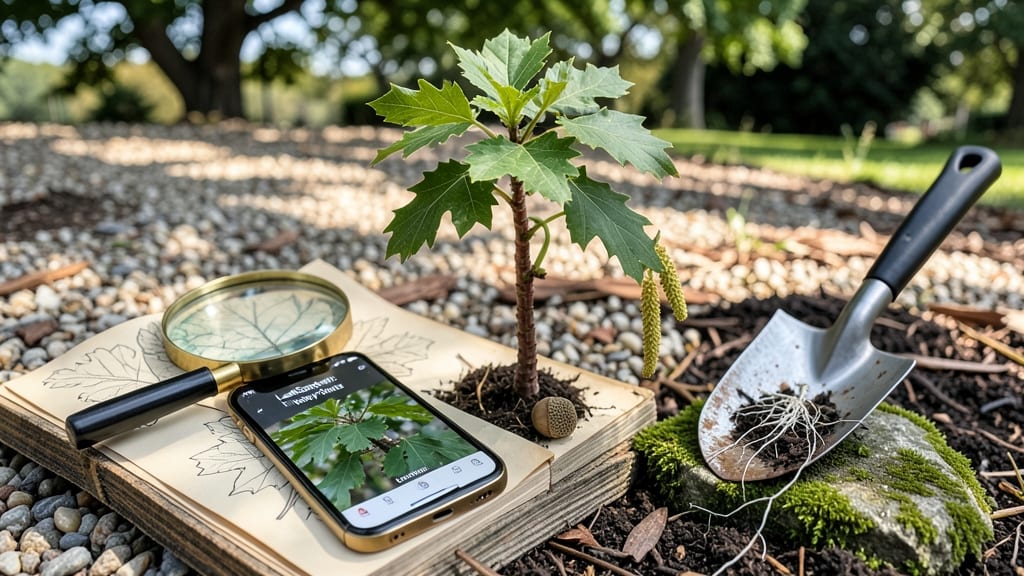
Tree seedling identification by leaf shape saves you from planting the wrong species—or worse, an invasive one. 🌱 I’ve spent years sorting through seedlings in my backyard, and the key is matching leaf shape, edge, and arrangement to common species in your area. A single misidentified seedling can turn into a 60-foot headache in a decade.
Start with the basics: simple leaves (like oak) vs. compound leaves (like hickory), and whether the edges are smooth, lobed, or serrated. A magnifying glass helps spot fine details—like the tiny hairs on a birch leaf or the distinct veins of a maple.
My go-to trick? Compare what you see to a field guide or app while the seedling’s still small, before it outgrows your yard.
You’ll quickly learn to spot native favorites like white oak (lobed leaves) or red maple (pointy, opposite leaves) and weed out invasive species like Bradford pear (with its telltale five-lobed leaves).
This method works for any climate zone—just adjust your reference list to local trees. Once you master it, you’ll never accidentally plant a seedling that belongs in someone else’s yard.
Bonus: Knowing your seedlings helps you decide whether to transplant, prune, or pull them. A misplaced seedling can disrupt your garden’s balance—or become your next shade tree. Start practicing now, and you’ll be an expert by next spring’s sprouting season.
Natural Factors Affecting Seedling Traits
Identifying tree seedlings can feel like solving a botanical puzzle—especially when their leaves, stems, or growth patterns don’t match what you’ve seen in field guides. The truth is, several natural factors influence how seedlings develop, making accurate identification trickier than it seems.
Understanding these causes helps you adjust your approach and avoid mislabeling species. Let’s break down the key reasons why seedlings can look so different from their mature counterparts—or even from each other.
Seedlings are extremely sensitive to their surroundings, and environmental stress can warp their typical traits. For example:
- Light exposure: Shade-tolerant species (like sugar maples) may produce broader, thinner leaves in low light to maximize photosynthesis, while sun-loving seedlings (such as oaks) might develop smaller, tougher leaves to conserve water. Pro tip: Compare seedlings from the same species growing in sun vs. shade—the differences can be dramatic!
- Water availability: Drought stress causes leaves to curl, shrink, or take on a darker green hue. Conversely, overwatered seedlings might develop lighter, paler leaves due to poor nutrient uptake. Soil moisture directly impacts cell structure, altering leaf shape and texture.
- Wind and mechanical damage: Young leaves are fragile. High winds or rubbing against branches can create irregular edges or holes, mimicking pest damage. Look for uneven tearing rather than clean, precise bites from insects.
Actionable fix: Observe seedlings in their native habitat (if possible) to see how they adapt. If you’re identifying potted seedlings, replicate their natural growing conditions—like partial shade for forest species—to reduce stress-induced variations.
Not all seedlings of the same species are identical—even in the same litter! Genetic diversity within a species can lead to:
- Hybrids: Cross-pollination between related species (e.g., Quercus alba × Quercus rubra) produces seedlings with mixed traits, like lobed leaves with extra sinuses or intermediate colors. Example: A "swamp chestnut oak" might have leaves that don’t neatly fit either parent species.
- Polyploidy: Some seedlings inherit extra chromosome sets, leading to larger leaves or altered growth rates. This is common in willows and birches, where leaf size can vary wildly.
- Seed source location: A white pine seedling from the northeastern U.S. may have shorter needles than one from the Rocky Mountains, due to evolutionary adaptations to climate.
Actionable fix: When identifying, focus on multiple consistent traits (e.g., leaf arrangement, bud shape, bark texture) rather than relying on a single feature. Use regional field guides or databases like the USDA PLANTS database to account for local genetic variations.
Seedlings are prime targets for pests and pathogens, which can drastically alter their appearance. Common culprits include:
| Pest/Disease | Visual Clues | Impact on Identification |
|---|---|---|
| Japanese beetles | Skewed, lace-like leaf patterns; skeletonized edges | Mistaken for normal variation in species like linden or birch |
| Spider mites | Stippling (tiny white/yellow dots); bronzing of leaves | Can make leaves appear darker or mottled, confusing identification |
| Fungal leaf spots (e.g., Anthracnose) | Dark, irregular patches with yellow halos; premature leaf drop | May lead to early misidentification as a different species |
| Root rot (e.g., Phytophthora) | Yellowing from bottom-up; stunted growth | Seedlings may look weak or malnourished, masking true species traits |
Actionable fix: Inspect the underside of leaves for eggs, webbing, or fungal spores. Healthy seedlings of the same species should show consistent damage patterns—if one looks "off," it might be sick, not a different species.
Seedlings don’t stay "baby trees" forever. Their leaves, stems, and growth habits change as they mature:
- Juvenile vs. adult leaves: Many species (like red maple) have lobed juvenile leaves that transition to smooth-edged adult leaves. A 6-month-old seedling might look nothing like a 10-year-old sapling!
- Growth rings and stem thickness: Thin, hairy stems in young seedlings can disappear as the bark toughens. Example: A sycamore seedling’s white bark with black patches is a dead giveaway—but only in maturity.
- Bud development: Terminal buds on seedlings are often larger and more pronounced than those on mature trees, which can be tiny or hidden in leaf axils.
Actionable fix: Use a two-pronged approach:
- Compare the seedling to known juvenile traits from guides (e.g., "Bud Break" resources).
- Look for consistent patterns across multiple seedlings of the same species—age-related changes should be predictable.
Fixing Seedling ID Confusion
Identifying tree seedlings can feel like solving a puzzle with missing pieces—especially when leaves, bark, and growth patterns look eerily similar across species. But with the right approach, you can turn guesswork into confidence. Below, we break down common challenges and practical fixes, from quick field tricks to long-term prevention.
Problem: Two or more seedlings share identical leaf shapes or bark textures, making them impossible to distinguish at first glance. Solution:
- 🔍 Use a magnifying glass to inspect fine details like leaf veins, serrations, or hairiness. For example, oak seedlings (Quercus spp.) often have lobed leaves with bristly edges, while maple seedlings (Acer spp.) have smooth, opposite leaves with pointed lobes.
- 🌿 Compare growth habits: Note whether the seedling has a single straight stem (like pine) or multiple branches (like birch). Height and spread can also hint at maturity differences.
- 📸 Take side-by-side photos in natural light. Apps like LeafSnap or PictureThis can cross-reference your images with a database for instant matches.
Prevention Tip: 💡 Carry a small field guide or digital app during walks—even a quick reference can save hours of head-scratching later.
Problem: Seedlings look drastically different in spring vs. fall, making identification inconsistent. Solution:
- 🌳 Focus on evergreen vs. deciduous first. Needles (pines, spruces) vs. broad leaves (oaks, maples) are your first clue.
- 🍁 Track leaf color shifts: Some seedlings turn bright red (sumac), yellow (birch), or stay green (evergreens). Note these patterns to build a mental library.
- 📅 Plant in layers: If possible, observe the same seedling over months. A red maple (Acer rubrum) might have red stems in winter but smooth green leaves in summer.
Prevention Tip: ✨ Mark seedlings with flags or stakes if studying long-term. Label them by date and species guess to track progress.
Problem: You rely solely on leaves, ignoring bark texture or bud shapes—which are often the real giveaways. Solution:
- 🧵 Examine bark texture: Smooth (birch), scaly (beech), or furrowed (oak)? Scratch a tiny section to check for color changes (e.g., paper birch peels in thin, papery layers).
- 🌟 Inspect buds: Are they pointed (hickory), rounded (maple), or clustered (willow)? Hold a seedling branch near your face—buds near the stem’s base often reveal species.
- 🔪 Gently peel back outer layers (if ethical) to see inner bark color. Sycamore has a distinctive mottled pattern, while elm is greenish-white.
Prevention Tip: 🌡️ Practice on fallen branches first—many species shed bark or buds naturally, letting you study them up close.
Problem: Your region has native seedlings, but invasive or non-native species sneak in, confusing your ID process. Solution:
- 🌍 Research regional "look-alikes": For example, autumn olive (Elaeagnus) mimics native dogwoods but has silvery bark and thorny branches.
- 🚫 Check for invasive traits: Non-natives often grow faster, have no natural predators, or outcompete locals. Report suspicious seedlings to local arboretums.
- 📊 Use a regional key: Websites like the USDA Plants Database or iNaturalist let you filter species by location, narrowing down matches.
Prevention Tip: 🎯 Join a local gardening or forester group—they’ll know which seedlings are red flags in your area.
Problem: You’re in the field with no reference materials, and your memory fails. Solution: - 📲 Use ID apps: Seek by iNaturalist or PlantNet let you upload photos for crowd-sourced IDs. - 🔬 Try a dichotomous key: Start with broad categories (needle vs. broadleaf) and narrow down.
Online tools like Key to North American Trees simplify this. - 📸 Post in forums: Reddit’s r/whatsthisplant or Facebook groups often provide rapid-fire answers from experts.
Prevention Tip: 💡 Download offline apps—cell service can be spotty in forests!
Problem: You keep misidentifying the same species over and over. Solution: - 📚 Create a scrapbook: Press leaves between book pages or use a herbarium kit to preserve samples. - 🌿 Grow a test plot: Plant known seedlings side by side to compare growth rates, leaf drop, and bark changes. - 📅 Log observations: Note when buds swell, leaves emerge, or fruit appears.
Patterns emerge over time!
Prevention Tip: ✨ Teach a friend—explaining your process to someone else reinforces your own knowledge.
Final Pro Tip: 🌟 When in doubt, wait. Some seedlings (like honey locust) have compound leaves that change shape with age—patience pays off!
By tackling these common pitfalls head-on, you’ll go from guessing to knowing in no time. Happy identifying! 🌿🔍
Frequently asked questions
What’s the quickest way to tell if a seedling is an oak or maple?
Look at leaf arrangement and edges! Oaks have lobed leaves with bristly edges and grow alternately along the stem. Maples have smooth, opposite leaves (paired at each node) with pointed lobes. A magnifying glass helps spot oak’s tiny hairs along leaf veins.
Can I use a phone app to identify seedlings?
Apps like LeafSnap or iNaturalist let you upload photos for instant matches. For best results, include the whole plant (not just leaves) and note bark/bud details. Pro tip: Use natural light and avoid shadows to improve accuracy.
How do I know if a seedling is invasive?
Check for these red flags: rapid growth, no natural predators, and aggressive spread. Common invasive seedlings include Bradford pear (five-lobed leaves) and autumn olive (silvery bark). Compare to your local invasive species list—many have distinctive traits like thorns or unusual leaf shapes.
Should I remove all seedlings from my yard?
Not necessarily! Native seedlings support wildlife and improve soil. Focus on removing invasives or species that won’t thrive in your climate. Keep desirable seedlings (like oaks or maples) if they’re native and well-suited to your space.
What’s the best time of year to identify seedlings?
Spring and early summer are ideal when leaves are fully formed. Avoid winter (when many species are dormant) or late fall (when leaves may be damaged). If you must ID in winter, look for bud shapes or bark patterns—some species have distinctive winter characteristics.