
Pruning
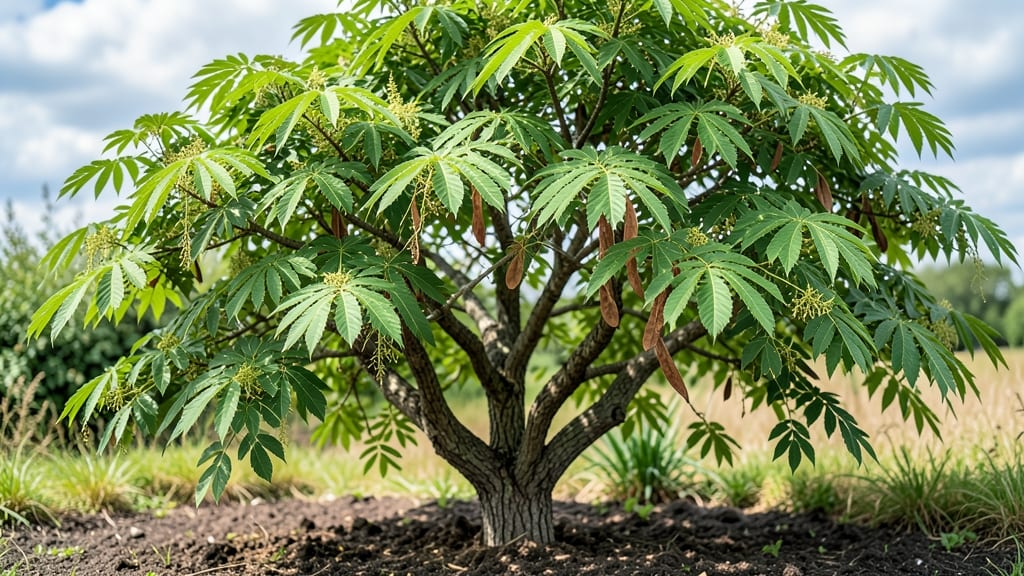
Winter pruning your Tree of Heaven now keeps it from taking over your yard by spring. ✂️ This fast-growing tree spreads aggressively, but sharp cuts in late winter—when it’s dormant—give you the upper hand before new growth starts.
The key is timing: prune after the worst cold snaps but before buds swell, usually in February or March depending on your zone.
You’ll need clean, sharp pruners (dull blades tear bark and invite disease) and a ladder if branches are high. Target suckers at the base and crossing or weak branches first—they’re the tree’s fastest way to spread.
Cut back to a strong outward-facing bud or lateral branch to encourage healthy regrowth. Think of it like giving your tree a haircut: shorter now means less work later.
What you’ll end up with is a neater, more manageable tree that’s less likely to smother nearby plants. The winter pruning also reduces those pesky seed pods, which can spread like dandelion fluff.
Just avoid heavy pruning—this tree bounces back fast, and you don’t want to trigger a surge of new growth too early in the season.
Works for both young trees and established ones, though mature specimens may need multiple sessions to tame their spread. Pro tip: Mark your calendar now so you don’t forget—this tree will remind you if you do. Ready to reclaim your yard?
📚 In This Guide
- What you need
- Instructions
- Tips and common mistakes
- Wrapping up and next steps
What you need
- ● Pruning shears – Sharp, bypass-style shears (for small branches, ¼"–½" diameter).
- ● Loppers – Bypass or anvil type (for branches ½"–2" in diameter).
- ● Pruning saw – Curved-tooth saw for thick branches (2"+ diameter).
- ● Work gloves – Heavy-duty, cut-resistant gloves (for protection from thorns and rough bark).
- ● Safety goggles – To shield eyes from debris.
- ● Ladder or extension pole – Sturdy, tall enough to reach the highest branches safely.
- ○ Disposable pruning bags or tarp – For collecting and disposing of cuttings (optional but helpful!).
- ● Rake or broom – For clearing fallen leaves and debris.
- ● Disinfectant (70% isopropyl alcohol or bleach solution) – To sterilize tools between cuts (prevents disease spread).
- ● First-aid kit – Just in case (thorns and sharp tools can cause minor injuries!).
- ● Hand saw – For emergency cuts if your pruning saw is unavailable.
- ● Tree wound dressing – Controversial but some swear by it for large cuts (use sparingly!).
- ● Marking spray or tape – To label branches for removal (great for large-scale pruning).
- ● Pruning sealant – For sealing cuts on older, larger trees (if desired).
Step-by-Step guide to pruning tree of Heaven in winter
Winter’s the perfect time to tackle this invasive tree’s aggressive growth—here’s how to prune it cleanly and effectively.
✂️ Step 1: Assess the Tree’s Structure and Identify Target Branches
Start by examining the tree’s canopy from all sides. Look for dead, diseased, or crossing branches—these are your first targets. Tree of Heaven grows rapidly, so its branches often tangle or grow inward, creating weak points. Use a pruning saw or loppers for branches thicker than 2 inches and hand pruners for smaller growth.
Focus on suckers (new shoots at the base) and water sprouts (vertical shoots growing from the trunk or larger branches). These are the tree’s fastest-growing parts and should be removed first. Mark branches with white tape if you’re unsure—you’ll thank yourself later when you can’t remember which ones you cut.
✂️ Step 2: Make Clean, Sharp Cuts at the Right Angles
Use disinfected pruning tools to avoid spreading disease. Make cuts just outside the branch collar (the swollen area where the branch meets the trunk). Angle your cut slightly downward to prevent water from pooling and rotting the wound. For larger branches, use a three-cut method: make the first cut about 12 inches out on the underside, then the second cut to remove the branch, and finish with a clean cut at the collar.
Tree of Heaven’s bark is tough, so you’ll need sharp tools—dull blades tear the wood, slowing healing. If a branch is too thick for your saw, consider sectioning it (cutting it into smaller pieces) to avoid damaging the tree or yourself. Wear gloves and safety goggles—this tree’s sap can irritate skin, and branches can snap unpredictably.
✂️ Step 3: Thin the Canopy for Better Airflow and Light Penetration
Remove up to 25% of the tree’s foliage to improve airflow and reduce disease risk. Focus on inner branches that block light from reaching the center. Cut back to lateral buds (side buds) to encourage outward growth rather than upward. Avoid heading cuts (cutting back to a stub)—this stimulates more aggressive regrowth, which Tree of Heaven thrives on.
Step back frequently to visualize the tree’s shape. You’re aiming for an open, balanced canopy that lets sunlight reach the ground. If the tree is young, you can be more aggressive with pruning—older trees may need gradual thinning over 2-3 years to avoid stress.
✂️ Step 4: Clean Up Suckers and Base Growth
Tree of Heaven sends up suckers from its roots and trunk, which can quickly overwhelm your yard. Dig out any new shoots at the base with a shovel or dandelion digger, ensuring you get the entire root system if possible. For trunk suckers, cut them flush with the trunk—any stub left behind will regrow.
Apply a layer of mulch (like wood chips) around the base to suppress future suckers. Keep the mulch 2-3 inches deep but avoid piling it against the trunk. This also helps retain moisture and keeps weeds down, making it harder for new growth to establish.
🪴 Step 5: Sterilize Tools and Monitor for Regrowth
After pruning, sterilize your tools with rubbing alcohol or a bleach solution (1 part bleach to 9 parts water) to prevent spreading disease. Tree of Heaven’s sap can harbor pathogens, so this step is critical if you’re working with other plants. Store tools in a dry place to prevent rust.
Check the tree monthly in early spring for new suckers or water sprouts. Tree of Heaven grows back fast, so don’t wait until summer—early intervention is key. If you see aggressive regrowth, repeat the pruning process or consider chemical treatments (like triclopyr) for stubborn areas, but always follow label instructions carefully.
Tips & tricks for pruning tree of Heaven in winter
Winter pruning gives you the upper hand against this invasive tree—here’s how to maximize your efforts and avoid common pitfalls.
Tool Prep is Non-Negotiable: Before you even touch a branch, sharpen your pruning saw and loppers with a file or sharpening stone. Dull tools waste energy and tear bark, creating larger wounds that take longer to heal. I’ve seen pruners struggle with branches thicker than 2 inches because they skipped this step—don’t make that mistake. Also, clean your tools between cuts with rubbing alcohol to prevent spreading any potential disease from branch to branch.
Visualizing the Canopy: In Step 1, when assessing the tree’s structure, bring a friend or take photos from multiple angles. Tree of Heaven’s dense growth can be deceiving—what looks like a single branch from one side might be three tangled branches from another. Marking branches with white tape (as suggested) helps, but stepping back every 10 minutes forces you to see the big picture. This is how you’ll spot crossing branches that need removal to prevent future weak points.
Three-Cut Method for Large Branches: The three-cut method in Step 2 isn’t just about technique—it’s about safety. That first cut about 12 inches out prevents the branch from tearing the bark as it falls. I’ve watched branches over 3 inches thick snap unpredictably when people skip this step, sending wood flying toward the trunk or even the pruner. Work slowly, and use a pruning saw with a comfortable grip—you’ll be doing this multiple times for larger trees.
Mulch Application Strategy: After cleaning up suckers in Step 4, apply your 2-3 inch layer of mulch in a donut shape around the tree’s base, leaving a 6-inch gap near the trunk. This creates a moisture barrier that suppresses weeds while keeping the trunk dry. I’ve seen mulch piled against trunks cause rot over time—this small adjustment makes all the difference in long-term tree health. Use wood chips rather than fresh bark mulch, which can draw pests.
Pro Tips for Tree Of Heaven Winter
- Winter pruning gives you the upper hand against this invasive tree—here’s how to maximize your efforts and avoid common pitfalls.
- Tool Prep is Non-Negotiable: Before you even touch a branch, sharpen your pruning saw and loppers with a file or sharpening stone.
- Visualizing the Canopy: In Step 1, when assessing the tree’s structure, bring a friend or take photos from multiple angles.
Frequently asked questions
Got questions about managing your Tree of Heaven (Ailanthus altissima) during winter pruning? You’re not alone!
Here are some of the most common concerns—plus clear, actionable answers to keep your yard under control year-round.
When is the best time to prune Tree of Heaven in winter?
The ideal window is late winter (just before new growth starts, typically February–March in most U.S. zones). Pruning in dormant season reduces stress on the tree and minimizes sap bleeding. Avoid heavy cuts in extreme cold—aim for 40°F+ days for best results.
Will winter pruning kill my Tree of Heaven?
No—done correctly, winter pruning won’t harm the tree. The key is removing no more than 25% of the canopy per year. Over-pruning can stress it, but Tree of Heaven is resilient. Focus on dead, diseased, or crossing branches first to prioritize health.
How do I tell the difference between winter-damaged branches and healthy ones?
Healthy branches have brown bark, tight buds, and no signs of rot. Damaged branches may appear shriveled, hollow, or oozing sap. Scratch the bark: if it’s green underneath, it’s alive! Cut only what’s clearly dead or problematic—Tree of Heaven recovers well from pruning.
Can I use herbicide after pruning to stop regrowth?
Yes! Apply glyphosate-based herbicide to fresh cuts (within 15 minutes) for best absorption. Seal the wound with pruning sealant to prevent disease. For large stumps, consider stump grinding + herbicide to eliminate regrowth. Safety tip: Wear gloves and avoid spraying on windy days!
What’s a good alternative if Tree of Heaven keeps spreading?
Consider native, non-invasive trees like Black Walnut, Serviceberry, or Hackberry for shade and wildlife benefits. For fast-growing options, try Mulberry or Eastern Redbud. Always check local regulations—some areas restrict invasive species like Tree of Heaven.
Pro Tip: Mark your pruning calendar!
Use a reminder app or sticky note to schedule winter pruning before buds swell. Proactively managing Tree of Heaven saves time (and frustration) in summer when it’s at peak invasiveness.
Wrapping up and next steps
The Tree of Heaven may seem relentless, but with sharp winter pruning, you can reclaim control and keep its aggressive growth in check year-round. 🌳✂️ Focus on clean cuts, proper timing, and safety—your yard will thank you for the effort!
Ready to tackle next season? Start small this winter, then expand your pruning skills with other invasive species or seasonal maintenance tasks.
Pro tip: Document your progress with photos—it’s a great way to track improvements and stay motivated! 📸