
Container Gardens
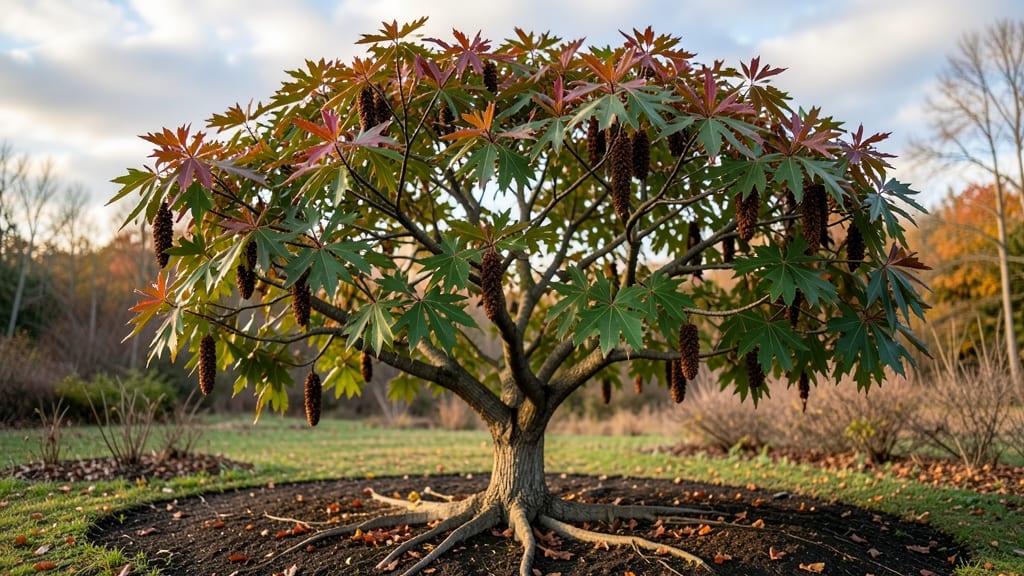
Sweet gum trees grow best in USDA zones 5 through 9, where they handle freezing winters down to -20°F and scorching summers up to 100°F+ while thriving in everything from clay soil to sandy loam.
Sweet gum trees originally hail from the southeastern U.S., where they evolved to handle both humidity and drought—qualities that make them resilient across zones 5-9. 🌳 Their star-shaped leaves and spiky seed pods are just as adaptable as their roots, which spread deep to access moisture even during dry spells.
In colder zones (5-6), young trees benefit from winter mulch to protect their shallow root systems, while hotter zones (8-9) require consistent watering during establishment to prevent stress.
What sets these trees apart is their ability to flourish in urban environments too—sidewalks, median strips, and even containers (with proper drainage). Their fast growth rate means you'll see noticeable height gains each year, though they do drop those signature seed pods, so plan for cleanup in fall.
For best results, plant in well-draining soil with full sun exposure, and avoid waterlogged areas where roots can rot.
💡 In This Article
- Sweet Gum Tree Hardiness: Zone 5-9 Climate Adaptations
- Optimizing Sweet Gum Tree Planting by USDA Zone
Sweet gum tree hardiness: zone 5-9 climate adaptations
The sweet gum tree (Liquidambar styraciflua) evolved in the southeastern U.S., where it naturally thrives in zones 5-9 due to its remarkable physiological adaptations. Its cold tolerance stems from a unique combination of deep root systems and a slow metabolic rate during winter dormancy.
Unlike many trees, sweet gums can survive -20°F temperatures by producing antifreeze-like proteins in their cells, preventing ice crystal formation that would otherwise rupture tissues. 🌡️ This adaptation explains why they flourish in zone 5's harsh winters while also enduring zone 9's heat waves.
The tree's heat resistance comes from its broad, star-shaped leaves that maximize sunlight absorption while minimizing water loss through a thick waxy cuticle. During summer, these leaves can reach 90°F internally without wilting, thanks to specialized stomata that open only during cooler parts of the day.
This mechanism allows sweet gums to maintain photosynthesis even when ambient temperatures exceed 95°F, a trait rare among deciduous trees. Their drought tolerance further stems from roots that extend 10-15 feet deep, tapping into groundwater sources that shallow-rooted species can't access.
Seasonal growth patterns reveal another adaptation advantage: sweet gums exhibit "flush growth" in spring, producing new leaves and branches in just 3-4 weeks after dormancy breaks.
This rapid regrowth compensates for any winter damage, while their autumn color shifts from green to vibrant red-orange provide a visual indicator of their health.
In zone 6-7 climates, this means you'll see dramatic color changes even after mild winters, while zone 8-9 trees maintain lush foliage year-round due to their extended growing season.
However, these adaptations come with trade-offs. The deep root system makes sweet gums competitive with other plants, sometimes lifting sidewalks if planted too close to structures. Their spiky seed pods (known as "gumballs") also mean they're not ideal for areas where children or pets play.
The tree's sensitivity to waterlogged soils—common in zone 5's clay-heavy regions—requires careful site selection to prevent root rot, which can occur within 2-3 weeks of prolonged saturation.
For gardeners in transitional zones (like zone 4 edges), consider these microclimate factors: sweet gums perform best in locations with afternoon shade during summer, which reduces heat stress. Planting near evergreens can create a protective windbreak, lowering winter temperature extremes by 5-10°F around the tree's base.
This simple strategy can extend their range into zone 4's northern limits with proper winter protection.
What most people don't realize is that sweet gums actually benefit from occasional cold snaps in zones 8-9. The 20-30°F temperature drops they experience in winter help break dormancy more effectively than mild winters, resulting in more vigorous spring growth.
This natural cycle explains why they often outperform other shade trees in southern climates where winters are too warm for proper dormancy.