
Pruning
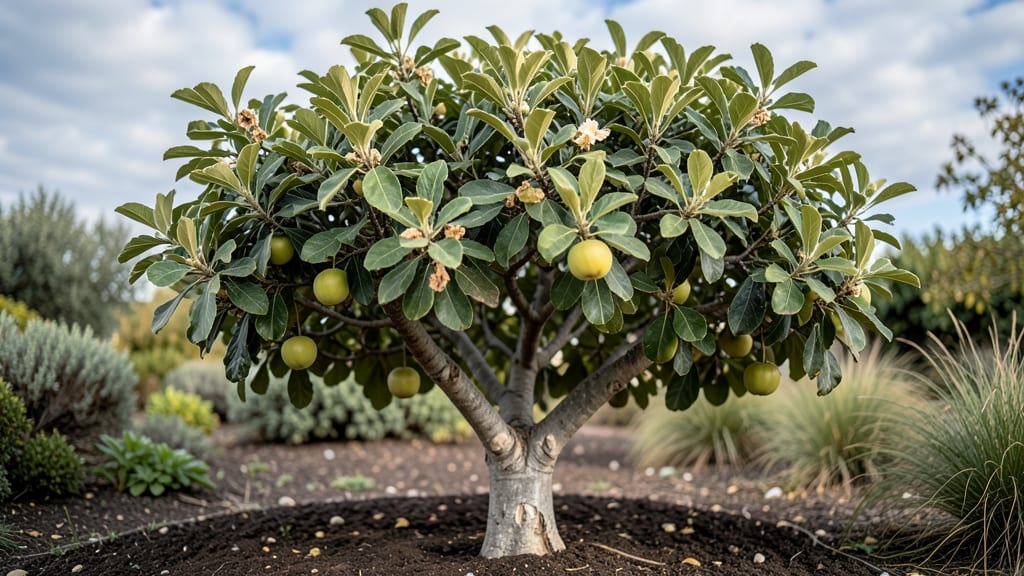
Your persimmon tree’s fruit stays stubbornly unripe—even when neighbors’ trees are dropping sweet, orange treats. 🌿 The problem often boils down to timing, sunlight, or pruning mistakes that starve branches of energy.
I’ve watched my own trees struggle with this, and the fix isn’t complicated once you know what to look for.
Unripe persimmons cling to branches because the tree prioritizes leaf growth over fruit when stressed—whether from too much shade, poor pollination, or overcrowded branches. Even mature trees need 6+ hours of direct sun daily, and pruning at the wrong time (like late summer) can delay ripening.
Pests like aphids or fungal issues also sap energy from developing fruit.
Prune in late winter or early spring to encourage strong new growth, and thin out crowded branches to improve airflow. If fruits still resist ripening by early October, check for pests or nutrient deficiencies—your goal is to shift the tree’s focus from leaves to fruit.
With the right adjustments, you’ll harvest plump, sweet persimmons by fall.
This works for both Asian (non-astringent) and American (astringent) varieties, though timing varies slightly. The key is patience—persimmons ripen slowly, but the payoff is worth it. Let’s troubleshoot your tree’s specific issues next.
Understanding Unripe Persimmon Fruit
Unripe persimmon fruit can be frustrating for gardeners eager for a sweet, harvest-ready bounty. But why does this happen? The issue often stems from a mix of environmental, biological, and horticultural factors.
Let’s break down the key reasons your persimmons might still be unripe when you expected them to be ready.
---
Persimmons are sun-loving trees, and lack of adequate sunlight is one of the most common reasons fruit fails to ripen properly. Persimmon trees (Diospyros spp.) require full sun (6–8+ hours daily) to trigger the biochemical processes that convert starches into sugars.
- Why it happens: Sunlight drives photosynthesis, which produces the energy needed for fruit development.
Without enough light, the tree prioritizes leaf growth over fruit ripening. - Actionable fix: Plant your persimmon tree in a south-facing location (in the Northern Hemisphere) with minimal shade from other trees or structures. If your tree is already planted, consider thinning nearby foliage or removing competing plants.
---
Persimmons are sensitive to temperature extremes, especially during flowering and early fruit set. Late spring frosts or unseasonably cool weather can damage blossoms, reducing fruit load or stunting development.
- Why it happens: - Frost damage: Flowers and young fruit are vulnerable to temps below 28°F (-2°C), leading to poor pollination or aborted fruit. - Slow sugar conversion: Cooler-than-average summers delay the enzymatic activity that turns starches into sugars, keeping fruit firm and astringent. - Actionable fix: - Monitor frost dates in your region and protect young trees with frost cloth if late frosts are common. - Choose cold-hardy varieties (e.g., ‘Meader’ or ‘Fuyu’) if you live in a shorter growing season area. - Use row covers during flowering to shield blossoms from unexpected chills.
---
Some persimmon varieties are self-pollinating, while others require cross-pollination from a different tree. Even if your tree has flowers, lack of pollinators (bees, wind) or self-sterility can result in small, unripe fruit.
- Why it happens: - Bee dependency: Persimmons rely on insects to transfer pollen.
If bees are scarce (due to pesticides or early blooms), pollination fails. - Genetic incompatibility: Some varieties (like ‘Hachiya’) need another persimmon tree nearby for successful pollination. - Actionable fix: - Plant two compatible varieties (e.g., ‘Fuyu’ + ‘Hachiya’) within 50 feet of each other. - Avoid overusing broad-spectrum insecticides during bloom time to protect pollinators. - Hand-pollinate by gently transferring pollen with a small brush if bees are absent.
---
Persimmons are heavy feeders and need balanced nutrients to produce ripe fruit. Deficiencies in potassium, phosphorus, or nitrogen can lead to stunted growth and poor fruit development.
- Why it happens: - Nitrogen (N) deficiency: Leads to small, pale fruit with poor sugar content. - Potassium (K) deficiency: Causes weak cell walls, making fruit prone to cracking or staying hard. - Phosphorus (P) deficiency: Slows energy transfer, delaying ripening. - Actionable fix: - Test your soil (pH 6.0–7.0 is ideal) and amend with compost or organic matter. - Apply a balanced fertilizer (e.g., 10-10-10) in early spring and a potassium-rich fertilizer (e.g., 0-0-50) in mid-summer. - Mulch heavily (3–4 inches of wood chips) to retain moisture and nutrients.
---
While pruning is essential for tree health, aggressive or improper pruning can stress the tree, diverting energy away from fruit ripening.
- Why it happens: - Excessive pruning reduces the tree’s ability to photosynthesize, limiting sugar production. - Poor pruning timing: Cutting back too late in the season (after June) can stimulate new growth that won’t harden before winter, weakening the tree. - Over-thinning: Removing too many branches reduces fruit-bearing wood, lowering yield and ripening success. - Actionable fix: - Prune in late winter/early spring (before buds swell) to encourage strong growth. - Remove only dead, diseased, or crossing branches—avoid heavy thinning. - Shape the tree to maximize sunlight penetration to the inner canopy where fruit often develops.
--- Persimmons need consistent moisture, especially during fruit set and development. Too much or too little water can disrupt ripening.
- Why it happens: - Underwatering: Causes small, hard fruit due to poor sugar transport. - Overwatering: Leads to root rot or diluted nutrient uptake, slowing ripening. - Drought stress: Triggers the tree to abscise (drop) fruit before maturity. - Actionable fix: - Water deeply 1–2 times per week (1–1.5 inches per session) during dry spells. - Mulch around the base to retain soil moisture and regulate temperature. - Avoid wetting foliage to prevent fungal diseases that can weaken the tree.
--- Pests like persimmon borers, aphids, or scale insects and diseases such as anthracnose or powdery mildew can sap the tree’s energy, preventing fruit from ripening properly.
- Why it happens: - Sap-sucking pests (e.g., aphids) reduce photosynthetic efficiency, limiting sugar production. - Fungal infections (e.g., anthracnose) cause leaf drop, further reducing the tree’s ability to fuel fruit development. - Actionable fix: - Inspect leaves and branches regularly for signs of pests (sticky residue, holes, discoloration). - Apply neem oil or horticultural oil in early spring to prevent pests. - Remove and destroy infected fruit/leaves to stop disease spread. - Prune for airflow to reduce humidity around the canopy, which fungal pathogens thrive in.
--- Not all persimmons ripen on the tree at the same rate—or even at all! Some varieties (like ‘Hachiya’) must be fully soft before eating, while others (like ‘Fuyu’) can be eaten firm.
- Why it happens: - Astringent varieties (e.g., ‘Hachiya’) contain tannins that only break down when the fruit is completely soft and mushy. - Non-astringent varieties (e.g., ‘Fuyu’) ripen while still firm but may never fully soften on the tree. - Actionable fix: - Know your variety’s traits—check if it’s astringent or non-astringent. - Harvest astringent persimmons when they’re fully orange and slightly soft (they’ll ripen off the tree). - Store them in a cool, dry place (50–55°F) to complete ripening.
--- Young persimmon trees (under 3–5 years old) may produce fruit, but their energy is focused on growth, not ripening. Conversely, overloaded branches can’t support proper fruit development.
- Why it happens: - Energy allocation: A young tree prioritizes root and trunk growth over fruit maturation. - Branch strain: Too many fruit can weaken branches, leading to poor sugar distribution. - Actionable fix: - Thin fruit when small (leave 1–2 inches between fruits) to reduce competition for nutrients. - Avoid heavy pruning in the first few years—let the tree establish its structure. - Fertilize lightly in early spring to support gradual growth without overloading the tree.
Fixing unripe persimmons naturally
Now that you understand why your persimmon fruit may be staying unripe, let’s tackle the solutions—starting with practical fixes and moving to preventative strategies to ensure a sweeter, safer harvest next season.
Below, we’ve mapped out actionable steps based on the most common causes, so you can address the issue with confidence.
---
Problem: Overly aggressive or poorly timed pruning stresses the tree, delaying fruit ripening.
Fix: - Prune in late winter or early spring (before buds swell) to avoid disrupting the tree’s energy flow. Avoid heavy pruning during flowering or fruiting seasons. - Focus on open-center shaping—remove only 10-20% of the tree’s canopy per year to maintain balance. Cut back suckers and water sprouts (fast-growing vertical shoots) to redirect energy to fruit production. - Thin out crowded branches to improve airflow and sunlight penetration, which speeds up ripening.
Pro Tip: 💡 Use sterilized pruning shears to prevent disease spread, and seal larger cuts with pruning sealant to reduce sap loss.
---
Problem: Shady spots or poor soil nutrition stunt fruit development.
Fix: - Move the tree (if possible) to a full-sun location (6+ hours of direct sunlight daily). Persimmons thrive in warm, sunny climates—partial shade can delay ripening. - Test your soil (pH 6.0–7.0 is ideal) and amend with: - Compost (for organic matter) - Balanced fertilizer (10-10-10 or 5-10-10) in early spring - Potassium-rich additives (like wood ash or banana peel tea) to boost sugar development in fruit. - Mulch heavily (3–4 inches of wood chips or straw) to retain moisture and regulate soil temperature.
Pro Tip: 🌡️ If your climate has late frosts, consider row covers or tree wraps to protect blossoms and ensure pollination.
---
Problem: Lack of pollinators (or self-incompatibility in some varieties) leads to poor fruit set.
Fix: - Plant a second persimmon tree (even a different variety) within 50 feet to cross-pollinate. Some varieties (like ‘Fuyu’) are self-pollinating, but others (like ‘Hachiya’) need help. - Hand-pollinate in the morning by gently transferring pollen from male to female flowers with a soft brush. - Attract native bees by planting bee-friendly flowers (like sunflowers or lavender) nearby.
Pro Tip: ✨ If bees are scarce, avoid pesticides during bloom—neonicotinoids can harm pollinators.
---
Problem: Drought stress or inconsistent watering halts fruit maturation.
Fix: - Water deeply 1–2 times per week (1–2 inches per session) during dry spells, focusing on the root zone (not the leaves). - Use drip irrigation to keep moisture levels steady—persimmons hate soggy roots but also wilting stress. - Mulch annually to lock in moisture and reduce evaporation.
Pro Tip: 🔥 Avoid overhead watering at night to prevent fungal diseases like anthracnose, which weakens the tree.
---
If your persimmons are physically ripe (hard like a rock for astringent types, soft for non-astringent) but still unripe in flavor, try: - Picking early (when fully colored but firm) and ripening indoors at room temperature (20–22°C / 68–72°F). - Storing in a paper bag with a banana (ethylene gas speeds ripening). - Cooking or baking unripe fruit—it’s still edible when used in jam, muffins, or dried chips!
---
To avoid unripe persimmons next season: 1. Monitor tree health yearly—look for pests (aphids, scale) or diseases (powdery mildew) and treat early. 2. Fertilize in stages: - Early spring: Nitrogen for leaf growth. - Summer: Potassium for fruit sweetness.
3. Prune lightly in winter, but avoid heavy cuts—persimmons are sensitive to stress. 4. Choose the right variety for your climate (e.g., ‘Fuyu’ ripens earlier than ‘Hachiya’).
--- Final Note: Patience is key—some persimmons take 3–5 years to bear reliably. With these adjustments, you’ll be enjoying plump, sweet fruit (not bitter or hard) in no time! 🍉✨
Frequently asked questions
Why do my persimmon fruits stay hard even when they're fully orange?
This usually means you have an astringent variety like 'Hachiya' that needs to soften completely before eating. These types contain tannins that only break down when fully ripe—often after falling from the tree. Harvest when they're deep orange and slightly soft, then store at room temperature for 1-2 weeks to complete ripening.
Can I force unripe persimmons to ripen indoors?
Yes! Place them in a paper bag with a banana or apple (ethylene gas speeds ripening). Keep them at 68-72°F and check weekly. For astringent types, this may take 2-4 weeks. Non-astringent varieties like 'Fuyu' ripen faster but won't get mushy—they're ready when firm and sweet.
What should I do if my persimmon tree has no fruit at all?
Check these first: 1) Sunlight—persimmons need 6+ hours daily; 2) Pollination—plant a second tree or hand-pollinate; 3) Age—young trees (<3 years) focus on growth. Also verify your variety—some need cross-pollination. If flowers appear but drop, frost damage or poor soil may be the issue.
Are unripe persimmons safe to eat?
They're not toxic but can be extremely bitter and astringent. For astringent types, cooking breaks down tannins—try baking into muffins or making jam. Non-astringent varieties can be eaten firm but may lack sweetness. Always ripen properly for best flavor and texture.