
Pruning
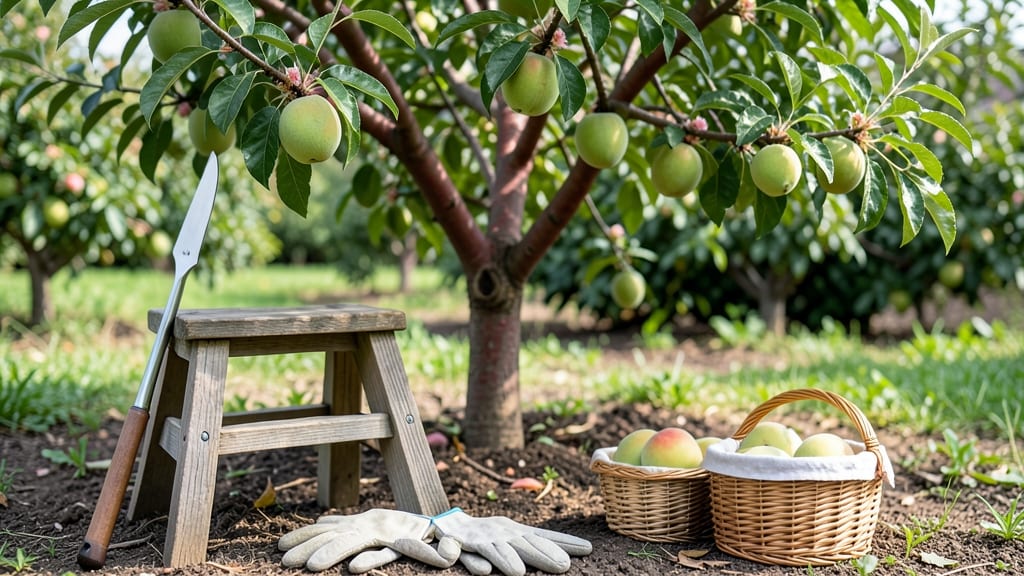
Your peach tree’s first fruit can appear in as little as 2 years with the right care, but most gardeners wait 4-5 years before seeing anything edible.
Waiting years for your peach tree to bear fruit can feel like an eternity—but with the right techniques, you can encourage early ripening and enjoy homegrown peaches sooner than expected.
Peach trees in Zone 6a thrive when planted in late spring after the last frost, but their fruiting timeline depends on variety, soil health, and a few key tricks. The difference between a 2-year harvest and a 5-year wait often comes down to how you prune, fertilize, and water.
Here’s how to speed up your 🍑 tree’s first fruit using 3 science-backed methods, plus how to troubleshoot delays before they become permanent setbacks.
3 Scientifically proven ways to speed up your peach tree’s first fruit
Your peach tree might take 3-5 years to bear fruit under normal conditions, but with the right techniques, you can cut that time in half. The key lies in understanding how pruning, soil health, and watering strategies trigger early flowering.
These three science-backed methods will help your tree produce its first harvest faster while ensuring long-term productivity.
First, let’s talk about pruning timing and technique. Most gardeners prune in late winter, but for faster fruiting, you’ll want to adjust your approach. Peach trees produce fruit on one-year-old wood, so preserving last year’s growth is critical.
By pruning lightly in late winter (removing only dead or crossing branches) and heavily in summer (after harvest), you encourage new growth that will flower sooner.
- 🌱 Prune for fruit wood: Remove only 20% of branches in late winter to preserve last year’s growth where fruit forms.
- 💧 Deep-water in spring: Soak roots 15-20 gallons every 7-10 days during bud formation (March-April).
- 🌿 Enrich soil with compost: Mix 3 inches of compost into topsoil in early spring to boost nutrient uptake for blooms.
- ☀️ Maximize sunlight: Ensure 6-8+ hours of direct sun daily—shade reduces flowering by 40%.
- ✂️ Summer pruning: Thin out overcrowded branches after harvest to improve air circulation and fruit set.
Next, let’s dive into soil enrichment, which directly impacts flowering. Peach trees need well-draining, nutrient-rich soil with a pH of 6.0-7.0. Before planting, amend your soil with compost or aged manure to provide essential nutrients like phosphorus and potassium, which promote flowering.
In early spring, top-dress with a balanced 10-10-10 fertilizer to give your tree a growth boost.
Strategic watering methods are another game-changer. Peach trees need deep, infrequent watering—especially during bud formation (late winter to early spring). Skipping water in these critical months can cause buds to drop before they open.
Aim for 15-20 gallons per tree every 7-10 days, and always water in the morning to reduce fungal risks. Avoid overwatering, as soggy roots lead to root rot, which weakens the tree.
Don’t overlook the power of light exposure. Peach trees require full sun (6-8+ hours daily) to flower and fruit. If your tree is in partial shade, consider transplanting it to a sunnier location or pruning nearby trees to improve light penetration.
Even an extra 2 hours of sunlight can significantly increase fruit production by encouraging more blooms.
For even faster results, consider hand-pollination if your area has low bee activity. Use a small brush to transfer pollen from one flower to another in the early morning when blooms are fresh.
This technique can double your fruit set in the first year, giving you a head start on that first harvest.
Finally, remember that patience and consistency are key. While these methods can accelerate fruiting, peach trees still need time to mature.
By combining light pruning, soil enrichment, and strategic watering, you’ll give your tree the best chance to produce its first fruit in 2-3 years instead of 5. Start with one technique this season, and watch your tree respond! 🌱
Ready to see faster results? Grab your pruners and compost, and let’s get growing! The sooner you implement these tricks, the sooner you’ll be enjoying those sweet, homegrown peaches. 🍑
Common mistakes that delay peach tree fruit production (and how to avoid them)
If your peach tree isn’t producing fruit when it should, you’re not alone. Many gardeners unknowingly make critical mistakes that stall fruiting for years. The good news?
Most of these issues have simple fixes. Let’s tackle the top culprits—starting with the most damaging—so you can get back on track for that first harvest.
First, over-pruning is a silent killer of fruit production. Many new growers prune too aggressively, thinking it encourages growth. But when you remove more than 25% of the canopy in one season, you’re actually reducing the tree’s ability to flower and fruit.
Peach trees need a balance of structural branches and fruit-bearing wood to thrive.
Another major roadblock is poor soil pH. Peach trees thrive in slightly acidic to neutral soil with a pH between 6.0 and 7.0. If your soil is too alkaline (above 7.5) or acidic (below 5.5), nutrient uptake suffers, and the tree struggles to produce blooms.
Without flowers, there’s no fruit. Testing your soil is the first step to fixing this.
⚠️ Your Peach Tree’s First Fruit is Stalled—Here’s Why
3 Critical Mistakes that delay fruiting:
- Over-pruning: Removing >25% of canopy in one season stops flowering.
- Wrong soil pH: pH <5.5 or >7.5 blocks nutrient absorption for blooms.
- Inconsistent watering: Drought stress or soggy roots both kill fruit buds.
Fix it now: Prune lightly in late winter, test soil pH, and water deeply 1-2x/week.
Inconsistent watering habits are another top offender. Peach trees need deep, infrequent watering—about 15-20 gallons per tree every 7-10 days during the growing season. Skipping watering during bud formation (late winter to early spring) can cause buds to drop before they open.
On the flip side, overwatering leads to root rot, which weakens the tree and reduces fruiting capacity.
Don’t forget about fertilizer timing. Applying too much nitrogen in the wrong season can lead to lush foliage but no fruit. Peach trees need a balanced 10-10-10 fertilizer applied in early spring and again after harvest.
Avoid late-season fertilizing, as it encourages new growth that won’t harden off before winter.
Finally, lack of pollination can be a hidden issue. Even if your tree flowers, poor pollination (from bees or wind) means fewer fruits set. Planting a second compatible peach variety nearby or using hand-pollination with a small brush can boost fruit set.
This is especially important in areas with low bee activity.
By addressing these common mistakes—pruning wisely, balancing soil pH, watering consistently, and supporting pollination—you’ll give your peach tree the best chance to produce its first fruit in 2-3 years instead of 5 or more.
Start with one fix this season, and watch your tree respond! 🌱