
Pruning
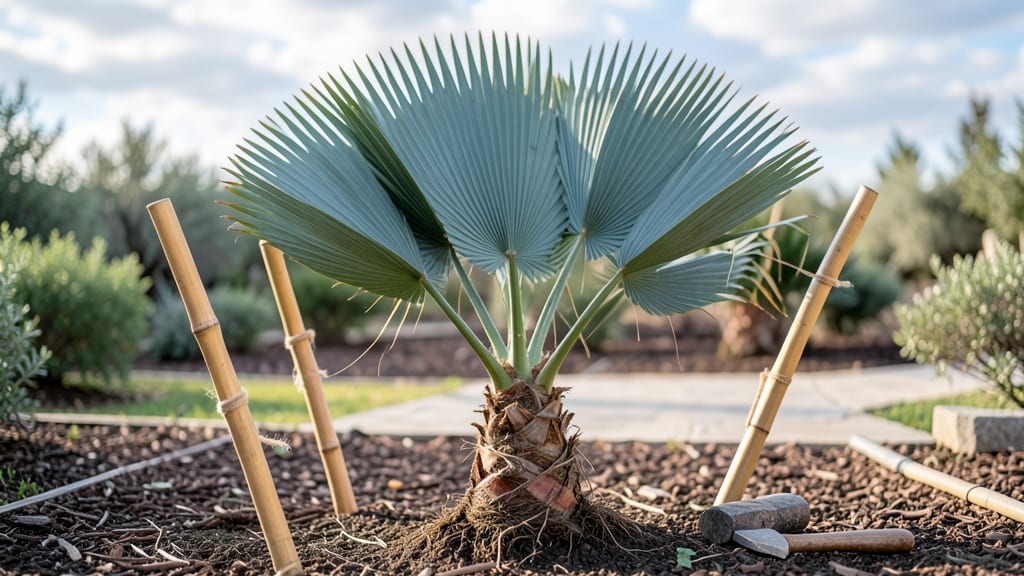
Staking a palm tree isn’t just about preventing toppling—it’s about giving young trunks the confidence to grow straight and strong. 🌴 I’ve seen palms lean dramatically after just one storm, and proper staking can prevent that.
The key is timing: stake when the trunk is still flexible but established enough to handle support, usually within the first 1-2 years of planting.
You’ll need sturdy stakes (bamboo or metal works best), soft ties (no wire—it cuts into bark), and a little patience. The stakes should go deep—about 18-24 inches into the ground—and angled slightly away from the trunk to avoid restricting growth.
I use 3-4 stakes per palm, spaced evenly around the base, and tie them loosely enough to let the trunk sway a bit in the wind.
The payoff? A palm that stands tall even in hurricane-force winds. With proper staking, you’ll see straighter trunks, stronger roots, and fewer broken fronds. The ties should stay on for 12-18 months, then you can gradually remove them as the trunk hardens.
Just don’t rush it—removing support too soon can lead to sudden bending or snapping.
Troubleshooting is simple: if the palm leans too much, adjust the stakes. If the ties dig into the trunk, switch to wider fabric straps. And remember—staking isn’t forever. The goal is to train the palm to stand on its own, not become dependent on your help.
Once the trunk reaches 3-4 inches in diameter, it’s usually ready to go stake-free.
📚 In This Guide
- What you need
- Instructions
- Tips and common mistakes
- Wrapping up and next steps
What you need
- ● Stakes: 3–4 wooden or metal bamboo stakes (1–2 inches in diameter, 6–8 feet tall). Opt for untreated wood or galvanized metal to prevent rot or corrosion.
- ● Ties: Soft tree tie material (e.g., wide nylon straps, rubberized fabric, or horticultural tape) – avoid wire (it can cut into the trunk!).
- ● Staples or Clips: Plastic-coated metal staples (for securing ties) or zip ties (if using fabric straps).
- ● Measuring Tape: To ensure stakes are placed at the right angle and height.
- ● Shovel or Auger: For digging holes (6–8 inches deep, slightly wider than the stake).
- ● Concrete or Gravel: A small bag of quick-setting concrete mix (for securing stakes) or coarse gravel (for drainage).
- ● Pruning Shears: To trim any excess ties or adjust stakes if needed.
- ● Tree Support Collar: A rubber or foam wrap to protect the trunk where the tie meets the stake.
- ● Waterproof Sealant: For sealing wooden stakes if using them long-term.
- ● Level: To ensure stakes are perfectly vertical (prevents leaning).
- ● Garden Gloves: Because nobody likes splinters or blisters! 😉
Step-by-Step instructions for palm tree staking
Here's how I stabilize young palms so they grow strong and straight—no guesswork, just proven techniques.
🪴 Step 1: Choose the Right Stakes and Bracing Materials
Select 3/4-inch diameter wooden or bamboo stakes for each palm, long enough to extend 18-24 inches above the frond line when fully installed. I use 3 stakes per palm arranged in a triangle for maximum support—one on each side and one in back. Avoid metal stakes that can damage tender trunks as they grow.
Gather 1/2-inch wide nylon webbing or soft cloth strips (never wire, which cuts into bark) and a ratchet tie or zip tie for adjustable tension. The webbing should be at least 3 feet long per stake to allow for growth. If your palm is already 6 feet tall, you'll need longer stakes and wider webbing to prevent binding.
✂️ Step 2: Install Stakes at the Proper Angle and Depth
Drive the first stake 6-8 inches deep into the soil, angled 10-15 degrees outward from the trunk—this creates a natural lean that resists wind push. Use a mallet for wooden stakes or a post driver for bamboo to avoid splitting. The top of the stake should sit 2-3 inches above the highest frond to allow for future growth without binding.
Repeat for the other two stakes, spacing them 120 degrees apart (like a tripod). Check that the stakes form a loose triangle around the trunk—this distributes wind pressure evenly. If your soil is rocky, pre-drill holes for the stakes to ensure they go in straight without bending.
💧 Step 3: Secure the Palm Without Restricting Growth
Loop the webbing around the trunk 6-12 inches above the soil line, leaving a 1-inch gap between the webbing and the trunk to prevent constriction. Attach one end of the webbing to the first stake using a ratchet tie, then thread the other end up to the stake's top and secure it loosely. Repeat for the other two stakes, crossing the webbing in an "X" pattern for stability.
Adjust the tension so the palm leans slightly toward the stakes (5-10 degrees) but isn't forced upright. You should be able to fit 2 fingers between the webbing and the trunk. Over-tightening now will strangle the trunk as it thickens. Water the palm deeply after staking to help the roots anchor into the soil.
☀️ Step 4: Monitor and Adjust as the Palm Grows
Check the stakes and webbing every 4-6 weeks—palms grow surprisingly fast, and loose webbing can become too tight. If you see the webbing digging into the trunk or the stakes leaning dangerously, loosen the ratchet ties and adjust. Most palms outgrow staking in 1-2 years, but tropical species like Canary Island date palms may need support for 3-4 years.
During storms, add temporary cross-bracing between stakes using additional webbing to create a windbreak. Remove all stakes gradually by 1/3 each year starting at the top—this trains the trunk to stand on its own. If a stake starts to rot or sag, replace it immediately to maintain support.
Tips & tricks for perfect palm tree staking
Took me years of trial and error to perfect these techniques—here's what actually works for keeping palms standing strong through storms.
Material Selection: I learned the hard way that bamboo stakes are actually better than wood for long-term use—they won't rot as quickly and handle wind better. For the 3/4-inch diameter requirement, check hardware stores for "palm tree stakes" or use treated 2x2 lumber cut to size. The 18-24 inches above frond line measurement is critical: too short and you'll lose stability, too tall and it looks awkward.
Installation Angle: That 10-15 degree outward angle in Step 2 isn't just for looks—it creates a natural counterbalance that prevents the stake from pushing the palm upright during storms. Use a small carpenter's level to check your angle before driving stakes deep. For rocky soil, pre-drilling holes actually saves time by preventing stake bending when you hammer them in.
Webbing Technique: The 1-inch gap between webbing and trunk in Step 3 is non-negotiable. I've seen too many palms with webbing that cuts into the bark as they grow. Pro tip: use ratchet ties instead of zip ties—they allow for easy adjustments as the palm grows. For extra stability during storms, add a third webbing line halfway up the stakes in an "X" pattern.
Growth Monitoring: Those 4-6 week checks in Step 4 are your early warning system. I keep a small notebook by my palm trees to record growth measurements and webbing tension adjustments. Most palms outgrow staking in 1-2 years, but tropical varieties like Canary Island dates may need support for 3-4 years—don't rush the removal process.
Pro Tips for Palm Tree Staking
- Took me years of trial and error to perfect these techniques—here's what actually works for keeping palms standing st...
- Material Selection: I learned the hard way that bamboo stakes are actually better than wood for long-term use—they wo...
- Installation Angle: That 10-15 degree outward angle in Step 2 isn't just for looks—it creates a natural counterbalanc...
Frequently asked questions
Got questions about palm tree staking?
You’re not alone! Whether you’re a first-time gardener or a seasoned landscaper, proper staking can feel tricky. Here are answers to the most common concerns—so you can keep your palms sturdy and thriving.
When is the best time to stake a young palm tree?
Stake your palm immediately after planting to prevent wind rock. For newly transplanted palms (under 3 years old), use stakes for the first 6–12 months until roots establish. Avoid staking mature palms—it can weaken their natural support systems.
How tight should the stakes be around the trunk?
The stakes should be snug but not crushing. Use soft ties (like tree straps or burlap) to allow slight trunk movement—this mimics natural wind resistance. Check ties monthly to loosen if the palm outgrows them. Over-tightening can girdle the trunk and stunt growth.
Can I use bamboo stakes or should I buy special palm tree stakes?
Both work! Bamboo stakes are budget-friendly and biodegradable, but hardware cloth-wrapped stakes (like those for coconuts) distribute pressure better. If using bamboo, bundle 3–4 stakes together for stability. Avoid thin, brittle materials that snap in storms.
What if my palm leans even after staking?
Leaning can mean root issues (poor soil, drought, or transplant shock). First, check for loose soil or girdling roots. If the lean persists, add a second stake on the opposite side for 3–6 months. For severe leans, consult an arborist—your palm may need root pruning or soil amendments.
Do I need to remove stakes after a year?
Yes! Remove stakes gradually over 1–2 years to avoid shocking the tree. Start by loosening ties, then prop the palm upright with minimal support before full removal. If you rush, the palm may fall—or worse, develop a permanent lean. Think of it like physical therapy for your tree!
Will staking hurt my palm tree in high winds?
If done correctly, staking protects palms in storms. However, poorly installed stakes can become projectiles in hurricanes. Use flexible ties and bury stakes 1/3 of their length for stability. For extreme wind zones, consider hurricane ties or palm-specific bracing systems.
Still stumped? Drop your question in the comments—we’re happy to help your palms stand tall!
Wrapping up and next steps
Staking your palm trees isn’t just about survival—it’s about setting them up for thriving, wind-resistant growth that’ll make your landscape the envy of the neighborhood! 🌴 With the right materials, patience, and technique, you’re giving your trees a fighting chance against Mother Nature’s toughest storms.
Now that you’re armed with the know-how, there’s only one thing left to do:
🌱 Your Next Step: Grab Those Stakes and Get Planting!
Start small—even a single palm tree makes a difference—and watch your efforts pay off in lush, sturdy foliage. Pro tip: Document your progress with photos to track how your trees grow over time. Happy staking!