
Watering
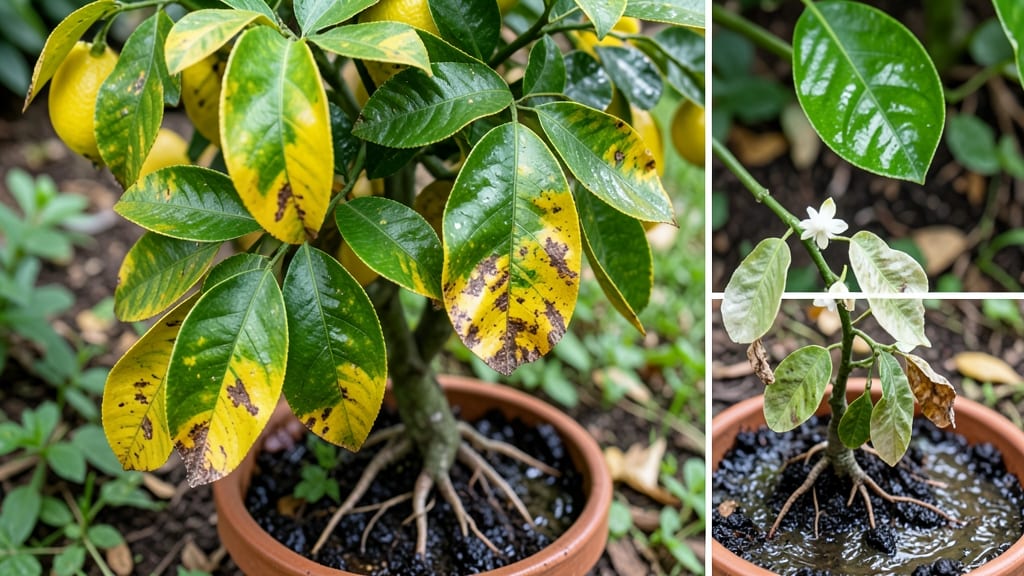
Your lemon tree's yellowing leaves aren't a death sentence—just a cry for help. 🌿 I've nursed more overwatered citrus trees back to health than I'd like to admit, and the fix is simpler than you'd think. The moment you spot those sad, drooping leaves, you're already halfway to a comeback.
Here's the thing—overwatering doesn't just mean soggy soil. It's about the wrong mix of water, air, and roots struggling to breathe. My first mistake? Ignoring the pot's drainage holes until the roots started rotting.
Now I check soil moisture like it's my job, and I've saved more trees than I've lost.
Within 2-3 weeks of proper care, you'll see fresh green growth pushing through. The secret is cutting back on water, improving drainage, and giving those roots some breathing room. No fancy tools or expensive treatments—just basic adjustments that make all the difference.
Works for container-grown trees, in-ground plantings, and even those tricky dwarf varieties. Let's turn those yellow leaves into vibrant green again—no citrus tree is beyond saving.
Root Causes Of Overwatered Leaves
When your lemon tree’s leaves start turning yellow, drooping, or developing unsightly brown edges, the culprit is often too much water. But why does this happen? The answer lies in how water affects your tree’s roots, soil, and overall health.
Let’s break down the science behind overwatered lemon tree leaves and why they struggle when given too much H₂O.
Lemon trees thrive in well-draining soil that allows excess water to escape quickly. When soil retains too much moisture—whether due to clay composition, compacted dirt, or lack of organic matter—roots suffocate. Here’s how it happens:
- Oxygen Deprivation: Water fills the air pockets in soil, starving roots of oxygen. Without oxygen, roots can’t respire properly, leading to anaerobic conditions that produce toxic compounds like ethanol and acetic acid.
- Fungal Infections: Soggy soil breeds Phytophthora and Pythium fungi, which attack root cells. These pathogens clog root vessels, blocking nutrient uptake and causing yellowing leaves.
- Nutrient Lockout: Excess water leaches essential nutrients (like nitrogen, phosphorus, and potassium) beyond the root zone, leaving your tree malnourished despite wet soil.
💡 Pro Tip: Test your soil’s drainage by digging a hole, filling it with water, and timing how long it takes to drain. If it takes more than 30 minutes, amend with perlite, sand, or compost to improve aeration.
Lemon trees are drought-tolerant once established—they prefer dry spells between waterings. Overwatering throws off their natural rhythm:
- Root Rot Development: Consistent moisture creates the perfect environment for root rot (often caused by Fusarium or Rhizoctonia fungi). Infected roots turn mushy and black, unable to absorb water or nutrients.
- Leaf Scorch from Imbalance: While roots drown, leaves may still appear "thirsty" because the tree can’t transport water efficiently. This causes marginal browning (edges turning crispy) despite wet soil.
- Salt Buildup in Soil: Overwatering with tap water (which contains minerals) leads to salinity in the root zone. High salt levels disrupt cellular functions, causing leaves to yellow or drop prematurely.
⏰ Actionable Fix: Adjust your watering schedule to once every 7–10 days for mature trees (less in winter). Stick your finger 2 inches into the soil—if it’s damp, wait before watering again.
Even with proper watering habits, external conditions can amplify the damage:
| Factor | How It Affects Leaves | Solution |
|---|---|---|
| 🌧️ High Humidity | Slows evaporation, keeping soil wet longer and encouraging fungal growth. | Improve airflow with pruning or a small fan near the tree. |
| ☀️ Intense Heat | Increases evaporation, but roots may still suffocate if watered heavily during heatwaves. | Water deeply early in the morning to reduce stress. |
| 🏺 Pot Size Too Small | Roots circle and compact, trapping water with no escape route. | Repot into a container 2–3 inches larger with fresh, gritty potting mix. |
🌡️ Temperature Check: Lemon trees prefer 60–85°F. If your climate is cooler, reduce watering frequency to prevent cold-induced rot.
Understanding these root causes helps you diagnose and fix the issue before it’s too late. Next, we’ll cover how to revive your lemon tree’s leaves with targeted solutions—starting with the soil!
Revive Your Lemon Tree Today
---
If your lemon tree’s leaves are drooping, yellowing, or falling off due to overwatering, don’t panic—there’s still hope! 🌱 The key is to act quickly and adjust your care routine. Below are targeted solutions based on the most common causes of overwatered leaves, along with easy prevention tips to keep your tree thriving.
---
Before making any other changes, halt all watering. Overwatering creates a suffocating environment for roots, cutting off oxygen and leading to rot. Let the soil dry out completely—this is the first and most critical step.
---
Poor drainage is often the root (pun intended) of overwatering issues. Here’s how to fix it:
#### 🔧 Fix Compacted or Heavy Soil - Test the soil: Dig a small hole (6 inches deep) and check for moisture.
If it’s still damp after 2–3 days, drainage is the problem. - Amend the soil: Mix in perlite, coarse sand, or pumice (20–30%) to improve aeration and water flow. - Raise the pot: If planting in-ground, consider elevating the tree slightly or using a raised bed.
#### 🪴 Switch to Well-Draining Pots - If your tree is in a container, repot it into a terracotta or fabric pot with drainage holes.
Avoid plastic, which traps moisture. - Pro tip: 💡 Add a 3-inch layer of gravel or broken pottery at the bottom of the pot to create a drainage barrier.
---
Yellow, mushy, or black leaves won’t recover—remove them to redirect the tree’s energy to healthy growth.
#### ✂️ How to Prune Correctly - Use sterilized pruning shears to cut back affected leaves and stems at a 45-degree angle. - Avoid cutting into healthy tissue—only trim dead or severely damaged parts. - Pro tip: ✨ Disinfect your tools with rubbing alcohol to prevent spreading disease.
---
Now that drainage is improved, it’s time to establish a smarter watering routine.
#### 💧 The Right Way to Water - Check soil moisture: Stick your finger 2 inches into the soil. Water only when it’s completely dry. - Water deeply but less often: Give your lemon tree a slow, thorough soak until water drains freely from the bottom.
Then, wait until the top 2–3 inches of soil are dry before watering again. - Morning is best: Water in the early morning to allow excess moisture to evaporate during the day.
#### ⏰ Seasonal Adjustments - Spring/Fall: Water every 7–10 days (adjust based on rainfall). - Summer: Increase frequency to every 5–7 days if temperatures exceed 90°F. - Winter: Reduce watering to every 3–4 weeks—lemon trees need less moisture in dormancy.
---
Overwatering weakens roots, so give them a chance to recover with these steps:
#### 💪 Fertilize Lightly (But Correctly) - Wait until new growth appears before fertilizing. - Use a balanced citrus fertilizer (6-6-6 or 10-10-10) diluted to half-strength. - Pro tip: 🌡️ Avoid fertilizing if the soil is still wet—roots need to recover first!
#### 🌱 Consider Root Stimulants (Optional) - For severely stressed trees, apply a mycorrhizal fungus or seaweed extract to promote root regeneration.
---
Once your lemon tree is back on track, keep these habits to prevent overwatering:
- ✅ Use a moisture meter to track soil dampness accurately.
- ✅ Group pots together to create a microclimate with more stable moisture levels.
- ✅ Mulch around the base (but avoid touching the trunk) to retain moisture without suffocating roots.
- ✅ Monitor weather changes—adjust watering during heavy rain or humidity spikes.
- ✅ Choose the right pot size—too large = more water retention. Aim for a pot 1–2 inches larger in diameter than the root ball.
---
With patience and these adjustments, your lemon tree should bounce back in 4–8 weeks. Keep an eye on new growth, and soon you’ll be harvesting juicy lemons instead of dealing with soggy soil! 🍋🌿
Frequently asked questions
How can I tell if my lemon tree leaves are overwatered vs. underwatered?
Check the soil first—stick your finger 2 inches deep. Overwatered leaves appear yellow and mushy, often with brown edges, while the soil stays damp. Underwatered leaves turn crispy and dry with brown tips, and the soil feels bone-dry. Pro tip: Lift the pot—overwatered soil feels heavy, while underwatered soil feels light.
Will my lemon tree recover from overwatering if I just stop watering it?
Not immediately—roots need time to recover. First, halt watering completely and let the soil dry out for 3-5 days. Then, adjust to watering only when the top 2-3 inches of soil are bone-dry. Recovery takes 4-8 weeks depending on severity, but new growth signals improvement. Monitor for fresh green leaves!
Can I use coffee grounds to fix overwatered lemon tree soil?
Coffee grounds can help long-term by improving soil structure, but they won’t fix immediate overwatering. Use them sparingly (mix 1 part grounds to 10 parts soil) to prevent nitrogen overload. For urgent fixes, focus on improving drainage with perlite or sand first—coffee grounds alone won’t solve soggy soil.
Why do some leaves stay yellow even after I’ve adjusted watering?
Yellow leaves may persist if root damage is severe or nutrients are locked out. Remove all fully yellow/mushy leaves to redirect energy. Test soil pH (6.0-7.0 is ideal) and consider a balanced citrus fertilizer once new growth appears. If no improvement in 6-8 weeks, check for fungal issues with a soil test.